%20(1).png)
B2B sales best practices: Proven strategies to boost revenue
Discover proven B2B sales best practices using MEDDPICC, Challenger, SPIN, and AI to boost win rates, forecast accuracy, and revenue performance.
Complex B2B sales have never been more demanding. Buyers expect speed, personalization, and measurable value at every stage. Meanwhile, sales leaders are under pressure to hit quota with teams that are stretched thin across long cycles and multiple stakeholders. The good news is that evidence-based frameworks cut through the noise. Organizations adopting MEDDPICC report 18% higher win rates and 24% larger deal sizes, with forecast accuracy improving by 20 to 30%. This article walks through the proven methodologies and technologies that separate top-performing B2B teams from the rest.
Table of Contents
- Setting the criteria: What defines B2B sales excellence?
- MEDDPICC/MEDDIC: The gold standard for sales qualification
- Challenger: Teaching, tailoring, and taking control
- SPIN Selling: Consultative discovery for complex deals
- AI and automation: New frontiers in sales productivity
- Integration: Combining frameworks and technology for maximum impact
- Enhance your B2B sales performance with Uman
- Frequently asked questions
Key Takeaways
PointDetailsMEDDPICC drives resultsAdopting MEDDPICC improves win rates, deal sizes, and forecast accuracy in complex B2B sales.Hybrid methods outperformIntegrating MEDDPICC, Challenger, and SPIN gives complete deal coverage and maximizes sales efficiency.AI raises productivityAI and automation deliver stronger forecasting, margin gains, and process discipline but require careful governance.Sales benchmarks matterTop performers consistently track win rates, cycle lengths, and digital interactions against industry standards.Customer outcomes firstLeading teams focus on value, tailored approaches, and technology-led innovation to achieve revenue growth.
Setting the criteria: What defines B2B sales excellence?
Before choosing a methodology, you need to know what you are measuring against. World-class B2B sales teams track a specific set of benchmarks that reveal process health and revenue potential. Understanding these numbers gives you a baseline for improvement.
According to current sales benchmarks overview, the numbers look like this:
MetricAverageWorld-classClose rate29%40%+Win rate21%35%+Sales cycle length1 to 3 monthsCompressed by processForecast accuracy50 to 70%80 to 95%
The gap between average and world-class is not accidental. It reflects deliberate process investment. Forecasting accuracy at the world-class level sits between 80 and 95%, while most teams hover between 50 and 70%. That gap costs deals.
Buyer expectations are also shifting fast. 80% of B2B interactions are now digital, and buyers expect a seamless, value-driven experience across every channel. Multi-channel selling and LinkedIn social selling consistently outperform single-channel approaches.
Key benchmarks every sales leader should track:
- Close rate and win rate by rep, team, and segment
- Sales cycle length broken down by deal size and product line
- Forecast accuracy measured weekly against actual outcomes
- Quota attainment across the full team, not just top performers
Understanding why sales process matters for B2B success is the first step toward closing these gaps. With these criteria in mind, let’s dive into proven frameworks that deliver results.
MEDDPICC/MEDDIC: The gold standard for sales qualification
MEDDPICC stands for Metrics, Economic Buyer, Decision Criteria, Decision Process, Paper Process, Identify Pain, Champion, and Competition. Each element forces your team to answer a critical question about deal viability before investing more resources. It is a qualification framework, not a sales script.
Here is what each component does in practice:
- Metrics: What measurable value does the buyer expect?
- Economic Buyer: Who controls the budget and final sign-off?
- Decision Criteria: What factors will drive the final choice?
- Decision Process: What steps does the buyer follow internally?
- Paper Process: What legal and procurement steps are required?
- Identify Pain: What business problem is urgent enough to act on?
- Champion: Who inside the account is selling for you internally?
- Competition: Who else is in the deal, and how do you compare?
The impact is measurable. Teams using MEDDPICC report 18% higher win rates, 24% larger deal sizes, and forecast accuracy improvements of 20 to 30%. Those are not marginal gains. They represent a structural advantage.

Pro Tip: Run a MEDDPICC scorecard on every deal in your pipeline review. Any deal missing more than three elements should be flagged for immediate action or deprioritized. This keeps your forecast clean and your team focused.
MEDDPICC works best when combined with other methodologies. Use it for qualifying B2B leads and pipeline hygiene, then layer in Challenger or SPIN for the discovery and persuasion phases. A complex sales process checklist can help your team apply MEDDPICC consistently across every deal stage.
Challenger: Teaching, tailoring, and taking control
The Challenger Sale methodology is built on a counterintuitive insight: the best salespeople do not just respond to buyer needs. They reframe how buyers think about their problems. Challenger reps lead with insight, challenge assumptions, and guide the conversation toward a conclusion that favors their solution.
The three core moves are:
- Teach: Share a perspective the buyer has not considered. This could be an industry trend, a hidden cost, or a risk they are underestimating.
- Tailor: Customize the message to the specific economic buyer and their priorities. Generic pitches lose deals.
- Take Control: Drive the sales process forward. Do not wait for the buyer to set the pace.
“The best sales conversations do not start with what we sell. They start with what the buyer does not yet know about their own situation.”
54% of top performers in complex sales use the Challenger methodology. That number is not a coincidence. In competitive markets where buyers have done their research before the first call, arriving with a new perspective is a genuine differentiator.
Pro Tip: Build a library of “teach” insights specific to each vertical you sell into. A logistics buyer and an IT services buyer face different pressures. Tailored insights land harder than generic ones.
Challenger pairs naturally with MEDDPICC. Once you have qualified the deal and identified the economic buyer, Challenger gives you the playbook for engaging that buyer with authority. Use it to optimize your sales cycle and reduce the time spent on deals that stall at the executive level.
SPIN Selling: Consultative discovery for complex deals
SPIN Selling, developed by Neil Rackham, is built around four question types that guide buyers through a structured discovery process. It is especially powerful in complex deals where the buyer may not fully articulate their pain without the right prompts.
The four question types:
Question typePurposeExampleSituationUnderstand the current state“How does your team currently manage pipeline reviews?”ProblemSurface explicit pain“Where does that process break down?”ImplicationAmplify the cost of inaction“What happens to forecast accuracy when that breaks down?”Need-PayoffConnect solution to value“How much time would your team save with automated updates?”
Top performers ask more Implication and Need-Payoff questions than average reps. This is the key insight. Most reps stop at Problem questions. The best reps push further, helping buyers feel the weight of inaction before presenting a solution.
“Discovery is not an interrogation. It is a structured conversation that helps buyers convince themselves.”
SPIN works best in the early and middle stages of a complex deal. Use it alongside optimizing complex sales strategies to shorten discovery time and improve deal quality. Pair it with a complex sales process checklist to ensure your team covers every critical discovery area before moving to proposal.
AI and automation: New frontiers in sales productivity
Frameworks give your team a process. AI gives that process scale and speed. The five primary use cases for AI in B2B sales are:
- Opportunity identification: AI surfaces accounts most likely to buy based on behavioral and firmographic signals.
- Value-based pricing: AI models help reps price deals based on buyer value, not just cost-plus logic.
- Seller automation: Routine tasks like CRM updates, meeting summaries, and follow-up drafts are handled automatically.
- Talent development: AI coaching tools analyze call recordings and flag skill gaps in real time.
- Governance: AI monitors pipeline data quality and flags inconsistencies before they distort forecasts.
The business case is clear. AI integration delivers a 3% margin gain and 11% revenue growth for organizations that implement it effectively. Hybrid AI forecasting models push accuracy to 85 to 95%, well above the industry average.
But adoption is outpacing governance. Many organizations deploy AI tools without the data culture, manager capabilities, or oversight structures needed to use them safely. The risk is not just bad forecasts. It is bad decisions made with false confidence.
Pro Tip: Before expanding AI tooling, assess your AI readiness honestly. The biggest gains come from teams that pair AI with strong data discipline, not from teams that simply add more tools.
Learn how AI boosts sales efficiency for B2B leaders and explore AI enablement workflows that fit complex sales environments.
Integration: Combining frameworks and technology for maximum impact
No single framework covers the full sales cycle. The highest-performing B2B teams blend methodologies deliberately, using each one where it delivers the most value.
Hybrid methodologies that combine MEDDIC for qualification with Challenger and SPIN for discovery consistently outperform single-approach teams. Here is how to structure the blend:
- Qualify with MEDDPICC: Before investing significant time, score every opportunity against the eight MEDDPICC elements. Deprioritize deals that cannot be qualified.
- Discover with SPIN: Use Situation, Problem, Implication, and Need-Payoff questions to build a complete picture of buyer pain and urgency.
- Engage with Challenger: Once you understand the buyer’s world, bring a reframing insight that positions your solution as the logical next step.
- Enable with AI: Use AI to automate CRM updates, surface cross-sell signals, and keep forecast data clean throughout the cycle.
StageFrameworkAI roleQualificationMEDDPICCOpportunity scoringDiscoverySPIN SellingCall analysis and coachingPersuasionChallengerContent personalizationForecastingAll frameworksData validation and accuracy
Pro Tip: Assign a framework owner for each stage of your sales process. When everyone knows which tool applies at which moment, execution becomes consistent and coaching becomes easier.
Applying sales cycle optimization tips alongside this blended approach gives your team a repeatable system, not just a collection of techniques.
Enhance your B2B sales performance with Uman
Putting these frameworks into practice requires more than training. It requires a system that keeps your team aligned, informed, and moving fast across every deal. That is exactly what Uman is built for.
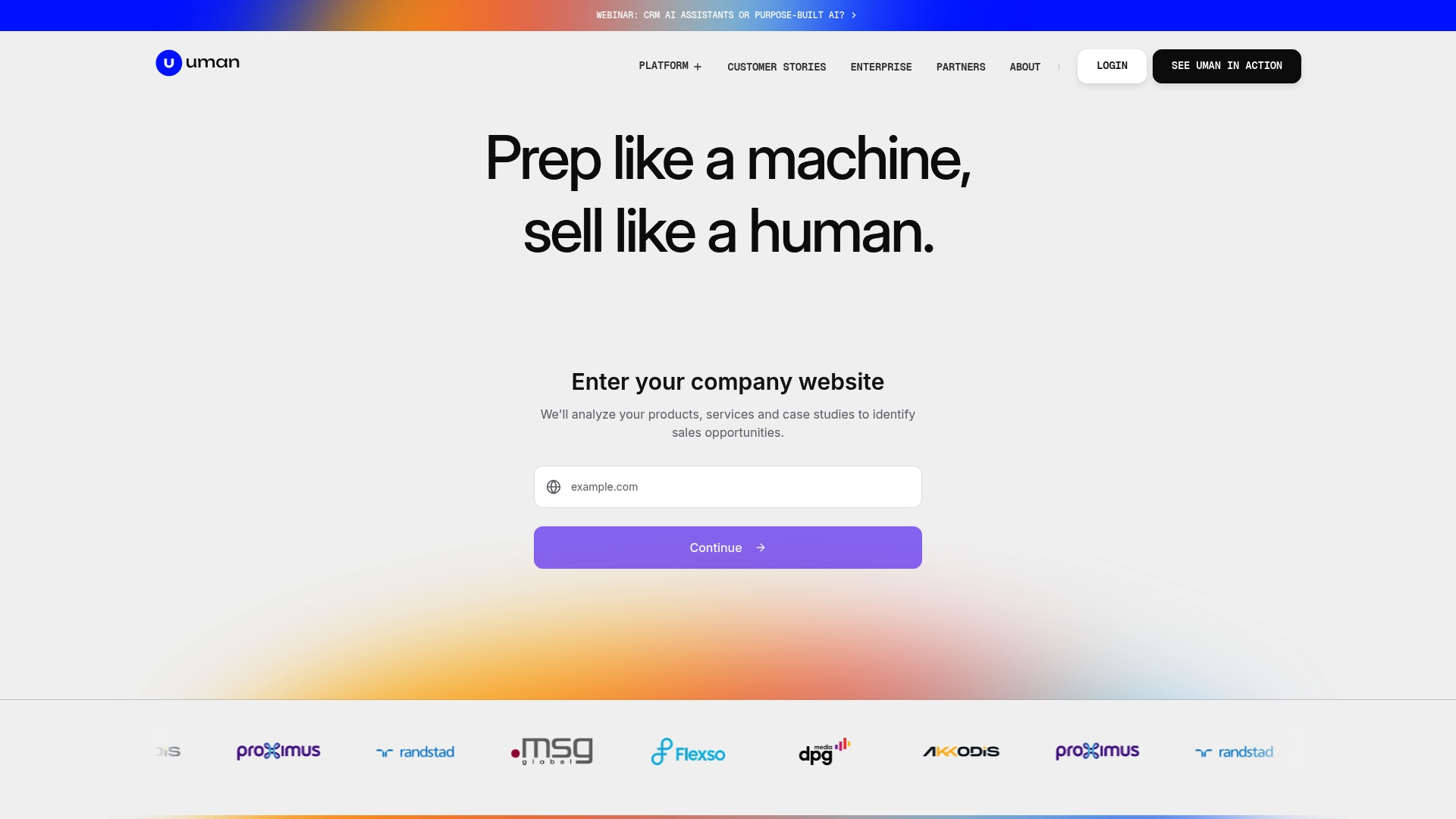
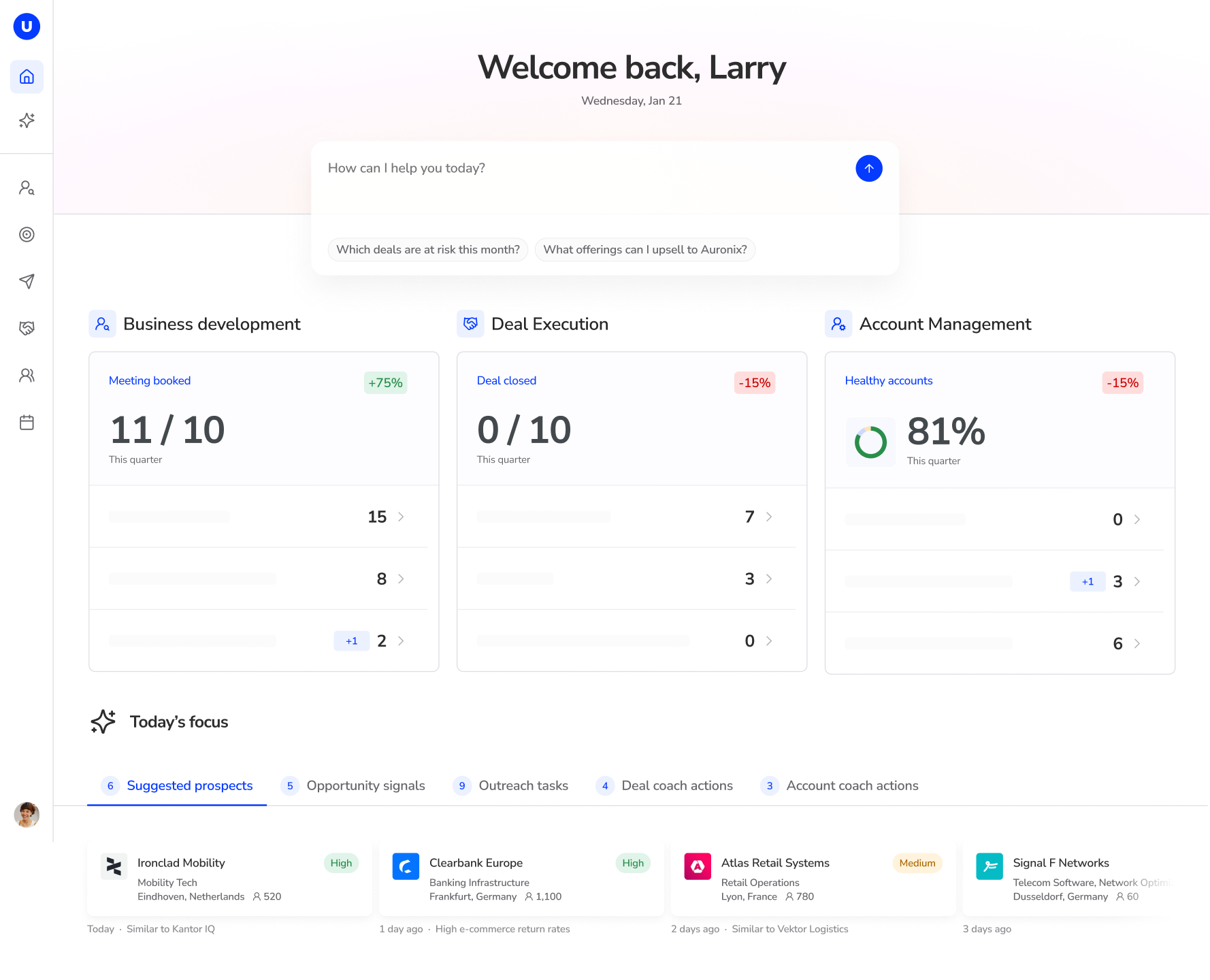
Uman’s AI-powered sales platform acts as a centralized sales brain for complex B2B organizations. It governs your sales knowledge, automates routine tasks, and surfaces the right content at the right moment. The deal execution module supports meeting preparation, qualification, and CRM updates so your reps spend more time selling and less time on administration. See how Flexso used Uman to accelerate onboarding and increase cross-sell across a complex service portfolio. If you are ready to move from frameworks to results, Uman gives you the infrastructure to make it happen.
Frequently asked questions
What is the most effective sales methodology for complex B2B deals?
MEDDPICC/MEDDIC delivers the highest win rates and deal sizes when combined with Challenger and SPIN for full process coverage. Teams using MEDDPICC report 18% higher win rates and 24% larger deal sizes compared to teams without a structured qualification framework.
How does AI improve B2B sales forecasting accuracy?
Hybrid AI forecasting models push accuracy to 85 to 95%, well above the 50 to 70% average most teams achieve without AI support. The key is pairing AI tools with clean, governed pipeline data.
What are top B2B sales benchmarks in 2026?
Close rates average 29%, win rates sit at 21%, sales cycles typically run 1 to 3 months, and 80% of customer interactions now happen through digital channels.
How can I blend MEDDPICC, Challenger, and SPIN in my sales process?
Use MEDDPICC to qualify opportunities, Challenger to teach and tailor your message, and SPIN for deep discovery questions. This hybrid approach consistently outperforms any single methodology applied in isolation.
What is the biggest challenge in adopting AI for sales?
Adoption is moving faster than governance. Effective AI use requires strong manager capabilities, a data-sharing culture, and an AI mindset across the team. Without these foundations, tools add complexity rather than clarity.
Recommended
Prep like a machine, sell like a human
Let AI handle the research and prep work — you focus on building relationships and closing deals.