%20(1).png)
Building a Sales Operating System: A practical guide
Most sales teams work hard, but they struggle to work in the same way. Every rep has their own style. Every manager has their own process. The result is slow ramp times, unpredictable forecasts, and uneven results. The highest-performing teams do something different. They build a sales operating system that makes success repeatable. In this article, you will learn what a sales operating system is, why it matters, and how you can start building one step by step.
What is a sales operating system?
A sales operating system is not just a CRM or a content library. It is the complete combination of:
- A central knowledge base with your content and best practices
- Embedded workflows that guide daily activities
- AI-powered recommendations that make every step easier
Think of it like a recipe.
If every rep follows the same steps, you get predictable results. Without a recipe, every dish turns out different.
The five pillars every system needs
1. A governed knowledge base
This is where you store your most important content:
- Product and service definitions
- Messaging and positioning
- Case studies
- Competitive comparisons
It must be clean, up to date, and easy to find.
2. Embedded workflows
These are step-by-step guides built into your daily tools. Workflows show reps exactly how to:
- Qualify leads
- Prepare for meetings
- Follow up after calls
- Advance deals to the next stage
3. Qualification scoring
Instead of relying on gut feeling, you need clear rules for what a qualified opportunity looks like. This improves forecast accuracy and helps managers coach more effectively.
4. Real-time insights
Data should not live in static reports. Your system must show insights as deals move forward, so reps can act before problems grow.
5. Continuous learning
The best systems improve over time. As more deals go through, the system learns what works and updates recommendations automatically.
Common mistakes to avoid
Many companies try to improve sales with more tools. But this often leads to:
- Confusion about where to find information
- Duplicate data
- Low adoption
- Inconsistent execution
Adding more software without a clear system is like adding more ingredients to a recipe without a plan.
A step-by-step roadmap to build your system
Step 1: Map your current process
Write down how deals move from lead to close today. Identify gaps and inconsistencies.
Step 2: Build your knowledge base
Gather all your messaging, case studies, and best practices in one place.
Step 3: Define your workflows
Decide the exact steps reps should follow at each stage. Document them clearly.
Step 4: Set qualification rules
Create a simple scoring system for each stage of the pipeline.
Step 5: Connect AI and automation
Choose a platform that can deliver recommendations based on your knowledge and workflows.
Step 6: Train and reinforce
Teach your team how to use the system. Reinforce best practices in every coaching session.
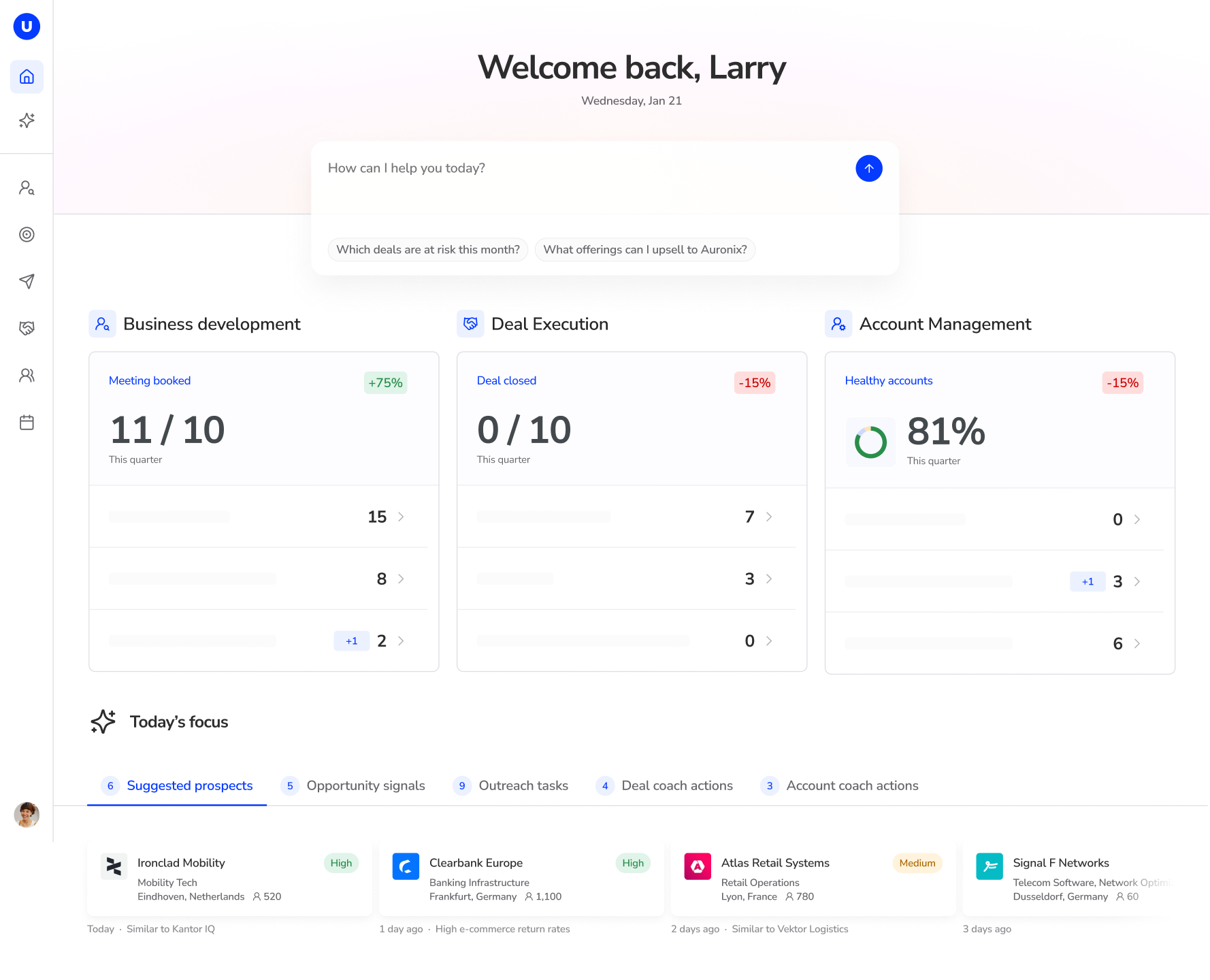
How uman makes this simple
uman brings all five pillars together:
- A single place to manage knowledge
- Embedded workflows for every stage
- AI that guides reps automatically
- Qualification scoring built in
- A system that improves with use
Instead of stitching together point solutions, you get everything in one platform.
Conclusion
If you want consistent, predictable revenue, you need more than tools. You need a system.
uman helps you build a sales operating system that drives growth and simplifies work. If you want to see it in action, book a demo today.


Prep like a machine, sell like a human
Let AI handle the research and prep work — you focus on building relationships and closing deals.