%20(1).png)
Complex sales process checklist for B2B leaders 2026
Master complex B2B sales with a comprehensive process checklist. Learn essential criteria, tools, and implementation strategies to optimize team performance and drive revenue growth in 2026.
Managing complex B2B sales with multiple stakeholders and extended cycles demands structured workflows to avoid missed opportunities and inconsistent execution. Sales leaders often struggle with fragmented processes that leave deals stalled or lost. A comprehensive checklist provides the framework to standardize qualification, stakeholder engagement, proposal management, and negotiation, transforming chaotic sales motions into predictable revenue engines. This guide walks you through building and implementing a checklist that optimizes your team’s performance and drives measurable results.
Table of Contents
- Evaluating Criteria For Your Complex Sales Process Checklist
- Essential Checklist Items For Managing Complex Sales Workflows
- Comparing Tools And Technology To Streamline Complex Sales Processes
- How To Implement And Optimize Your Complex Sales Process Checklist
- Optimize Your Complex Sales Process With Uman Platform
- Frequently Asked Questions
Key takeaways
PointDetailsStandardized criteriaDefine measurable objectives at each sales stage to reduce cycle times and improve win ratesEssential checklist itemsInclude qualification, stakeholder mapping, proposal management, and negotiation trackingTechnology enablementPlatforms with workflow automation and analytics streamline execution and visibilityContinuous optimizationRegular feedback and data-driven iteration ensure checklist relevance and adoptionTeam alignmentCross-functional collaboration and clear ownership drive consistent process adherence
Evaluating criteria for your complex sales process checklist
Building an effective checklist starts with defining criteria that align with your sales reality. Clear process criteria are vital to reducing sales cycle times and improving win rates. Your criteria should reflect the complexity of your deals, not generic best practices that ignore your specific challenges.
Start by defining sales stages with measurable objectives. Each stage needs concrete exit criteria that prevent deals from advancing prematurely. For example, discovery doesn’t end until you’ve documented three business pain points and quantified their impact. This precision eliminates guesswork and ensures reps focus on qualified opportunities.

Stakeholder identification and engagement strategies must be baked into your criteria. Complex sales involve multiple decision-makers, influencers, and blockers. Your checklist should mandate stakeholder mapping at the earliest stage, identifying roles, priorities, and relationships. Without this foundation, you’re flying blind into political minefields that derail deals late in the cycle.
Risk assessment and decision checkpoints are non-negotiable. Build in stage gates where managers review deal health, competitive threats, and resource allocation. These checkpoints catch red flags early, allowing you to pivot or disengage before wasting months on unwinnable deals. Qualification criteria should filter opportunities ruthlessly, focusing resources on deals with genuine fit and budget.
Pro Tip: Involve cross-functional teams when defining criteria. Sales, product, legal, and finance perspectives reveal blind spots that pure sales thinking misses, creating criteria that foster true organizational alignment.
Your criteria should also address content and messaging consistency. In organizations with broad service portfolios, reps struggle to position offerings effectively. Criteria that require tailored value propositions and client-specific storylines ensure every interaction advances the deal with relevant, compelling narratives.
Essential checklist items for managing complex sales workflows
Once criteria are established, translate them into actionable checklist items that guide reps through each stage. Structured workflows covering qualification, proposal, and negotiation stages improve sales team performance by eliminating ambiguity and missed steps.
- Initial lead qualification: Assess fit using BANT or similar frameworks. Document budget authority, identified needs, and timeline. Disqualify fast to protect pipeline integrity. This gate prevents unqualified leads from consuming valuable resources.
- Stakeholder mapping: Identify all decision-makers, influencers, and potential blockers. Document their priorities, concerns, and relationships. Update this map continuously as new players emerge. Missing a key stakeholder is the fastest way to lose a deal you thought was locked.
- Strategic storyline development: Create a tailored narrative connecting your solution to the client’s specific business outcomes. Avoid generic pitches. Your storyline should address each stakeholder’s priorities with quantified impact. This differentiation separates you from competitors offering similar capabilities.
- Proposal and contract management: Establish clear approval workflows and version control. Track proposal sections, pricing scenarios, and legal terms. Ensure proposals reflect current offerings and pricing. Outdated or inconsistent proposals erode credibility and slow negotiations.
- Negotiation tracking and risk mitigation: Document concessions, objections, and competitive threats. Identify deal risks early, from budget cuts to executive changes. Build mitigation strategies before they become crises. This proactive approach prevents last-minute surprises that kill deals.
- Cross-sell and upsell identification: Review client context against your portfolio to surface relevant additional services. Complex sales organizations often miss expansion opportunities within existing accounts. Your checklist should prompt reps to explore adjacent needs at every touchpoint.
Each item should have clear ownership, deadlines, and success metrics. Vague checklist items like “understand client needs” fail because they lack specificity. Instead, mandate “document three quantified business pain points with stakeholder validation” to drive concrete action.
Integrate your deal execution platform with these checklist items to automate reminders, track completion, and surface bottlenecks. Technology transforms static checklists into dynamic workflow engines that guide reps in real time.
Comparing tools and technology to streamline complex sales processes
The right technology amplifies your checklist’s impact by automating workflows, centralizing knowledge, and providing visibility. Technology platforms improve visibility, consistency, and collaboration in complex sales management. Not all tools are created equal, so compare capabilities carefully.
FeatureWhy It MattersWhat to Look ForDeal executionGuides reps through qualification, preparation, and proposal stagesWorkflow automation, stage-specific prompts, content generationAccount managementTracks relationships, identifies expansion opportunitiesStakeholder mapping, cross-sell suggestions, account health scoringIntegration capabilitiesConnects with CRM, DMS, and communication toolsNative integrations, API flexibility, data sync reliabilityReporting and analyticsSurfaces bottlenecks, win/loss patterns, rep performanceCustomizable dashboards, pipeline forecasting, conversion metricsCollaboration toolsEnables cross-functional alignment on complex dealsShared workspaces, comment threads, approval workflows
User interface and customization options matter more than feature lists suggest. If your reps find the platform clunky or rigid, adoption will fail regardless of capabilities. Look for intuitive navigation, mobile access, and the ability to tailor workflows to your specific sales stages. Generic tools force you into their process, while adaptable platforms mold to yours.
Scalability is critical for growing enterprises. Your platform should handle increasing deal volume, expanding teams, and evolving product portfolios without performance degradation. Ask vendors about their largest deployments and how they support organizational growth.
Pro Tip: Prioritize platforms that centralize sales knowledge into a governed data layer. Fragmented information across multiple systems creates inconsistency and wastes time. A unified knowledge base ensures reps always access current, accurate content.
Security and compliance cannot be afterthoughts. Enterprise B2B clients demand robust data protection, especially in regulated industries. Verify certifications like ISO 27001 and GDPR compliance. Understand how the vendor handles your data and whether they use it for AI model training.
Evaluate sales enablement platforms by running pilot programs with a subset of your team. Real-world testing reveals usability issues and integration challenges that demos gloss over. Measure impact on key metrics like time spent on administrative tasks, deal cycle length, and win rates before committing to full deployment.
Account management platforms deserve special attention if your revenue model relies on expansion within existing clients. Tools that proactively surface cross-sell opportunities based on client context and portfolio analysis can significantly boost account growth without adding headcount.
How to implement and optimize your complex sales process checklist
Implementation determines whether your checklist becomes a valuable tool or ignored documentation. Successful sales process adoption requires training, clear communication, and ongoing measurement. Start with a pilot group to refine the checklist before rolling it out broadly.
Conduct comprehensive training sessions that go beyond checklist mechanics. Explain the why behind each item, connecting it to better outcomes and easier workflows. Reps resist processes they perceive as bureaucratic overhead. Frame your checklist as a tool that makes their jobs easier and more successful, not another compliance burden.
Collect feedback regularly through surveys, one-on-ones, and team meetings. Identify bottlenecks where the checklist creates friction or confusion. Maybe a qualification step requires information that’s unavailable early in the cycle, or a proposal review process involves too many approvers. Act on this feedback quickly to maintain trust and momentum.
Use a data-driven approach to monitor success against KPIs. Track metrics like stage conversion rates, average deal size, sales cycle length, and win rates. Compare performance before and after checklist implementation to quantify impact. Drill into individual rep data to identify who’s thriving with the new process and who needs additional coaching.
Implementation PhaseKey ActionsSuccess MetricsPilot (Month 1-2)Train core group, gather feedback, refine checklistCompletion rates, time savings, user satisfactionRollout (Month 3-4)Train full team, integrate with tools, establish ownershipAdoption rates, process compliance, early win rate changesOptimization (Month 5+)Iterate based on data, scale best practices, update for market changesSustained KPI improvements, reduced cycle times, increased revenue
Iterate checklist items based on changing market or customer needs. What works today may become obsolete as buyer behaviors evolve or competitive dynamics shift. Schedule quarterly reviews to assess relevance and update items accordingly. This living document approach keeps your process aligned with reality.
Establish clear ownership for checklist maintenance and improvements. Assign a sales operations leader or enablement manager to monitor usage, collect feedback, and coordinate updates. Without dedicated ownership, checklists decay into outdated artifacts that nobody follows.
Showcase early wins to build momentum. When a rep closes a deal faster or larger because they followed the checklist, share that story widely. Success breeds adoption far more effectively than mandates. Create internal champions who advocate for the process based on their personal results.
Integrate your checklist with building a high performing sales team initiatives. Hiring, onboarding, and coaching should all reinforce the structured workflows your checklist embodies. New hires ramp faster when they have clear processes to follow, and managers coach more effectively when they can reference specific checklist items.
Optimize your complex sales process with Uman platform
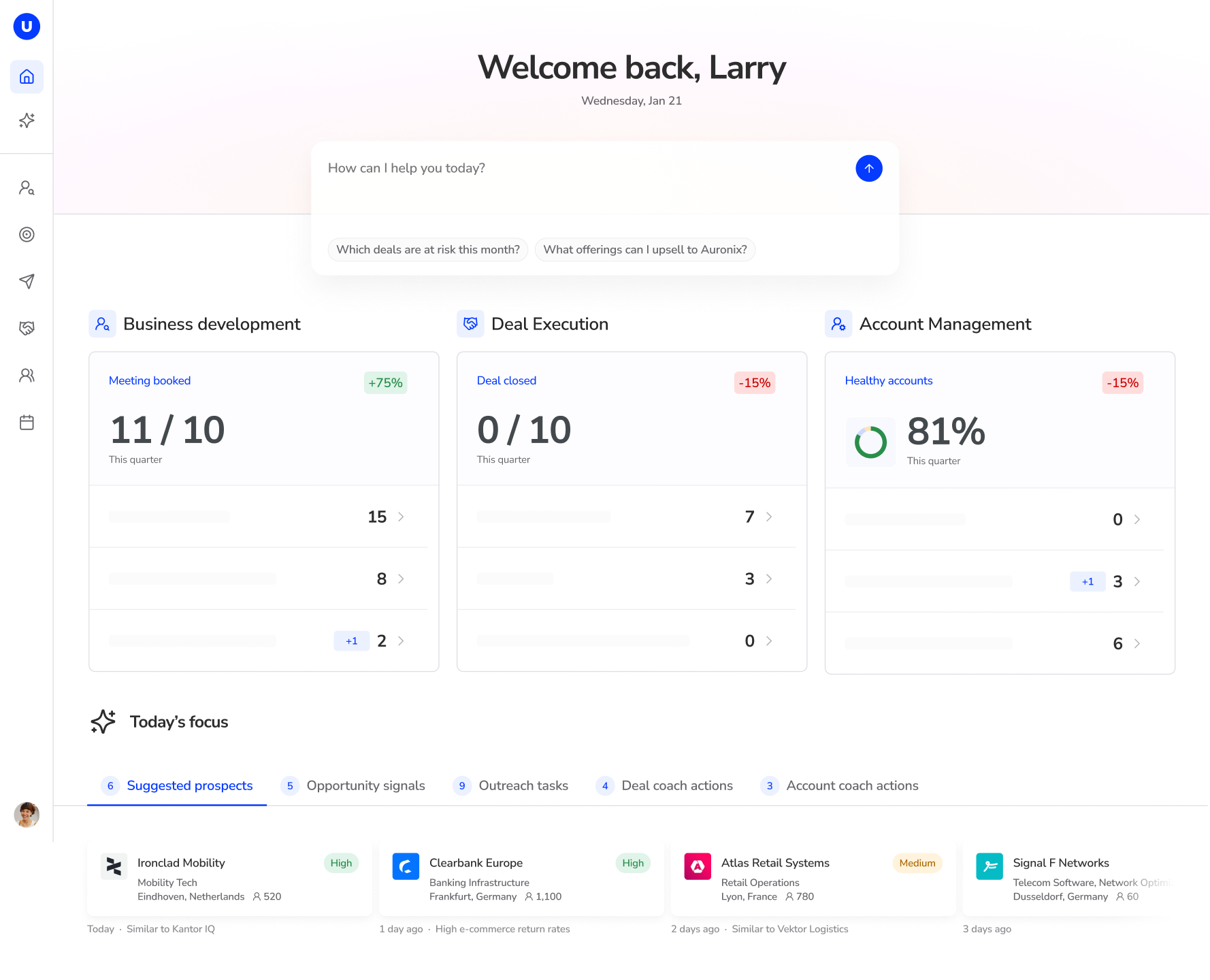
Transforming your sales process from chaotic to structured requires more than a checklist. You need technology that embeds workflows into daily activities, surfaces insights proactively, and scales with your organization. Uman provides integrated tools for deal execution and account management tailored to complex B2B sales.
The Uman platform centralizes your sales knowledge into a governed data layer, ensuring reps access accurate, current information without hunting across systems. Structured workflows guide teams through qualification, stakeholder mapping, proposal development, and negotiation with stage-specific prompts and automated content generation. This eliminates guesswork and inconsistency that plague complex sales.
Our deal execution solution supports meeting preparation, deal qualification, and CRM updates, saving reps up to 12 hours per week on administrative tasks. The account management tools proactively identify cross-sell and upsell opportunities by analyzing client context against your portfolio, driving expansion revenue without additional headcount. Discover how Uman can help you implement and optimize your sales process checklist for measurable performance gains.
Frequently asked questions
What is a complex sales process checklist?
A complex sales process checklist is a structured framework that guides sales teams through multi-stage B2B deals involving multiple stakeholders and long cycles. It standardizes qualification, stakeholder engagement, proposal development, and negotiation to ensure consistent execution and reduce missed opportunities. The checklist transforms tribal knowledge into repeatable workflows that improve win rates and shorten sales cycles.
How can I tailor a sales checklist for my organization?
Start by assessing your unique sales cycle stages, typical deal complexity, and stakeholder patterns. Involve sales reps, managers, and cross-functional partners in checklist design to capture diverse perspectives and build buy-in. Pilot the checklist with a small group, gather feedback on what works and what creates friction, then iterate before full rollout. Tailor items to reflect your specific offerings, buyer personas, and competitive landscape rather than copying generic templates.
What tools best support complex B2B sales processes?
Look for platforms with robust deal execution and account management capabilities that automate workflows and provide real-time guidance. Prioritize tools offering workflow automation, stakeholder mapping, content generation, and analytics to surface bottlenecks and opportunities. Integration with existing CRMs and document management systems is essential for seamless data flow. Collaboration features that enable cross-functional alignment on complex deals significantly improve coordination and reduce internal friction.
How do I ensure my sales team adopts the checklist?
Provide comprehensive training that explains the why behind each checklist item, connecting it to easier workflows and better outcomes. Collect ongoing feedback through surveys and one-on-ones, then act quickly on suggestions to demonstrate responsiveness. Showcase early wins where reps achieved faster closes or larger deals by following the process. Integrate the checklist into your CRM or sales platform so it becomes part of daily workflows rather than a separate task. Establish clear ownership for maintenance and celebrate teams that consistently execute the process well.
How often should I update my sales process checklist?
Review your checklist quarterly to assess relevance against changing market conditions, buyer behaviors, and competitive dynamics. Conduct more frequent spot checks after major product launches, organizational changes, or shifts in your target market. Use data from your CRM and sales platform to identify checklist items that correlate with wins versus those that don’t impact outcomes. Balance stability with adaptability by making incremental improvements rather than overhauling the entire checklist frequently, which creates confusion and reduces adoption.
Recommended

Prep like a machine, sell like a human
Let AI handle the research and prep work — you focus on building relationships and closing deals.