%20(1).png)
Optimize CRM for B2B success: 12 evidence-based best practices
Discover 12 evidence-based CRM best practices for B2B sales leaders. Improve pipeline accuracy, data quality, and revenue growth with actionable strategies.
Most B2B sales organizations have a CRM. Far fewer use it well. The gap between basic adoption and strategic execution is where revenue is won or lost, and leading B2B marketers apply up to 12 distinct best practices to pull ahead of the competition. If your team is logging activities but not driving measurable growth, the issue is rarely the tool itself. It is the strategy, alignment, and discipline behind it. This article breaks down the practices that separate high performers from the rest, with actionable steps you can apply immediately.
Table of Contents
- Defining CRM best practices for B2B organizations
- Customer-centric strategy and cross-team alignment
- Insight-driven planning and KPI standardization
- Pipeline mapping and lead lifecycle management
- Workflow automation and adaptive campaign execution
- Data quality, enrichment, and scoring for B2B CRM
- Summary comparison: B2B CRM best practices in action
- Bring CRM best practices to life with advanced platforms
- Frequently asked questions
Key Takeaways
PointDetailsSales alignment drives resultsIntegrating sales, marketing, and IT teams is a proven growth multiplier for B2B CRM.Mapped pipelines prevent errorsCustomizing CRM pipelines to real sales cycles improves lead tracking and conversion rates.AI scoring boosts accuracyAdopting AI and machine learning for lead scoring leads to more precise targeting and higher sales performance.Data hygiene avoids costly mistakesMaintaining high data quality and enrichment protects your CRM program from expensive errors.Platform choice enables scaleSelecting a CRM platform with advanced automation and analytics lets you deploy best practices efficiently.
Defining CRM best practices for B2B organizations
A CRM best practice is not just a feature you enable or a field you fill in. It is a deliberate behavior, process, or cultural norm that shapes how your entire organization engages with customers and data. For complex B2B sales, where cycles are long and stakeholders are many, this distinction matters enormously.
Organizations that treat CRM as a living system rather than a static database see 11% annual revenue growth compared to under 1% for laggards. That gap is not accidental. It reflects disciplined execution across several interconnected practices.
High-performing B2B teams build their CRM strategies around three pillars:
- Insight-driven growth: Using real data to guide decisions, not gut instinct
- Sales and marketing alignment: Shared definitions, shared goals, shared accountability
- Flexible, adaptive processes: Workflows that evolve with your sales cycle and market signals
Understanding your complex sales cycle is the starting point. Without that foundation, even the best CRM configuration will underperform. Reviewing proven B2B sales strategies alongside your CRM setup helps close the gap between tool capability and actual results.
“The best CRM strategies are not about technology. They are about building a culture where data, process, and people work together toward the same outcome.”
Pro Tip: Start every CRM planning cycle with a customer-centric question: what does our buyer need at each stage, and does our CRM support that journey?
With CRM’s impact clarified, it is time to break down the leading best practices leveraged by high-performing B2B organizations.
Customer-centric strategy and cross-team alignment
The single biggest lever in CRM effectiveness is not a software setting. It is organizational alignment. When sales, marketing, and customer success teams operate from the same data and toward the same goals, CRM becomes a multiplier rather than a record-keeping tool.

Customer-obsessed companies earn 1.7 times more revenue and achieve higher retention rates than those that treat customer data as a departmental asset. That is a significant return on a cultural shift.
Practical steps to build cross-team alignment include:
- Establish shared KPIs that span sales, marketing, and customer success
- Hold monthly cross-functional reviews using CRM data as the single source of truth
- Integrate customer feedback loops directly into CRM records so every team sees the full picture
- Build IT partnerships early: 68% of B2B leaders have dedicated IT partnership teams specifically for CRM development and maintenance
A well-structured sales process checklist can anchor these cross-team conversations, giving everyone a shared reference point for what good looks like at each stage.
Pro Tip: Schedule quarterly cross-team CRM audits. These sessions surface blind spots that no single department would catch on its own, and they build the shared ownership that makes CRM strategies stick.
Understanding the cultural and structural factors enables organizations to address operational challenges. Next, let us look at how high-performing firms operationalize CRM.
Insight-driven planning and KPI standardization
Data without structure is noise. The organizations that extract the most value from their CRM are those that define what they measure, standardize it across teams, and use it to make forward-looking decisions rather than backward-looking reports.
Uniform KPIs and insight-driven planning are among the clearest differentiators between B2B leaders and average performers. This means agreeing on definitions (what counts as a qualified lead, what marks a deal as active) and enforcing them consistently across the CRM.
Key practices for insight-driven CRM planning:
- Use real-time CRM dashboards to monitor pipeline health and forecast accuracy
- Define stage-exit criteria so deals only advance when they genuinely qualify
- Apply deal and account insights to reallocate resources toward higher-probability opportunities
- Review campaign performance data monthly and adjust targeting based on what the CRM reveals
“Insight-driven planning turns CRM from a database into a growth engine.”
For teams managing long, multi-stakeholder cycles, sales cycle optimization frameworks provide a practical structure for connecting CRM data to real decisions. The goal is not more reports. It is faster, smarter action.
With strategic and operational foundations set, an effective CRM must mirror the realities of complex B2B sales cycles.
Pipeline mapping and lead lifecycle management
Most CRM pipelines are set up once and never revisited. That is a costly mistake. A pipeline that does not reflect how your buyers actually move through a decision process will produce inaccurate forecasts and missed opportunities.
Best-in-class B2B teams map pipeline stages to actual sales behaviors, assigning realistic probabilities and average timeframes to each stage. They also account for edge cases: paused deals, reworked proposals, and re-engaged prospects.
Steps to build a more accurate pipeline:
- Audit your current pipeline stages against real deal histories from the past 12 months
- Assign win probabilities based on actual close rates, not assumptions
- Map average time-in-stage to identify where deals stall most often
- Consider multi-pipeline approaches for distinct motions such as new business, renewals, and expansion
- Review the full lead lifecycle, including dormant and recycled leads
FeatureHubSpotSalesforcePipeline customizationIntuitive, low-code setupHighly flexible, requires adminStage probability mappingBuilt-in, easy to configureAdvanced, with custom fieldsMulti-pipeline supportAvailable on paid tiersNative across all editionsComplexity managementBest for mid-market B2BBest for enterprise-scale complexity
For teams managing complex B2B pipelines, the right configuration can mean the difference between a forecast you trust and one you ignore. A solid complex sales checklist helps ensure nothing falls through the gaps.
Pro Tip: Set a recurring calendar reminder to review pipeline stage definitions every quarter. Sales processes evolve, and your CRM should evolve with them.
A dynamic pipeline enables targeted workflows, but automation must be both thoughtful and precise.
Workflow automation and adaptive campaign execution
Automation is one of the most powerful features in any modern CRM. It is also one of the most misused. Poorly configured workflows do not just fail to help. They actively waste resources and create noise for your sales team.
Research shows that trigger-based workflows can generate up to 82% waste when conditions are not set with precision. That means most automated actions fire at the wrong time, to the wrong contact, with the wrong message.
Building smarter automation requires:
- Defining triggers based on meaningful buying signals, not just activity volume
- Segmenting workflows by deal stage, persona, and buying group role
- Building in wait conditions and exit criteria so contacts do not get stuck in irrelevant sequences
- Adapting campaigns dynamically as new signals emerge from the CRM
Campaign typeTriggerKey KPIOutcomeStatic dripTime-basedOpen rateLow engagement over timeAdaptive nurtureBehavior-basedPipeline progressionHigher conversion ratesBuying group signalRole-based engagementMulti-stakeholder responseFaster consensus building
Teams that want to automate prospecting effectively need to invest time upfront in defining what a meaningful signal actually looks like for their specific sales motion.
Pro Tip: Review all active workflow conditions monthly. Remove or update any trigger that has not produced a qualified outcome in the past 30 days.
As automation streamlines tasks, robust data hygiene ensures that insights and actions stay accurate.
Data quality, enrichment, and scoring for B2B CRM
Even the most sophisticated CRM strategy collapses without clean data. Duplicate records, incomplete fields, and outdated contact information do not just create friction. They lead to bad decisions, missed follow-ups, and lost deals.
Poor data quality can cost organizations millions of dollars annually, and the damage compounds over time as bad records multiply. Prevention is far cheaper than correction.
A practical data quality framework includes:
- Data entry standards: Mandatory fields, dropdown menus instead of free text, and validation rules at the point of entry
- Enrichment protocols: Regular syncs with third-party data sources to fill gaps and verify accuracy
- Deduplication routines: Automated or scheduled processes to identify and merge duplicate records
- Lead scoring models: Frameworks that rank prospects by fit and engagement to prioritize sales effort
AI and machine learning lead scoring consistently outperforms traditional rule-based approaches, especially in complex B2B environments where buying signals are subtle and multi-threaded. Understanding how AI boosts sales efficiency helps teams make the case for investing in smarter scoring models.
For teams still relying on manual qualification, reviewing frameworks for qualifying B2B leads is a practical first step toward a more structured approach.
“Clean data and smart scoring are the foundation for CRM-driven sales growth.”
With best practices laid out, a summary comparison crystallizes their impact and aids actionable decision-making.
Summary comparison: B2B CRM best practices in action
Not all CRM practices deliver equal value. The table below maps the major practices against their primary impact areas, helping you prioritize based on where your organization has the most room to grow.
PracticePrimary impactRevenue growthData qualityAI adoptionCustomer-centric strategyRetention and loyaltyHighMediumLowCross-team alignmentForecast accuracyHighMediumLowInsight-driven planningResource allocationHighHighMediumPipeline mappingWin rate and forecastingHighMediumLowAdaptive automationCampaign efficiencyMediumLowHighData hygiene and enrichmentDecision accuracyMediumHighMediumAI lead scoringPipeline prioritizationHighHighHigh
Best-in-class B2B organizations combine all of these practices rather than treating them as isolated initiatives. The compounding effect is what drives the 11% annual revenue growth gap between leaders and laggards.
Use this table as a decision framework. Identify the two or three practices where your organization scores lowest, and treat those as your highest-priority investments for the next quarter. For additional context, B2B CRM insights from industry analysts can help benchmark your current state. Reviewing proven CRM best practices alongside this framework gives you a complete picture of where to focus.
Having mapped out the options and their comparative effects, let us explore how technology platforms can drive these practices forward.
Bring CRM best practices to life with advanced platforms
Knowing the best practices is one thing. Executing them consistently across a large, complex sales organization is another challenge entirely. The right platform makes the difference between a strategy that lives in a slide deck and one that shapes daily sales behavior.
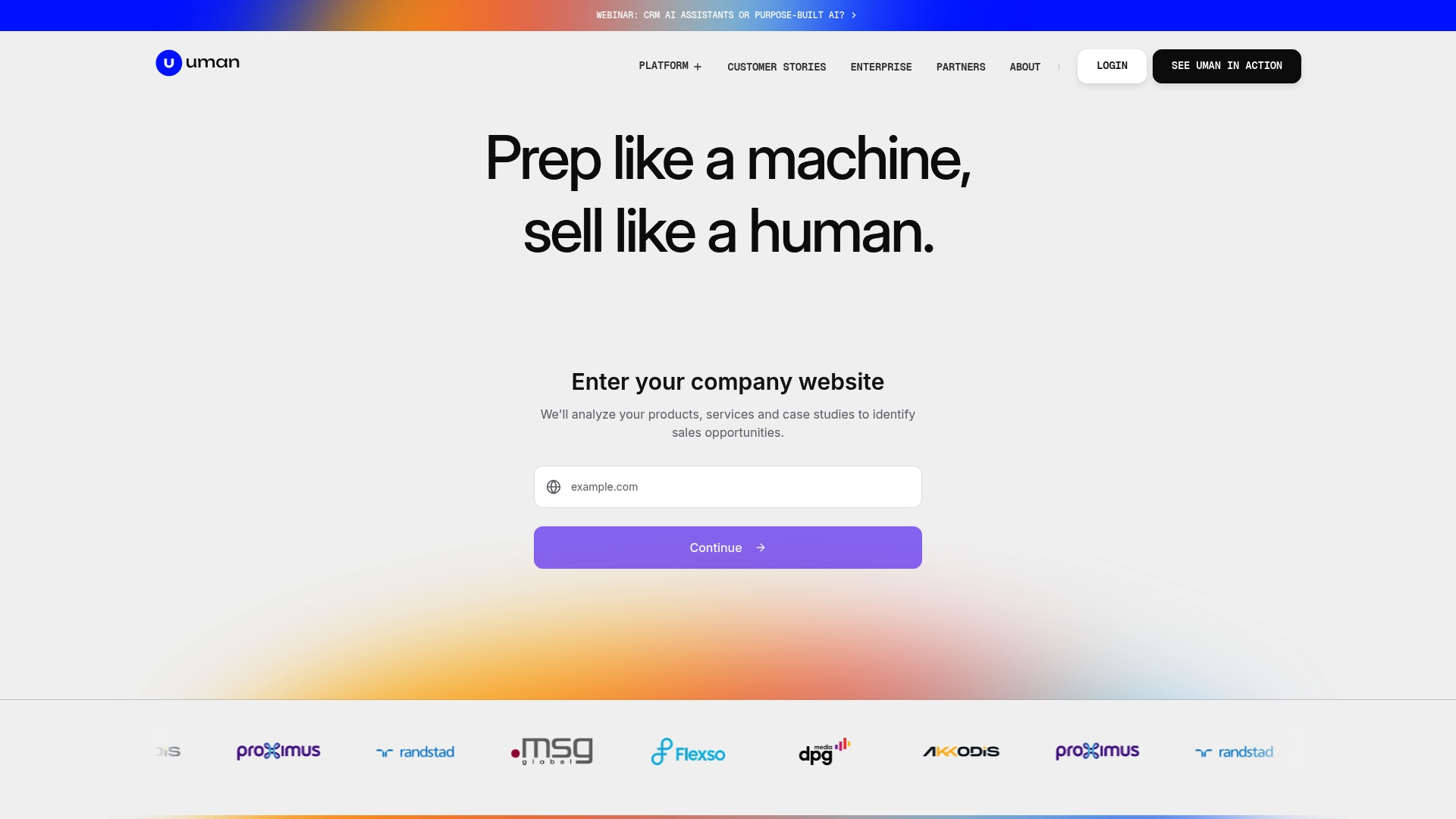
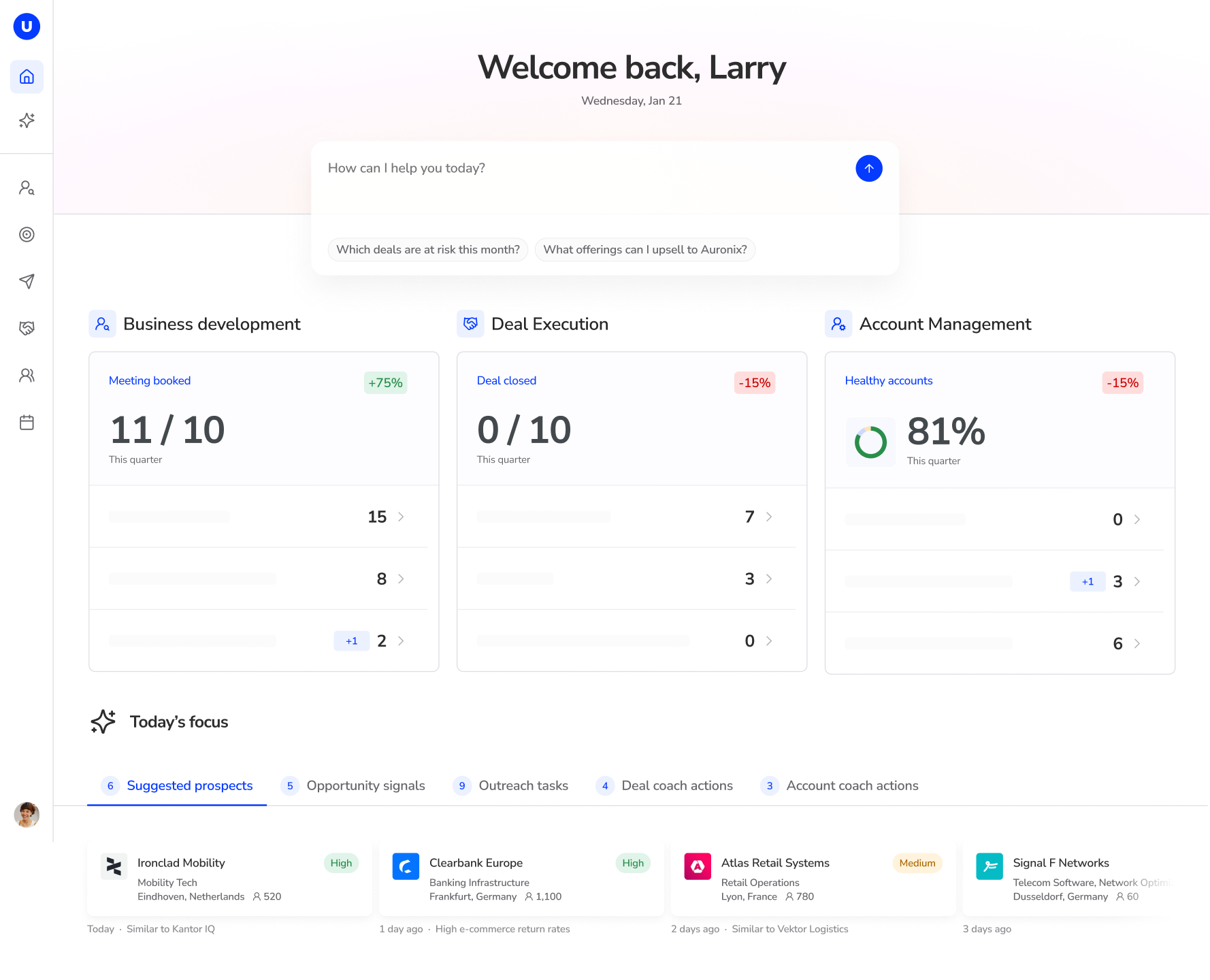
Uman is purpose-built for exactly this kind of complexity. As a B2B CRM platform designed for organizations with broad service portfolios and long sales cycles, uman centralizes sales knowledge, automates CRM updates, and surfaces cross-sell opportunities in real time. Its deal execution solutions support meeting preparation, qualification, and content generation, while its account management features keep teams on top of account health and expansion signals. If you are ready to move from CRM basics to evidence-based execution, uman gives your team the structure and intelligence to do it at scale.
Frequently asked questions
What are the most important CRM best practices for B2B organizations?
Focus on customer-centric strategy, cross-team alignment, mapped pipelines, data hygiene, and AI-driven lead scoring. Customer-centric practices yield 1.7 times more revenue in B2B companies compared to less aligned competitors.
How does data quality affect CRM success in B2B sales?
Poor CRM data can cost organizations millions annually, leading to bad forecasts and missed deals. Enrichment and data standards prevent errors before they compound and enable smarter, faster decisions.
Is AI lead scoring worth it for complex B2B sales cycles?
Yes. AI and ML scoring is more accurate and better suited to multi-stakeholder, long-cycle B2B pipelines than traditional rule-based methods, which often miss subtle buying signals.
How often should CRM automation workflows be reviewed in B2B sales teams?
Monthly reviews are the standard for high-performing teams. Regular checks help refine trigger conditions, eliminate wasted sequences, and ensure campaigns stay aligned with current buying signals and pipeline realities.
Recommended

Prep like a machine, sell like a human
Let AI handle the research and prep work — you focus on building relationships and closing deals.