%20(1).png)
Boost Revenue: Top Cross-Sell Strategies for B2B Teams
Discover proven cross-sell strategies for B2B sales teams. Learn how to identify opportunities, compare approaches, and measure results to grow revenue from existing clients.
TL;DR:
- Existing clients are 3-4 times more likely to buy, making cross-selling highly profitable.
- Effective cross-selling relies on systematic account analysis, targeted strategies, and performance measurement.
- Success depends on organizational culture, leadership support, and enablement of sales teams.
Most B2B sales teams already have their best revenue opportunity sitting right in front of them. Existing clients are 3-4x more likely to buy than new prospects, yet cross-selling remains one of the most underutilized levers in complex B2B organizations. Done well, it can boost revenue by 20-30% and lift profits by 30%. This article walks you through a practical framework, five proven strategies, a side-by-side comparison, and clear performance metrics so you can turn your existing client base into a reliable engine for sustainable growth.
Table of Contents
- Framework for effective cross-selling in B2B
- Five high-impact cross-sell strategies for B2B sales
- Comparing cross-sell strategies: Which works best for your client base?
- Measuring and optimizing B2B cross-sell performance
- The real secret: Why most B2B cross-sell efforts stall—and what actually drives results
- Drive more cross-sell wins with Uman
- Frequently asked questions
Key Takeaways
PointDetailsExisting clients are keyCross-selling to current B2B clients dramatically boosts revenue and profitability.Best-fit strategies varyChoose and adapt strategies based on client segment, team skills, and sales triggers.Measure and optimizeOngoing analytics and feedback loops are crucial for cross-sell program success.
Framework for effective cross-selling in B2B
With the case for cross-selling clear, the next step is zeroing in on how to identify and evaluate opportunities within your client base. A strong framework does more than point you toward add-on products. It helps you understand where a client is in their journey, what problems remain unsolved, and which parts of your portfolio genuinely fit their priorities.
Here is a practical four-step framework to build that foundation:
- Map your client portfolio against your full service catalog. Most sales teams only know the services they personally sell. Start by auditing which clients use which solutions, and where obvious gaps exist. This is where structured account management methods become essential.
- Segment clients by growth potential and strategic fit. Not every account deserves equal attention. Prioritize clients with expanding budgets, evolving needs, or recent organizational changes. These signals often indicate readiness to buy.
- Align offers to real business problems. The worst cross-sell pitches lead with features. The best ones connect a new service directly to a client outcome the client already cares about. Think in terms of value drivers, not product catalogs.
- Set data-driven triggers for outreach. Contract renewals, product usage spikes, new executive hires, and industry shifts are all signals. Build these triggers into your CRM best practices so your team acts on them consistently rather than by chance.
Systematic account analysis is what separates high-performing cross-sell programs from random attempts. Existing accounts analyzed for need and fit consistently outperform reactive approaches. The difference is discipline.
Pro Tip: Build a quarterly pipeline review specifically for cross-sell opportunities. Ask your account managers to flag one untapped service per key account before each review. This simple habit surfaces more pipeline than most teams expect.
Five high-impact cross-sell strategies for B2B sales
With criteria for prioritization defined, you can now focus on which concrete cross-sell approaches drive the most results. Because existing customers buy at 3-4x the rate of new prospects, the return on effort here is significant.
- Solution bundling tailored by industry or segmentGroup complementary services into packages that address a specific client challenge. Bundles reduce decision fatigue and increase perceived value.
- Best for clients with multiple active pain points in a single domain
- Avoid generic bundles that feel like upselling for its own sake
- Executive alignment sellingLeverage peer-to-peer connections between your leadership and the client’s C-suite. Senior conversations open doors that account managers often cannot.
- Use shared business priorities, not product pitches, as the entry point
- Works especially well in accounts where trust is already high
- Trigger-based outreachTime your outreach to moments of change: contract renewals, product usage spikes, mergers, or new regulatory requirements. Relevance at the right moment dramatically improves conversion.
- Build a trigger library in your CRM so reps know exactly when to act
- Pair triggers with B2B sales productivity tips to keep execution consistent
- Outcome-focused case studies and proof-of-valueClients in complex B2B environments need evidence before they expand a relationship. Use client-specific ROI examples and peer stories to reduce perceived risk.
- Tailor case studies to the client’s industry and company size
- Share results from similar clients to build credibility fast
- Upskilling client-facing teams with cross-sell playbooksYour account managers and customer success teams are your best cross-sell channel. Equip them with structured playbooks through a solid business development program so they know what to offer and when.
- Playbooks should include conversation guides, objection responses, and trigger checklists
- Regular training keeps the playbook alive and relevant
Pro Tip: When preparing a cross-sell proposal, include a client-specific ROI projection. Even a rough estimate tied to their actual numbers increases conversion rates meaningfully.
Comparing cross-sell strategies: Which works best for your client base?
Because not all strategies fit every organization or client set, it is vital to compare their strengths and limitations before making a choice. Matching approach to client portfolio can lift profitability by 30%, which makes this comparison step worth the time.
StrategyResources requiredTime to resultsEase of adoptionBest fitSolution bundlingMedium1-3 monthsModerateMid-market, multi-need clientsExecutive alignmentHigh3-6 monthsDifficultStrategic, high-value accountsTrigger-based outreachLow to medium1-2 monthsEasyBroad client base, CRM-mature teamsOutcome-focused case studiesMedium2-4 monthsModerateRisk-averse or enterprise clientsCross-sell playbooksMedium3-6 monthsModerateLarge or distributed sales teams
Here is how to think about which approach fits your situation:
- Solution bundling works well when your portfolio has natural adjacencies. The common pitfall is bundling services that do not genuinely connect, which erodes trust.
- Executive alignment is high-effort but high-reward. Do not attempt it without a clear business case and internal sponsor at the client.
- Trigger-based outreach is the easiest to scale. The risk is over-automation, where outreach feels impersonal. Balance automation with human judgment.
- Case studies are most effective with procurement-driven or risk-averse buyers. Invest in high-impact sales workflows to keep content current and relevant.
- Playbooks take time to build but pay dividends at scale. See how teams like Plat4mation have used structured enablement to accelerate cross-sell adoption.
Measuring and optimizing B2B cross-sell performance
To ensure sustainable gains from cross-sell initiatives, you need to measure performance and adapt over time. Strategy without measurement is just activity. The best B2B organizations treat cross-sell as a managed pipeline, not a side effort.

Leading B2B firms see a 20-30% revenue uplift and a 30% rise in profitability from cross-selling when they track and optimize systematically. Here are the KPIs that matter most:
KPIWhat it measuresTarget benchmarkCross-sell pipeline sizeTotal value of active cross-sell opportunities15-25% of total pipelineCross-sell conversion ratePercentage of opportunities closed25-40% for existing accountsRevenue per clientAverage annual revenue across your client baseYear-over-year growth of 10-20%Cross-sell cycle timeAverage days from opportunity to close20-30% shorter than new businessClient penetration ratePercentage of clients using more than one serviceIncrease by 10% annually
“The teams that see the biggest cross-sell gains are not necessarily the ones with the most sophisticated tools. They are the ones that review the data regularly and act on what they find.”
To gather and act on performance data effectively:
- Run monthly cross-sell pipeline reviews with your account management leads
- Ask reps to log why opportunities were lost, not just won
- Use client health scores to flag accounts at risk before they churn
- Review how Flexso used structured analytics to improve cross-sell visibility across a complex portfolio
The real secret: Why most B2B cross-sell efforts stall—and what actually drives results
Armed with clear strategies and measurement tools, it is tempting to jump straight into execution. But before you do, it is worth being honest about why so many cross-sell programs fail despite having the right frameworks in place.
The most common reason is not a lack of strategy. It is a lack of cultural alignment. Sales teams that are rewarded only for new logo acquisition have little incentive to invest time in existing accounts. If your compensation structure does not reward cross-sell, your playbooks will collect dust.
Leadership support matters just as much. When executives do not visibly champion cross-sell as a priority, it gets treated as optional. Account managers take their cues from the top.
The uncomfortable truth is that enablement comes before tactics. Your team needs to know your full portfolio deeply, feel confident presenting it, and have the tools to surface the right offer at the right moment. Without that foundation, even the best strategy fails in the field.
Start by auditing your incentive structure and your onboarding process. Then look at how knowledge is shared across your sales team. These proven revenue strategies show that organizations that invest in enablement first see cross-sell results that compound over time. Tactics follow culture, not the other way around.
Drive more cross-sell wins with Uman
Cross-selling at scale requires more than good intentions. It requires the right context, the right tools, and a team that knows your portfolio well enough to act on every opportunity.
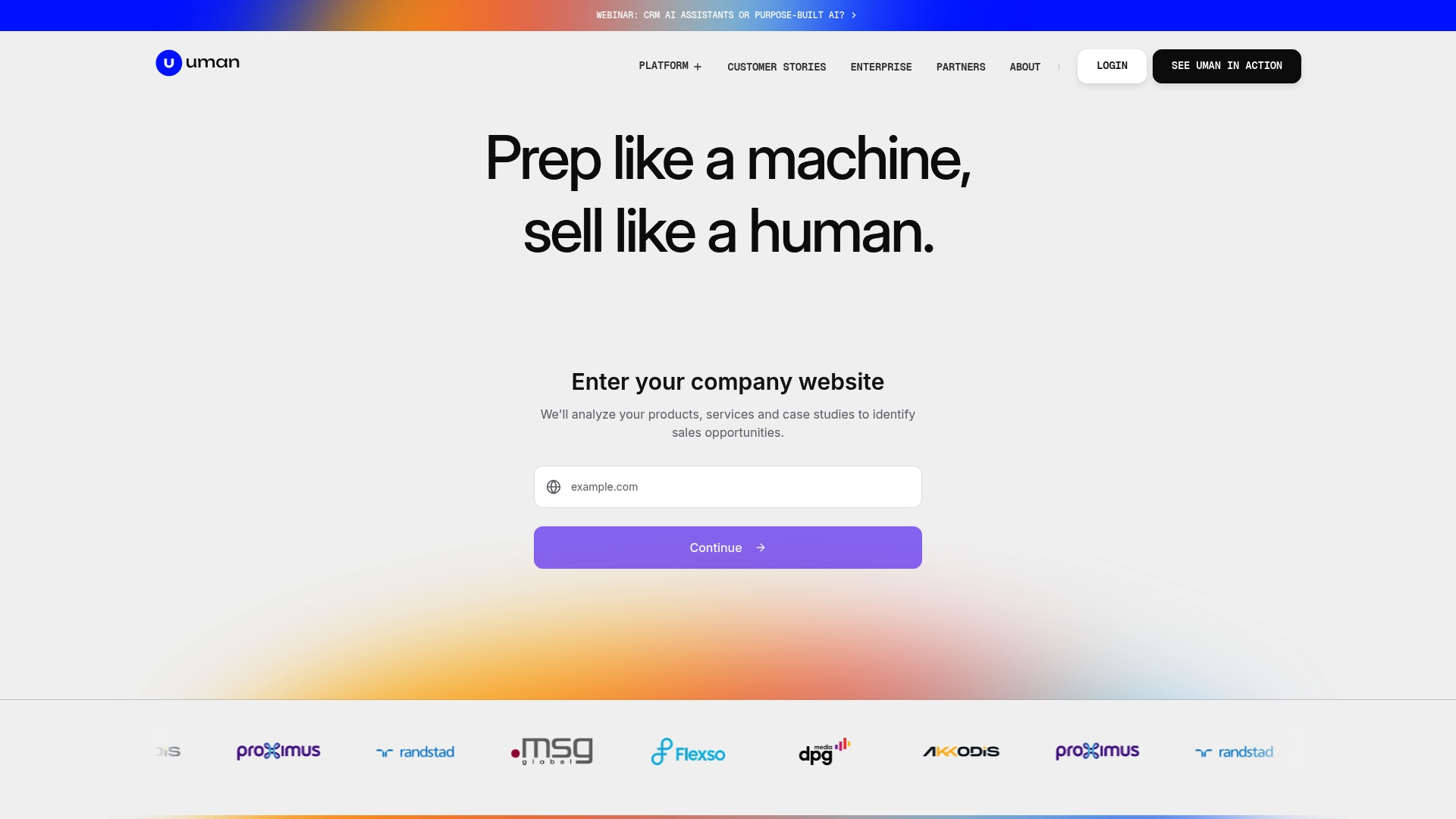
Uman gives B2B sales teams exactly that. The Uman platform centralizes your service knowledge and surfaces cross-sell signals in real time. The account management solution helps your team track account health and identify expansion opportunities before they go cold. And the deal execution tools keep your reps focused on the right conversations with the right clients. If you are serious about turning your existing client base into a consistent revenue engine, Uman is built to help you get there faster.
Frequently asked questions
What is cross-selling in B2B sales?
Cross-selling in B2B means offering additional, relevant products or services to existing clients to increase account value. It boosts revenue by leveraging trust already built with the client.
How does cross-selling impact B2B revenue?
It can boost revenue by 20-30% and profits by 30% when applied systematically to existing client relationships.
What is the main challenge of cross-selling in B2B?
The main challenge is identifying which clients and solutions have the highest potential while aligning teams on execution. Systematic account analysis and team alignment are essential to overcome this.
How do I measure cross-sell success in B2B?
Track KPIs like pipeline size, conversion rates, and revenue growth per client to assess impact. Analytics are key to tracking the success and profitability of cross-selling initiatives over time.
Recommended


Prep like a machine, sell like a human
Let AI handle the research and prep work — you focus on building relationships and closing deals.