%20(1).png)
Data-backed cold calling: where deals actually die
Cold calling is one of the most misunderstood motions in B2B sales. Some teams believe success comes from dialing more. Others believe it’s all about better scripts or sharper closing techniques. Well, our data tells a different story. By looking at real (anonymous) outbound activity from our customers (from cold calls to meetings, deals, and closed-won outcomes) a clear pattern shows: Most inefficiency in cold calling has nothing to do with closing.
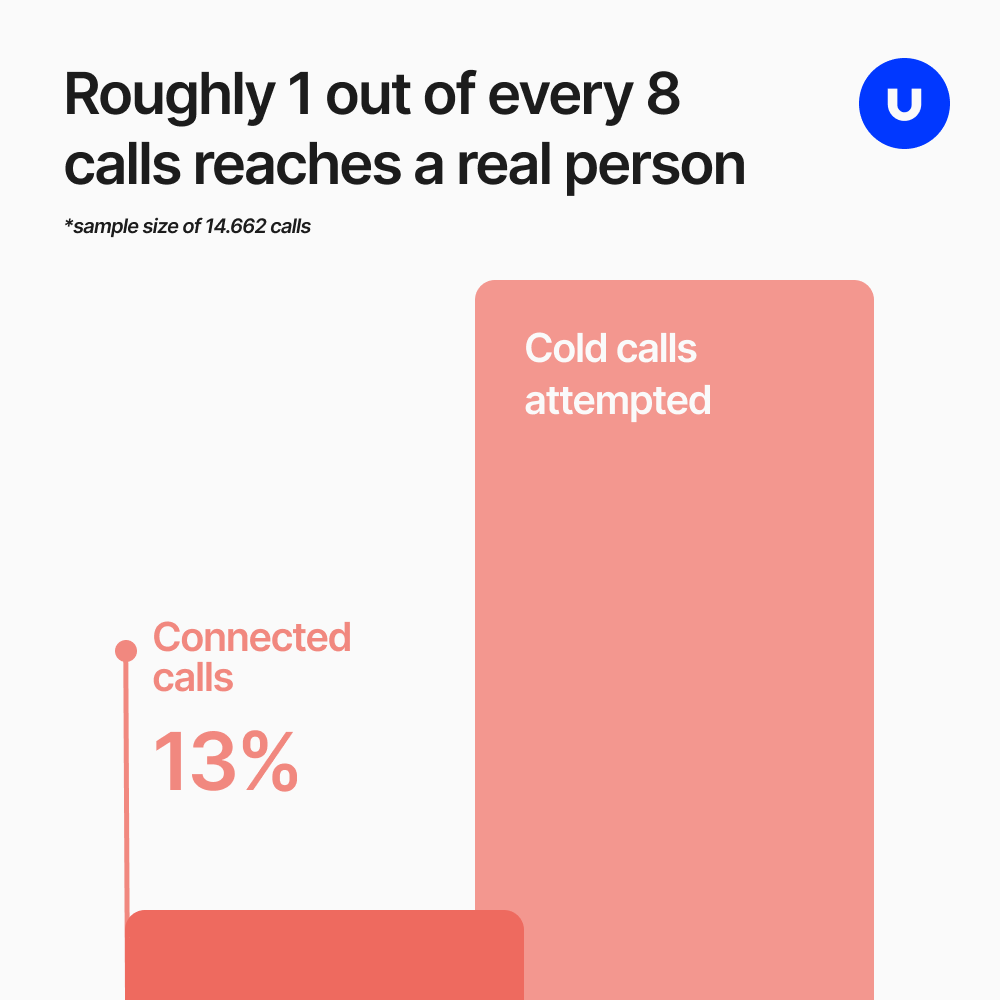
Cold calling connects far less than people think
On average:
- Only about 13% of cold calls result in a live conversation.
- Roughly 1 out of every 8 calls reaches a real person.
Low connection rates are normal, and not the problem to solve first.
This matters because many outbound strategies are built on unrealistic expectations. Sales feel like they’re underperforming, when in reality the channel itself is noisy and resistant by nature.
What happens after “hello” matters more than dialing more
Once a call connects, performance starts to diverge dramatically.
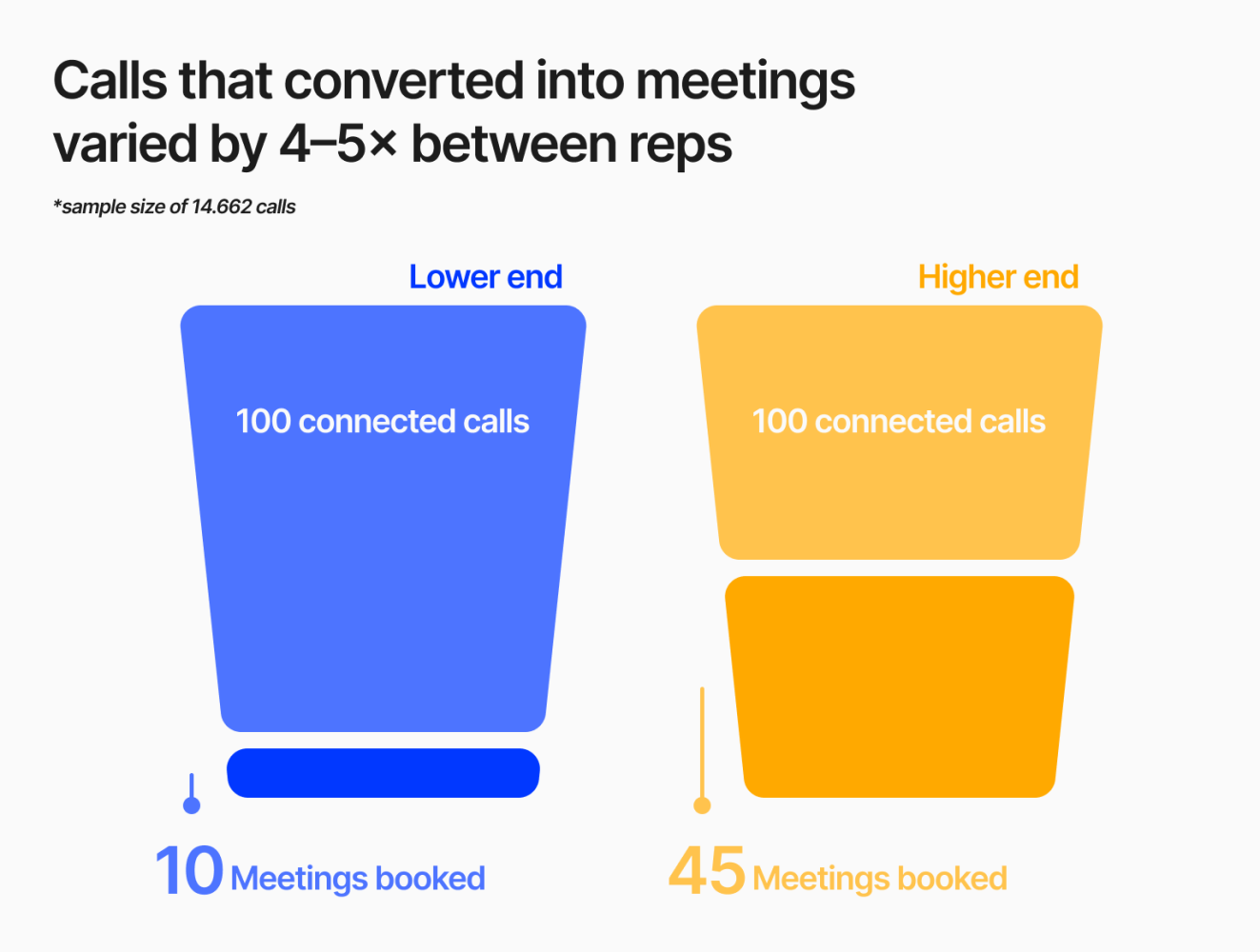
In our data, the percentage of conversations that turned into meetings varied by 4–5× between colleagues, even though their connection rates were almost identical.
Some sales turned nearly half of conversations into meetings.
Others struggled to convert even 1 in 10.
So that means, to some degree, calling is not a volume game AFTER the call connects. It a qualification and conversion game.
The biggest gains don’t come from more dials but from better conversations.
Meetings are not pipeline
High-performing outbound sales can book lots of meetings. But when we followed those meetings into the sales funnel, a hard truth appeared:
Less than 25% of meetings turn into real sales opportunities.
In fact, the biggest drop-off in the entire deal funnel happens before pricing or commercial discussions ever start.
This means:
- The meeting felt good
- The conversation happened
- But the account was never truly qualified
Qualifying accounts happens mostly in the prospect stage.
Looking to book more meetings with qualified accounts? Go here.
More meetings don’t automatically mean more revenue. They often just mean more work for sales, and more disappointment later.

Closing isn’t the problem
Once deals reach the later stages of the funnel, the story changes again.
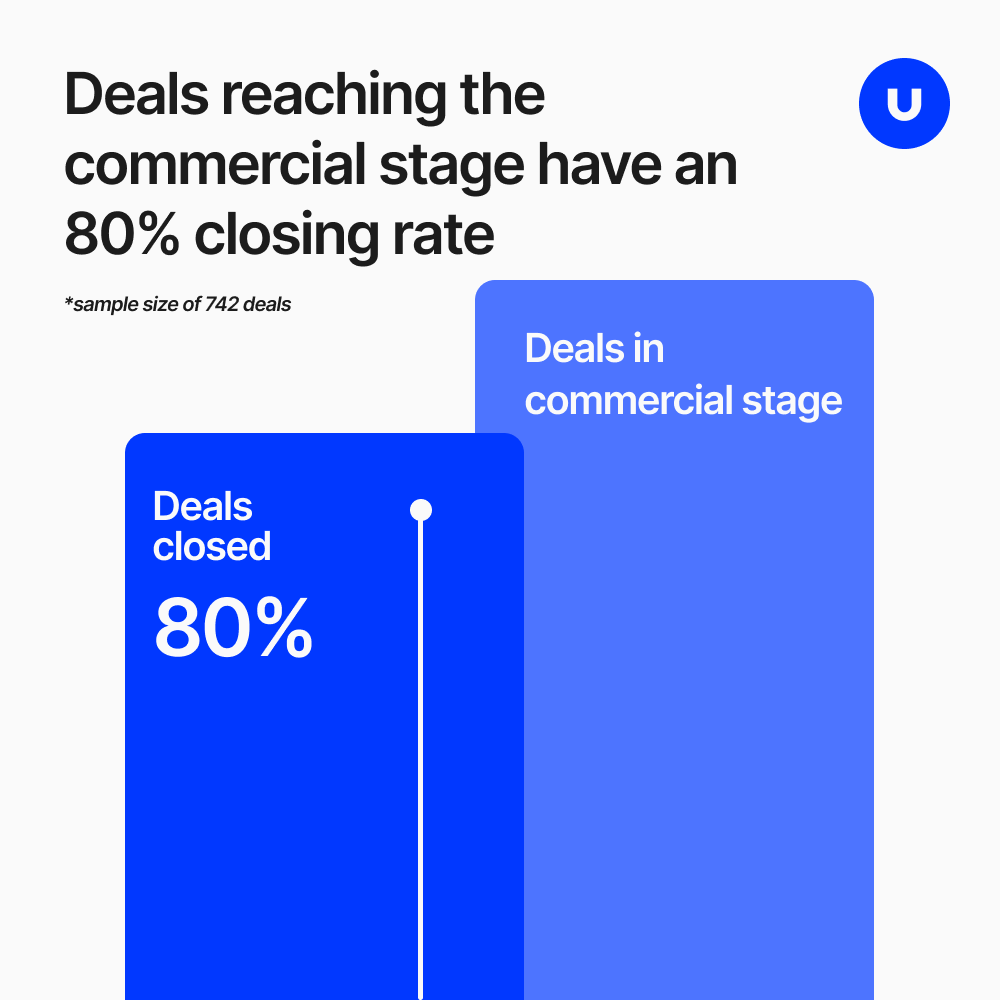
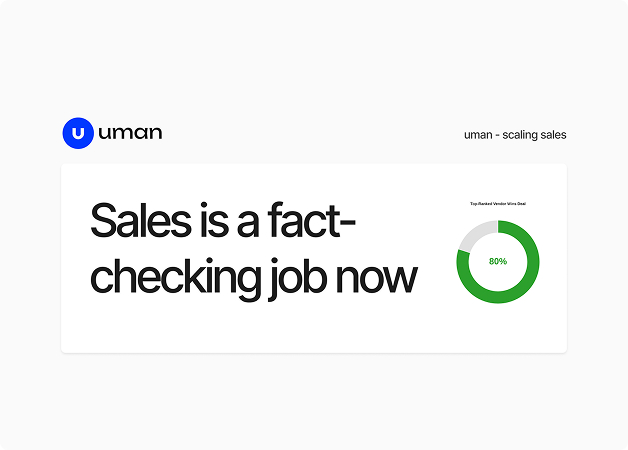
Deals that make it to commercial or closing stages show very strong win rates, often 80% or higher.
In other words:
- Sales teams can close
- Offers do resonate
- Buyers will move forward
The real bottleneck isn’t persuasion at the end. It’s deciding who deserves a meeting in the first place, and converting them.
So what have we learned:
- Connection rates are largely out of a team’s control, and late-stage win rates are strong once deals are real.
- The biggest gains come from making better decisions at the top of the funnel: who to call, when to call them, and what qualifies as a real meeting.
- Teams that win consistently don’t dial more or push harder. They use better signals to focus their efforts, qualify earlier, convert more, and turn fewer conversations into higher-quality pipeline.
This is where a data-driven outbound approach like uman quietly create massive leverage: by helping sales teams spend their time on the right opportunities, not just more activity.
One thing to remember: efficiency beats volume.
Prep like a machine, sell like a human
Let AI handle the research and prep work — you focus on building relationships and closing deals.