%20(1).png)
Master sales compliance requirements for B2B success
Learn how to meet sales compliance requirements in complex B2B environments. Reduce risk, build trust, and embed compliance into every stage of your sales process.
TL;DR:
- Sales compliance involves legal, ethical, and industry-specific regulations that evolve continuously.
- Embedding compliance checkpoints at every sales stage reduces risks and streamlines processes.
- Technology and ongoing training are essential for managing compliance effectively and building a trustworthy sales culture.
Sales compliance is one of those topics that most B2B sales leaders believe they have covered. They assume a signed code of conduct and an annual training session are enough. But the reality is that compliance in complex B2B environments involves far more than a checklist. Regulations shift, product portfolios expand, and sales teams operate across multiple jurisdictions, each with its own rules. The gap between what executives think they know and what compliance actually requires is where costly mistakes happen. This guide clarifies the core requirements, the real risks your team faces, and practical ways to build compliance into your sales process from the ground up.
Table of Contents
- What are sales compliance requirements?
- Key compliance risks in complex B2B sales
- How to build a compliant B2B sales process
- Technology’s role in sales compliance
- Training and culture: The human factor in compliance
- A new way to approach sales compliance in B2B organizations
- Connecting compliance with smarter sales solutions
- Frequently asked questions
Key Takeaways
PointDetailsCompliance is ongoingSales compliance is a continuous process that adapts with regulations and market demands.Risks are multifacetedB2B sales teams face legal, ethical, and operational risks throughout the sales cycle.Technology reduces errorsDigital platforms help automate and document compliance tasks, lowering the chance of costly mistakes.Culture is criticalA culture of compliance supported by regular training ensures policies are followed, not just filed away.Compliance can drive growthViewing compliance as a sales accelerator, not a barrier, unlocks new market opportunities and speeds deals.
What are sales compliance requirements?
With the importance of compliance risks clear, let’s define what sales compliance actually means for your organization.
Compliance in B2B sales is broader than most executives initially expect. As a working definition: “sales compliance includes legal, ethical, and industry-specific regulations that govern how products and services are sold.” That covers everything from how your team communicates pricing to how contracts are structured and how client data is handled.
In practice, compliance requirements fall into several overlapping categories:
- Legal obligations: National and regional laws governing contracts, trade, anti-bribery, and data privacy
- Industry codes: Sector-specific standards such as financial services regulations or healthcare procurement rules
- Company policies: Internal approval processes, pricing authorities, and documentation standards
- Ethical standards: Fair dealing principles, transparency in communications, and conflict-of-interest rules
What makes B2B sales compliance particularly demanding is that none of these categories stay static. Laws change. New markets open. Product lines evolve. A regulation that did not apply to your business two years ago may be fully relevant today.
“Sales compliance is not a one-time task. It requires ongoing monitoring, regular policy updates, and a team that understands why the rules exist, not just what they are.”
For sales executives managing large teams across multiple regions or product lines, this creates real operational pressure. A rep closing a deal in Germany operates under different rules than one closing a deal in Singapore. Both need to be right, every time.
The consequences of getting it wrong go beyond fines. Non-compliance can stall deals mid-cycle, trigger contract disputes, and damage the client relationships you have worked years to build. Regulators in many markets are also increasing scrutiny on B2B sales practices, particularly around data use and pricing transparency. Treating compliance as a background function rather than a front-line concern is a risk your organization simply cannot afford.
Key compliance risks in complex B2B sales
Understanding what counts as sales compliance sets the stage to look at the specific risks your team faces.
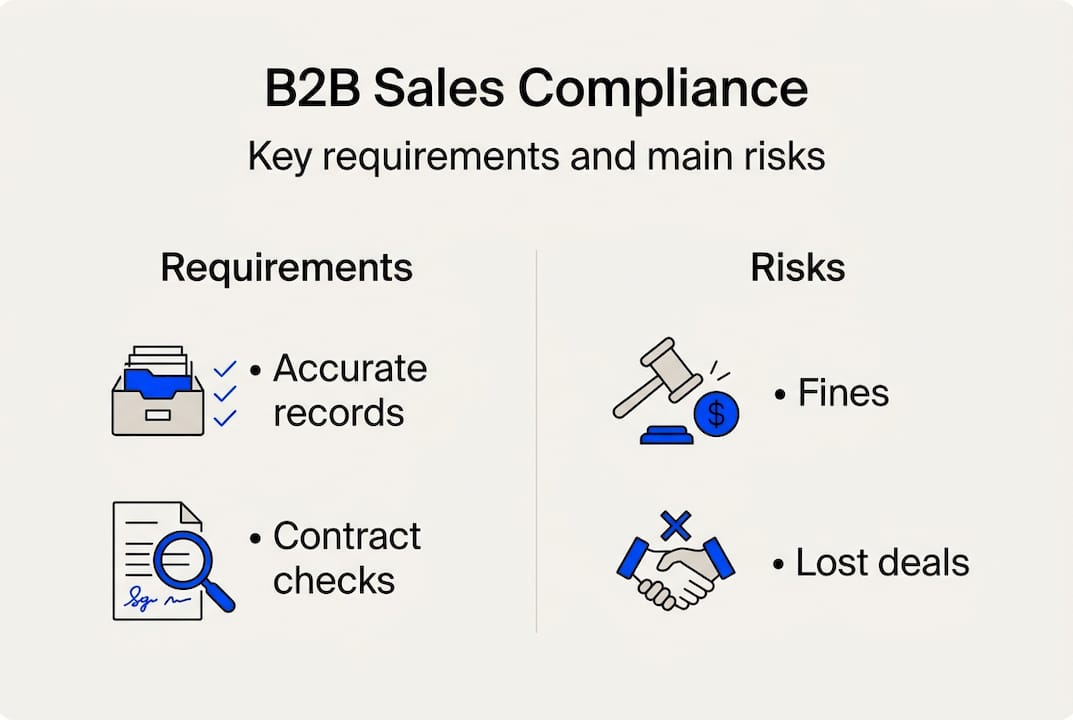
Complex B2B sales environments carry a unique set of compliance vulnerabilities. “Typical issues range from inaccurate documentation to breaches in data privacy and anti-bribery laws.” Knowing which risks are most likely to surface in your organization is the first step toward managing them.
Risk categoryCommon triggerPotential impactMulti-jurisdictional conflictOperating across regions with different lawsRegulatory penalties, deal delaysContract mismanagementMissing approvals or outdated termsDisputes, unenforceable agreementsData privacy breachMisuse of prospect or client dataGDPR fines, reputational damageAnti-bribery violationsGifts, entertainment, or third-party paymentsCriminal liability, contract termination
Here are the four risks that most frequently affect complex B2B sales teams:
- Multi-jurisdictional conflicts: When your team sells across borders, the rules can contradict each other. What is acceptable in one market may be prohibited in another. Without clear guidance, reps default to what they know, which may not be locally compliant.
- Contract mismanagement: Deals that move fast often skip proper documentation steps. Verbal commitments, undocumented scope changes, and missing sign-offs create legal exposure that surfaces long after the deal closes.
- Data privacy violations: Under GDPR compliance in sales, how you collect, store, and use prospect data is tightly regulated. Many sales teams still treat CRM data as freely usable without checking consent records.
- Anti-bribery and corruption: Rules like the UK Bribery Act and the US Foreign Corrupt Practices Act apply to your sales activities globally, including third-party intermediaries. A hospitality gesture that seems routine can cross a legal line.
Pro Tip: Review your complex sales process checklist against current compliance risk best practices at least twice a year. Regulatory environments shift faster than most annual review cycles can keep pace with.
How to build a compliant B2B sales process
Awareness of risks is step one. Now, see how to embed compliance into every part of your process.
Building compliance into your sales process is not about adding friction. It is about making the right path the default path. “Codifying compliance into workflows ensures adherence with regulations and reduces risk.” The goal is to design a process where reps cannot easily skip a compliance step, even under deal pressure.
Here is a practical framework mapped to each sales stage:
Sales stageCompliance checkpointResponsible partyProspectingData consent verification, sanctions screeningSales rep, legalQualificationConflict-of-interest check, authority confirmationSales managerProposalPricing approval, terms reviewLegal, financeNegotiationDocumented scope, approval matrix sign-offSales manager, legalClosingFinal contract review, compliance sign-offLegal, senior leadershipPost-saleData handling confirmation, record archivingAccount manager
To make this work in practice, consider these actions:
- Map checkpoints clearly: Every stage should have a named compliance task with a designated owner. Ambiguity leads to skipped steps.
- Build approval matrices: Define who can approve what, at what deal value, and in which regions. Document this and make it accessible.
- Schedule regular training: Compliance expectations change. Your team needs updates, not just onboarding sessions.
- Audit regularly: Partner with your legal and compliance teams to review live deals and closed contracts for adherence. Spot issues before they escalate.
Pro Tip: Align your compliant sales workflows with enterprise compliance management frameworks to ensure your internal process meets external standards, especially if you operate in regulated industries.
Technology’s role in sales compliance
Implementing a new process is far easier and more effective when you have the right technology as an ally.
Manual compliance management does not scale. When your sales team is managing hundreds of active opportunities across multiple regions, expecting reps to remember every checkpoint and document every interaction without support is unrealistic. Technology fills that gap.

“Platforms can automate record-keeping, approval workflows, and real-time compliance monitoring.” This is not a future capability. It is available today, and leading B2B sales organizations are already using it to reduce exposure and speed up deal cycles.
Here is what modern sales compliance technology delivers:
- Automated compliance checks: The system flags missing documentation or unapproved steps before a deal advances, removing reliance on individual memory
- Digital audit trails: Every action, approval, and document change is logged automatically, making regulatory reviews straightforward
- Customizable workflows: Platforms can be configured to reflect regional requirements, so a rep in France follows a different approval path than one in the US, automatically
- Data privacy controls: Access permissions, consent tracking, and data retention rules are enforced at the platform level, not left to individual judgment
- Real-time monitoring: Dashboards give compliance and sales leadership visibility into where risks are accumulating before they become problems
Pro Tip: When evaluating platforms, check whether account management technology includes compliance tracking for existing accounts, not just new deals. Post-sale compliance is a common blind spot. For broader context on what leading organizations expect from their tech stack, sales technology insights from Gartner offer a useful benchmark. Also, improving pre-sales efficiency through technology reduces the administrative burden that often causes reps to cut compliance corners.
Training and culture: The human factor in compliance
Technology is powerful, but compliance success still hinges on team action, behavior, and values.
No platform eliminates human judgment from the sales process. Your team will still face situations where the right call is not obvious. That is why training and organizational culture are not optional extras. They are the foundation that makes everything else work.
“Continual compliance education for sales teams dramatically reduces compliance missteps.” But the format of that education matters as much as the frequency.
Here is how to build a training program that actually changes behavior:
- Replace checkbox training with scenarios: Generic slide decks do not prepare reps for real decisions. Use case studies and role-play exercises based on situations your team actually encounters.
- Encourage open dialogue: Create space for reps to raise compliance questions without fear of judgment. If people feel they cannot ask, they will guess, and guessing creates risk.
- Reward compliance alongside revenue: If performance evaluations only measure deals closed, compliance will always come second. Add compliance metrics to your scorecards.
- Integrate compliance into onboarding: New hires should understand your compliance expectations from day one, not after their first deal closes.
- Revisit compliance in all-hands meetings: Keep it visible. When leadership discusses compliance regularly, it signals that it matters at every level of the organization.
Building an ethical sales culture is not a soft initiative. It is a business protection strategy. Organizations that invest in it see fewer regulatory incidents, stronger client relationships, and better long-term retention among top sales talent. Review your B2B sales best practices and sales productivity best practices to see how compliance fits into your broader performance framework.
Pro Tip: Assign a compliance champion within your sales team, someone who is not from legal but who understands the sales floor. Peer credibility makes compliance conversations far more effective than top-down mandates.
A new way to approach sales compliance in B2B organizations
Most sales leaders treat compliance as a cost center. Something to manage, minimize, and hand off to legal. That framing is costing them more than they realize.
The organizations that pull ahead in complex B2B markets are the ones that treat compliance as a strategic asset. When your process is demonstrably clean, clients in regulated industries trust you faster. Procurement teams approve you faster. And you can pursue high-value contracts in sectors like defense, finance, and healthcare that competitors with weaker compliance postures simply cannot access.
The conventional wisdom says compliance slows sales down. The evidence says the opposite. Integrated compliance shortens cycles by removing late-stage surprises. When legal sign-off is built into the workflow from the start, there is no scramble at the finish line. Explore complex sales process strategies to see how the best teams align compliance with speed, not against it.
Compliance is not a barrier. It is the framework that lets you scale with confidence.
Connecting compliance with smarter sales solutions
Ready to bridge the gap between compliance and performance in your sales organization?
Modern sales enablement technology makes it possible to operationalize compliance without slowing your team down. Platforms like Uman centralize compliance steps, document trails, and approval workflows into a single governed environment, so your reps always know what is required and your leadership always has visibility.
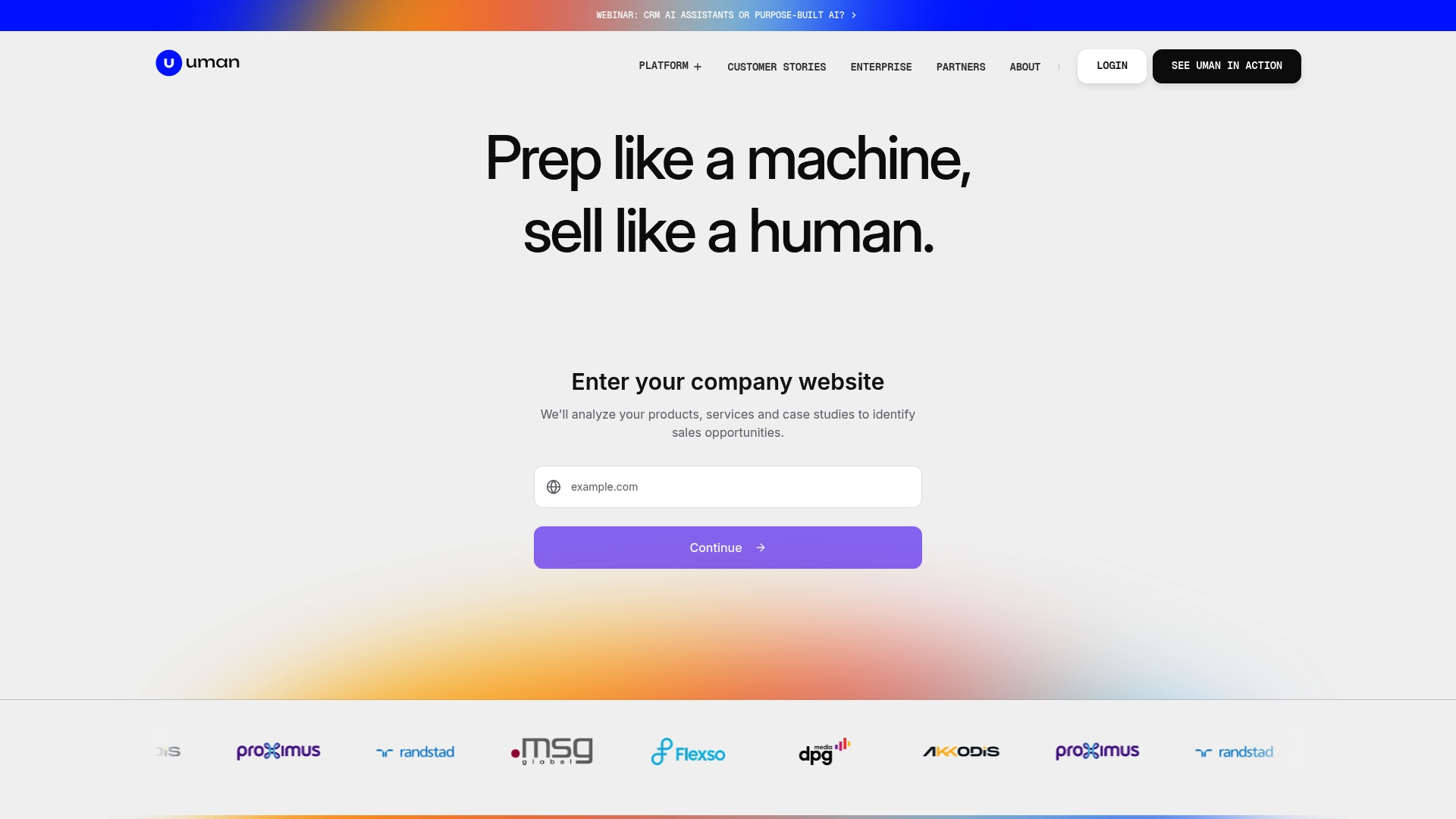
Uman’s account management features extend compliance tracking beyond the deal close, covering the full account lifecycle where risk often goes unmanaged. If you are ready to see how a purpose-built platform can make compliance a natural part of how your team sells, explore the full Uman compliance platform and discover what integrated sales compliance looks like in practice.
Frequently asked questions
What are the basic sales compliance requirements every B2B team must follow?
Every B2B team must follow regulations covering anti-bribery, contract accuracy, data privacy, and adherence to local and national trade laws. As a starting point, “sales compliance includes legal, ethical, and industry-specific regulations” that apply across every stage of the sales cycle.
How often should sales compliance processes be reviewed?
Sales compliance policies should be reviewed at least annually and whenever major legal or market changes occur. “Sales compliance is not a one-time task but requires ongoing monitoring and adjustments” as regulations and business conditions evolve.
Which technology helps the most with sales compliance tracking?
Sales compliance is best managed with platforms that automate documentation, approval workflows, and real-time monitoring. “Platforms can automate record-keeping, approval workflows, and real-time compliance monitoring” to reduce manual errors and improve visibility.
What’s the risk of ignoring sales compliance requirements?
Ignoring sales compliance can result in fines, lost business opportunities, and lasting damage to your brand’s reputation. “Non-compliance can result in penalties, stalled deals, and client trust loss” that are difficult to recover from.
How can we make compliance training effective for sales teams?
Use scenario-based learning and encourage open feedback so teams actively engage with compliance issues rather than treating them as abstract rules. “Continual compliance education for sales teams dramatically reduces compliance missteps” when delivered in formats that reflect real selling situations.
Recommended
Prep like a machine, sell like a human
Let AI handle the research and prep work — you focus on building relationships and closing deals.