%20(1).png)
Optimize your sales enablement workflow with AI strategies
Discover how AI-driven strategies transform sales enablement workflows for complex B2B teams, boosting win rates, shortening ramp times, and driving measurable revenue growth.
Complex B2B sales teams often struggle with fragmented workflows, lengthy onboarding cycles, and inconsistent execution across diverse product portfolios. Traditional sales enablement approaches create bottlenecks that prevent reps from focusing on what matters most: closing deals and building client relationships. AI-driven strategies are transforming these workflows by automating repetitive tasks, delivering personalized coaching, and unifying scattered tools into cohesive systems. This guide shows sales leaders how to optimize enablement workflows with AI for measurable improvements in win rates, ramp times, and revenue performance.
Table of Contents
- Key takeaways
- Understanding the foundations of a sales enablement workflow
- Preparing for AI integration in your sales enablement workflow
- Executing AI-driven enhancements within your sales enablement workflow
- Verifying and measuring the impact of your AI-enhanced sales enablement workflow
- Discover Uman’s platform to revolutionize your sales enablement workflow
- FAQ
Key Takeaways
PointDetailsProactive buyer alignmentAI transforms enablement into proactive systems that tailor coaching and content to each rep and deal context.Pillars of enablementThe four to five core pillars are strategy and content, training and coaching, technology integration, performance measurement, and collaboration to unify strategy and tools.Governance and metricsEstablish governance to prevent shadow AI and redesign workflows to realize 30 to 42 percent ramp time reductions and 164 percent gains in training engagement.Buyer journey mappingMap workflows to buyer journey stages rather than internal sales steps to create relevant activities and reduce stalled deals.
Understanding the foundations of a sales enablement workflow
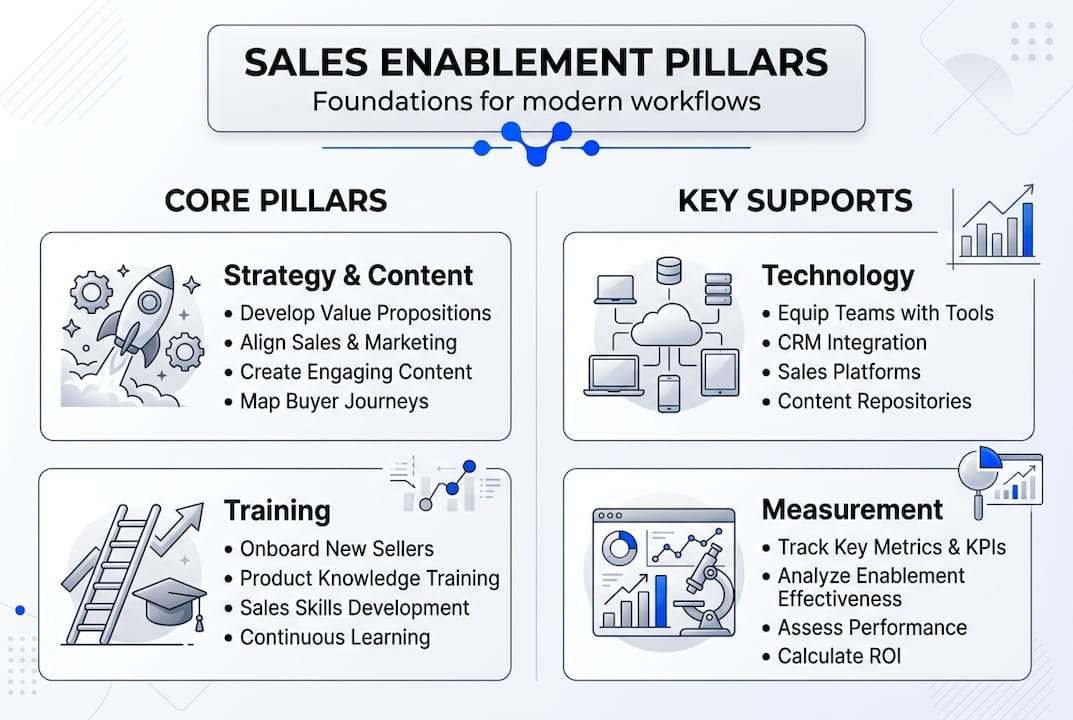
Sales enablement workflows in complex B2B organizations typically follow structured frameworks with four to five core pillars. These pillars create the foundation for consistent execution across large sales teams managing extensive product portfolios.
The first pillar, strategy and content, establishes your go-to-market approach and ensures reps access accurate, current materials for every buyer conversation. Content governance prevents outdated collateral from undermining credibility. The second pillar, training and coaching, builds competency through structured onboarding programs targeting 30-day ramp periods and ongoing skill development tied to real deal scenarios.
Technology integration forms the third pillar, connecting CRM systems, content repositories, and communication tools into unified platforms that eliminate context switching. The fourth pillar, performance measurement, tracks leading and lagging indicators to identify what drives results. Some frameworks add a fifth pillar focused on collaboration, ensuring alignment between sales, marketing, and product teams.
Clear methodology application guides reps through each deal stage with specific activities, exit criteria, and deliverables. This structure prevents deals from stalling in ambiguous middle stages where many opportunities die. Deal progression tracking reveals pipeline health and forecasting accuracy.
PillarPrimary ObjectiveKey ActivitiesStrategy & ContentAlign messaging and materialsPortfolio mapping, content audits, governance protocolsTraining & CoachingBuild competency and confidenceOnboarding programs, skill assessments, deal coachingTechnologyEnable efficient executionPlatform integration, workflow automation, data connectivityPerformance MeasurementDrive continuous improvementKPI tracking, pipeline analysis, outcome attribution
Objection handling deserves special attention within your workflow framework. Reps need battle-tested responses to common pushback, organized by buyer persona and deal stage. Effective workflows include objection libraries with recommended approaches, not scripted responses that sound robotic.
Pro Tip: Map your workflow to actual buyer journey stages, not just internal sales stages. This shift forces you to design activities around buyer needs rather than administrative convenience, creating more relevant and effective enablement.
The future of sales enablement moves beyond these static frameworks toward dynamic systems that adapt in real time. Traditional workflows establish necessary structure, but AI integration unlocks their full potential by personalizing every interaction and automating low-value tasks that consume selling time.
Preparing for AI integration in your sales enablement workflow
Successful AI adoption requires deliberate preparation, not just technology deployment. Organizations that layer AI onto broken workflows simply automate dysfunction. Start by establishing governance policies that prevent shadow AI usage, where reps adopt unauthorized tools that create data security risks and inconsistent outputs.
Ninety percent of organizations are using or planning to implement AI for go-to-market strategies, with AI reducing ramp time by 30 to 42 percent and increasing sales training engagement by 164 percent. These gains only materialize when you redesign workflows around AI capabilities rather than treating AI as an add-on feature.
Consider hybrid coaching models that combine AI-driven skill development with human motivation and accountability. AI excels at delivering consistent, personalized feedback at scale, analyzing call recordings, and identifying improvement opportunities. Human coaches provide emotional support, strategic guidance, and the motivational push that technology cannot replicate.
Before implementing AI, verify these prerequisites:
- Unified platform architecture that consolidates tools and creates single sources of truth for customer data, content, and activity tracking
- Data quality standards ensuring CRM hygiene, complete opportunity records, and accurate attribution that AI systems need for training and recommendations
- Team readiness assessments measuring digital fluency, change management capacity, and leadership commitment to new workflows
- Clear success metrics tied to business outcomes, not just adoption rates or usage statistics that measure activity rather than impact
“Traditional enablement treated training as an event. AI-powered enablement makes learning continuous, contextual, and embedded in the actual workflow where reps need it most.”
Pipeline outcomes matter more than training completion rates. A rep who finishes every module but misses quota delivers no value. Focus your preparation on metrics that connect enablement activities to revenue results, even if those connections take months to become clear.
Understanding AI pitfalls in sales process design helps you avoid common mistakes. AI cannot compensate for unclear value propositions, misaligned incentives, or poor product-market fit. Use an AI readiness assessment to identify gaps before investing in implementation.
Pro Tip: Run a pilot program with a small, high-performing team segment before rolling out AI-driven workflows organization-wide. This approach surfaces unexpected challenges while building internal champions who can evangelize benefits to skeptical peers.
Governance frameworks should address data privacy, output accuracy verification, and human oversight requirements. Establish clear guidelines about when AI recommendations require human review before acting, especially for high-stakes activities like contract negotiations or executive outreach.
Executing AI-driven enhancements within your sales enablement workflow
Implementation follows a structured sequence that builds capability progressively. Start with feedback automation that analyzes rep activities and surfaces improvement opportunities without waiting for manager review. AI-driven enhancements include just-in-time feedback, personalized content, role-play simulations, and unified platforms reducing tool fragmentation.
Follow these steps for systematic AI integration:
- Deploy conversation intelligence that records, transcribes, and analyzes customer interactions to identify successful patterns and coaching opportunities
- Implement content personalization engines that recommend relevant materials based on buyer industry, role, deal stage, and expressed concerns
- Launch simulation environments where reps practice objection handling, discovery questioning, and demo delivery against AI-powered personas that adapt responses
- Activate just-in-time coaching that delivers micro-learning moments when reps encounter specific situations, embedding training directly into workflow execution
- Consolidate point solutions into unified platforms that eliminate context switching and create seamless experiences from prospecting through account management
Traditional static training delivers generic content to all reps regardless of skill level, learning style, or current needs. Modern AI-driven enablement personalizes every interaction based on individual performance data and adapts difficulty as competency grows.

AspectTraditional Static TrainingAI-Driven Dynamic EnablementContent DeliveryBatch courses, scheduled sessionsContinuous micro-learning, contextual momentsPersonalizationOne-size-fits-all curriculumAdaptive paths based on skill gapsFeedback TimingDelayed manager reviewsImmediate automated analysisPractice OpportunitiesLimited role-plays with peersUnlimited AI simulations on demandContent RelevanceGeneric best practicesDeal-specific, buyer-aligned recommendations
Unified platform benefits extend beyond convenience. When your deal execution platform connects activity tracking, content delivery, coaching feedback, and performance analytics, you create network effects where each system component enhances the others. Conversation insights inform content recommendations. Performance patterns guide coaching priorities. Deal outcomes validate or challenge methodology assumptions.
Role-play simulations deserve special attention because they build muscle memory without risking real opportunities. AI personas can embody different buyer types, objection patterns, and communication styles, giving reps diverse practice scenarios that prepare them for actual conversations. Advanced simulations adapt difficulty based on performance, ensuring reps stay challenged without becoming overwhelmed.
Just-in-time coaching delivers the right guidance at the perfect moment. When a rep opens an opportunity record before a discovery call, the system surfaces relevant questions based on the buyer’s industry and stated challenges. When they draft a follow-up email, AI suggests language that aligns with successful patterns from similar deals.
Pro Tip: Balance AI automation with human coaching touchpoints. Use AI to handle repetitive feedback and skill building, freeing managers to focus on strategic deal guidance, career development conversations, and motivational support that technology cannot provide effectively.
Fragmented tools create friction that reduces adoption and effectiveness. Reps who must switch between six applications to prepare for one meeting will find workarounds that bypass your carefully designed workflows. Consolidation improves compliance and data quality while reducing training complexity.
Verifying and measuring the impact of your AI-enhanced sales enablement workflow
Measurement transforms enablement from a cost center into a revenue driver by proving ROI and guiding optimization. Define key performance indicators that connect activities to business outcomes, focusing on metrics that matter to executive stakeholders.
Mature sales enablement programs show 15 to 49 percent higher win rates, 42 percent faster ramp times, 18 to 27 percent shorter sales cycles, and 27 to 84 percent more quota attainment. These ranges reflect implementation quality and organizational context, not just AI adoption.
Win rate improvements signal better qualification, more effective discovery, and stronger value articulation. Track this metric by deal size, product line, and rep tenure to identify where enablement delivers greatest impact. Ramp time reduction measures how quickly new hires reach full productivity, directly affecting capacity planning and hiring ROI.
Sales cycle length reveals efficiency gains from better preparation, more relevant content, and faster buyer education. Quota attainment percentage shows whether enablement improvements translate to actual revenue results, the ultimate success measure.
Pipeline outcomes provide clearer ROI than training completion metrics. A hundred percent course completion means nothing if deals still stall or reps miss targets. Focus verification on how enablement activities influence opportunity progression, close rates, and deal sizes.
MetricBefore AI EnablementAfter AI EnablementImprovementAverage Win Rate18%26%+44%New Hire Ramp Time6.2 months3.6 months-42%Average Sales Cycle127 days98 days-23%Quota Attainment58%79%+36%
Best practices for ongoing verification include:
- Quarterly business reviews that connect enablement initiatives to revenue outcomes, presenting data to executive stakeholders who control budgets and strategic priorities
- Cohort analysis comparing reps who adopted AI-driven workflows against control groups using traditional approaches, isolating enablement impact from market conditions or product changes
- Leading indicator tracking that monitors activity quality metrics predicting future results, allowing course correction before lagging indicators reveal problems
- Attribution modeling that traces closed deals back to specific enablement touchpoints, identifying which activities drive greatest value
- Continuous feedback loops where frontline reps and managers report what works and what needs refinement, ensuring workflows evolve with changing buyer expectations
Measurement tools range from native CRM analytics to specialized enablement platforms with built-in reporting. Choose solutions that integrate with your existing tech stack and surface insights without requiring data science expertise.
Strategic enablement measurement connects tactical metrics to strategic objectives, showing how workflow improvements support broader go-to-market goals. This alignment secures ongoing investment and leadership support for continuous optimization.
Verification never ends because markets evolve, competitors adapt, and buyer expectations shift. What works today may underperform tomorrow. Build measurement systems that detect performance changes early and guide rapid iteration.
Discover Uman’s platform to revolutionize your sales enablement workflow
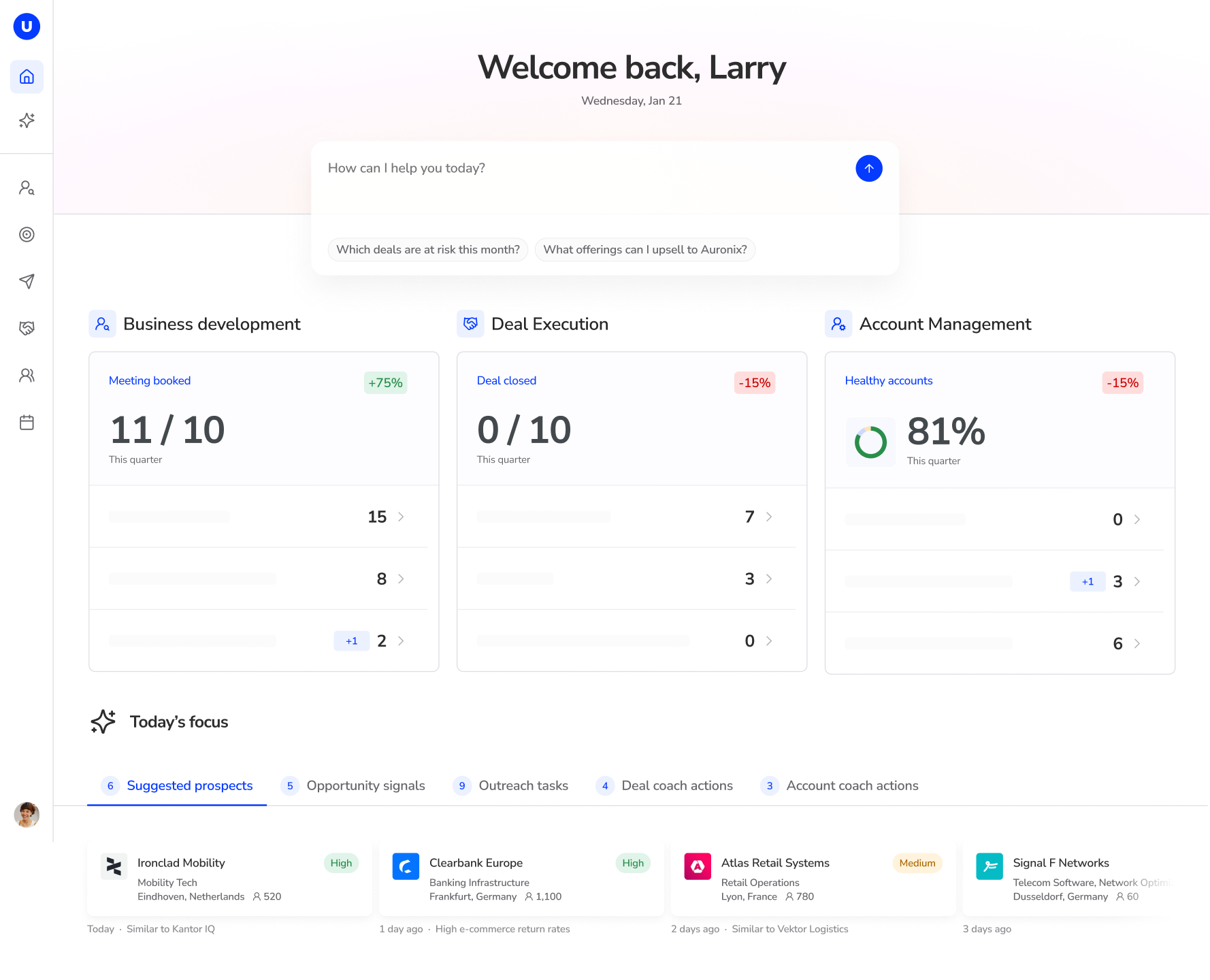
Uman’s AI sales enablement platform unifies the capabilities discussed throughout this guide into a single, governed system designed specifically for complex B2B sales organizations. Our platform centralizes your entire product and service portfolio into a trusted knowledge layer that powers structured workflows across business development, deal execution, and account management.
The deal execution capabilities automate meeting preparation, generate client-specific content, and provide real-time coaching that adapts to each opportunity’s unique context. Account management tools identify cross-sell and upsell opportunities by analyzing client portfolios against your service catalog, surfacing relevant offerings that reps might otherwise miss. This integrated approach eliminates tool fragmentation while maintaining the governance and security standards enterprise organizations require. Sales teams using Uman report 10 to 30 percent revenue increases within 12 to 18 months, faster onboarding cycles, and significantly higher win rates across their pipelines.
FAQ
What are the core pillars of a sales enablement workflow?
Strategy and content alignment, training and coaching programs, technology integration, and performance measurement form the foundation of effective sales enablement workflows. These pillars work together to create consistent execution across large teams managing complex product portfolios. Some organizations add collaboration as a fifth pillar to ensure cross-functional alignment.
How does AI improve ramp-up time for sales reps?
AI provides personalized training paths that adapt to individual learning speeds and skill gaps, delivering just-in-time coaching when reps encounter specific situations. Studies show ramp times can reduce by 30 to 42 percent with AI-enabled coaching that makes learning continuous rather than event-based. This acceleration directly impacts revenue capacity and hiring ROI.
What risks should organizations consider when implementing AI in sales workflows?
Uncontrolled shadow AI usage can cause inaccuracy, data security vulnerabilities, and misalignment with company messaging standards. Proper governance and workflow redesign are essential when adding AI, ensuring systems enhance rather than undermine sales effectiveness. Combining AI automation with human oversight optimizes results by balancing efficiency with strategic judgment.
How can sales leaders measure the success of their enablement workflows?
Track win rates, ramp time, sales cycle length, and quota attainment as primary indicators of enablement impact. Focusing on pipeline outcomes offers clearer ROI than just training completion rates, which measure activity rather than results. Cohort analysis comparing groups using different workflows isolates enablement effects from market conditions or product changes.
What distinguishes dynamic AI-driven enablement from traditional training approaches?
Traditional training delivers generic content in batch sessions with delayed feedback, while AI-driven enablement personalizes learning paths, provides immediate analysis, and embeds coaching directly into workflow execution. Dynamic systems adapt difficulty based on performance and deliver contextual guidance at the exact moment reps need it. This shift transforms enablement from periodic events into continuous, embedded learning experiences.
Recommended
Prep like a machine, sell like a human
Let AI handle the research and prep work — you focus on building relationships and closing deals.