%20(1).png)
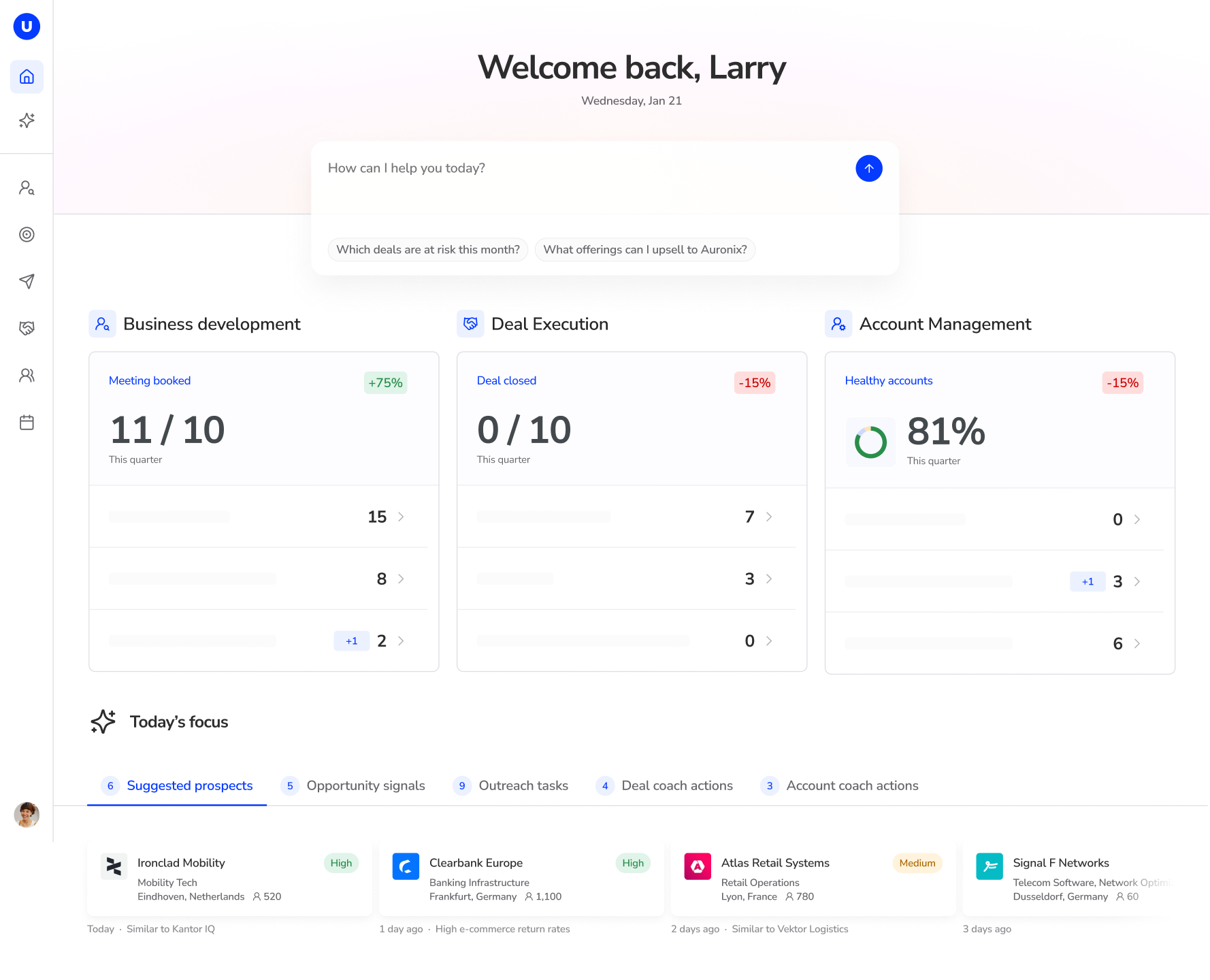
Sales knowledge management: Centralize, automate, drive revenue
Learn how sales knowledge management centralizes content, automates workflows, and drives revenue for complex B2B sales teams with AI-driven systems.
TL;DR:
- Sales knowledge management centralizes and structures sales assets for real-time access and continuous improvement.
- AI enhances SKM with semantic search, proactive content surfacing, and personalized recommendations.
- Effective SKM boosts win rates, shortens sales cycles, and accelerates new hire ramp-up.
Most sales leaders assume the fix for underperforming reps is more content. More case studies, more battle cards, more product one-pagers. But volume rarely solves the real problem. The real problem is structure. Sales knowledge management (SKM) centralizes sales assets like playbooks, battle cards, product specs, case studies, and tribal knowledge into a searchable, AI-powered repository that reps can access during live workflows. It is not a content library. It is an operating system for how your team finds, uses, and improves sales knowledge every single day. This guide walks you from confusion to application.
Table of Contents
- What is sales knowledge management?
- Core mechanics: Structuring and governing sales knowledge
- AI-driven workflows: Automating and personalizing sales knowledge
- Outcomes, challenges, and expert strategies
- Expert perspective: What most sales leaders get wrong about SKM
- How Uman powers smarter sales knowledge management
- Frequently asked questions
Key Takeaways
PointDetailsCentralization drives efficiencyOrganizing sales knowledge into a structured, searchable repository dramatically boosts win rates and selling time.AI enables smarter workflowsAI-powered tools provide fast, contextual answers and personalization at scale—transforming sales outcomes.Structure beats volumePrioritize clean governance, relevant assets, and role-based access for sustainable SKM, not simply more content.Expert strategies overcome common pitfallsFederated access, ongoing feedback, and measurement help navigate challenges like silos, knowledge loss, and resistance.
What is sales knowledge management?
Sales knowledge management is the practice of organizing, governing, and delivering sales information in a way that is structured, searchable, and actionable. It goes well beyond storing files in a shared drive or uploading decks to a portal nobody visits.
At its core, SKM centralizes varied sales assets and tribal knowledge into AI-powered repositories that reps can query in real time. That includes:
- Playbooks and sales methodologies that guide reps through complex deal stages
- Battle cards that help reps respond to competitive objections on the spot
- Case studies and proof points matched to specific industries or buyer personas
- Product and service specifications that evolve as your portfolio grows
- Tribal knowledge captured from top performers, call recordings, and deal reviews
The business impact of centralizing this knowledge is significant. When reps spend less time hunting for information and more time selling, win rates climb. When messaging is consistent across a large team, buyer trust increases. When new hires can access structured knowledge from day one, ramp time shrinks.
“The difference between a high-performing sales team and an average one often comes down to knowledge access, not talent. The best reps are not smarter. They just know where to find the right answer faster.”
It is also worth understanding what SKM is not. It is not a one-time project. You do not build a knowledge base, launch it, and walk away. SKM is an ongoing system that requires governance, iteration, and analytics to stay relevant. Content becomes outdated. Portfolios change. Buyer objections evolve. A well-run SKM system accounts for all of this.
For sales leaders building or refining their approach, understanding sales enablement fundamentals is the logical starting point. SKM sits at the center of any mature enablement strategy, and getting it right creates a compounding advantage over time.
The key distinction is intent. SKM is not about having more knowledge available. It is about making the right knowledge available to the right rep at the right moment in the sales cycle.
Core mechanics: Structuring and governing sales knowledge
Building an effective SKM system requires a clear process. Here is a practical sequence that works for complex B2B organizations:
- Audit your existing assets. Identify what content exists, where it lives, and how current it is. Expect to find duplicates, outdated materials, and gaps.
- Index and tag content systematically. Assign metadata by product line, industry, deal stage, buyer role, and use case. This is what makes retrieval fast and relevant.
- Categorize by workflow context. Group assets by how they are used: prospecting, meeting preparation, proposal generation, objection handling, or account reviews.
- Test retrieval with real queries. Have reps search for content using natural language. If they cannot find what they need in under 30 seconds, the structure needs work.
- Iterate based on usage data. Track what gets accessed, what gets ignored, and what searches return no results. Use that data to fill gaps and retire dead content.
Governance is where most SKM systems fail. Without clear ownership, content decays. Assign content owners by domain, set review cycles, and define permissions so reps see only what is relevant to their role.
The mechanics underneath a modern SKM system are more sophisticated than most leaders realize. Effective SKM systems include ingestion pipelines, AI indexing, contextual querying, source-grounded responses, governance workflows, and usage analytics. This is not a simple search box. It is a purpose-built retrieval architecture.
For teams looking to go further, optimizing sales workflows with AI requires that the underlying knowledge structure is clean before automation is layered on top.
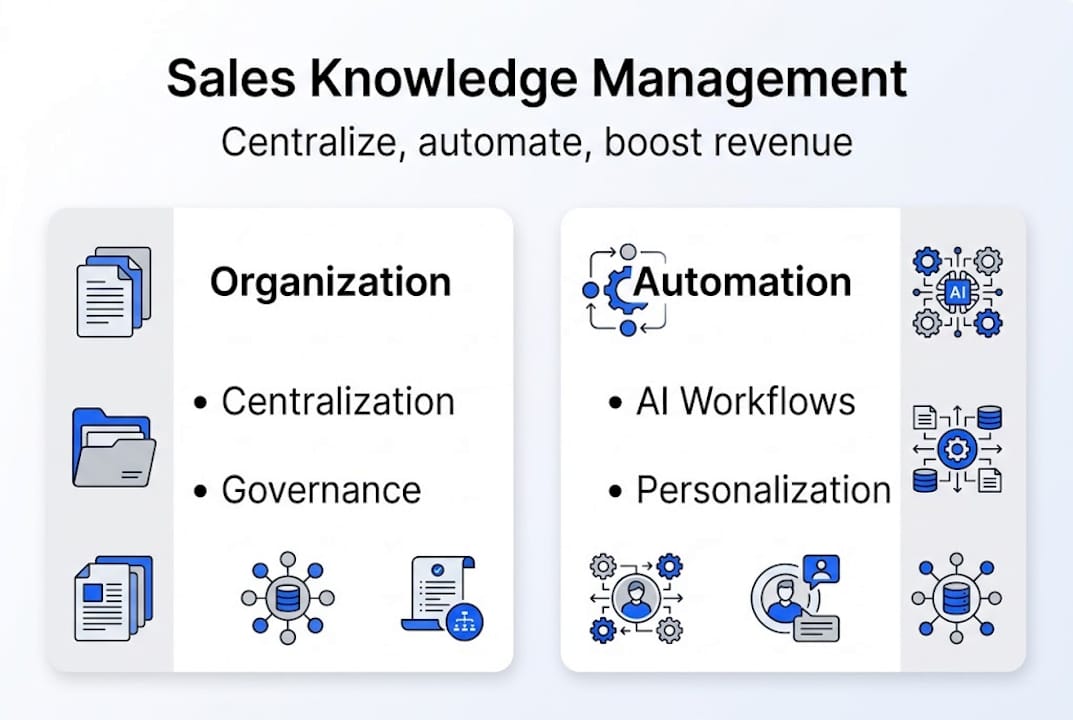
ApproachStructureGovernanceAI-readinessShared driveLowNoneNot compatibleStatic intranetMediumManualLimitedPurpose-built SKMHighAutomatedFully compatible
Good CRM integration strategies also depend on clean knowledge architecture. When your SKM feeds your CRM with accurate, contextual content, the entire sales process becomes more consistent.

Pro Tip: Start with a small, high-value subset of your knowledge base, such as your top 10 most-asked questions during discovery calls. Structure that content well, test it with reps, and use the feedback to build your broader taxonomy. Structure beats volume every time.
AI-driven workflows: Automating and personalizing sales knowledge
Once your knowledge is structured, AI becomes the accelerator. Without structure, AI produces generic, unreliable outputs. With structure, it delivers precise, contextual answers that reps can act on immediately.
AI-driven workflows in SKM typically include semantic search, proactive surfacing, auto-personalization, and conversation integration. Here is what each means in practice:
- Semantic search understands the intent behind a query, not just the keywords. A rep asking “what do we say to a CFO worried about implementation cost” gets relevant battle cards and ROI frameworks, not a list of documents with those words in the title.
- Proactive surfacing pushes relevant content to reps based on deal context, without them having to search at all. If a deal moves to a new stage, the system surfaces the right preparation materials automatically.
- Auto-personalization tailors content suggestions based on the rep’s role, the buyer’s industry, and the current stage of the deal. A new hire and a senior account executive see different recommendations for the same account.
- Conversation integration connects SKM to tools like Slack or your CRM, so knowledge is available inside the platforms reps already use.
The data behind these capabilities is compelling. Organizations using AI-powered sales efficiency tools report meaningful reductions in search time, faster proposal generation, and higher rep confidence in client conversations.
Workflow capabilityManual processAI-assisted processFinding relevant content15 to 30 minutesUnder 60 secondsPersonalizing a proposal2 to 4 hours20 to 40 minutesPreparing for a meeting45 to 90 minutes10 to 15 minutes
For complex team workflow examples, the gains are even more pronounced. Teams managing broad portfolios across multiple industries benefit most because the volume of relevant knowledge is simply too large for any individual rep to master manually.
Pro Tip: AI is only as good as the data it is trained on. Generic AI tools struggle in complex B2B organizations because they lack domain-specific knowledge. Purpose-built systems that are grounded in your actual service portfolio and governed content will always outperform general-purpose tools for sales accuracy.
Outcomes, challenges, and expert strategies
The performance data for structured SKM is clear. Organizations with formal enablement programs see 49% win rates compared to 42.5% without them. Quota attainment improves by 15.3%, sales cycles shorten by 12 days, and reps gain 20% more selling time. These are not marginal gains. They compound over time.
But outcomes depend on execution. The most common challenges leaders face include:
- Knowledge loss from turnover. When top performers leave, their expertise walks out the door unless it has been captured systematically.
- Content graveyards. Assets that are never accessed, never updated, and never retired. They create noise and erode rep trust in the system.
- Data silos. Knowledge fragmented across product teams, marketing, and sales operations that never gets consolidated.
- Rep resistance. Reps who have built personal workarounds are reluctant to adopt new systems, especially if those systems feel like added overhead.
- ROI measurement gaps. Leaders struggle to connect SKM investment to revenue outcomes without the right analytics in place.
“76% of organizations that invest in structured sales enablement report measurable performance improvements. The gap between high and low performers is increasingly a knowledge infrastructure gap, not a talent gap.”
Expert strategies for overcoming these challenges center on three practices. First, federated access: give each team access to the knowledge most relevant to their role, rather than overwhelming everyone with everything. Second, feedback loops: build mechanisms for reps to flag outdated content or request missing assets, keeping the system self-improving. Third, role-based personalization: tailor the knowledge experience by rep seniority, product focus, and account type.
For onboarding strategies specifically, structured SKM is one of the highest-leverage investments a sales leader can make. New hires with access to governed, searchable knowledge ramp faster and hit quota sooner. The Flexso case study is a strong example of how this plays out in a complex IT services environment.
Expert perspective: What most sales leaders get wrong about SKM
Most articles on sales knowledge management focus on tools. Which platform to buy, which integrations to configure, which content types to prioritize. That framing misses the deeper issue.
The leaders who struggle most with SKM are not the ones who chose the wrong tool. They are the ones who treated SKM as a content problem rather than a systems problem. They uploaded hundreds of assets, called it a knowledge base, and wondered why adoption was low and outputs were inconsistent.
The uncomfortable truth is that source-grounded AI outperforms generic AI in B2B sales because it answers from your actual portfolio, your actual case studies, and your actual competitive positioning. Generic tools hallucinate. They generate plausible-sounding answers that are not grounded in your reality. That is a serious risk in a complex sales environment.
The leaders who get SKM right treat it as an ongoing system with analytics-driven governance. They review usage data monthly. They retire dead content. They build feedback loops with their reps. They think of their knowledge base the way a good CFO thinks about a balance sheet: something that requires constant attention, not a one-time build. That mindset shift is what separates functional SKM from transformational SKM. Explore future enablement trends to see where this is heading.
How Uman powers smarter sales knowledge management
If this guide has clarified what SKM should look like, the next question is how to build it without adding complexity to an already stretched sales operation.
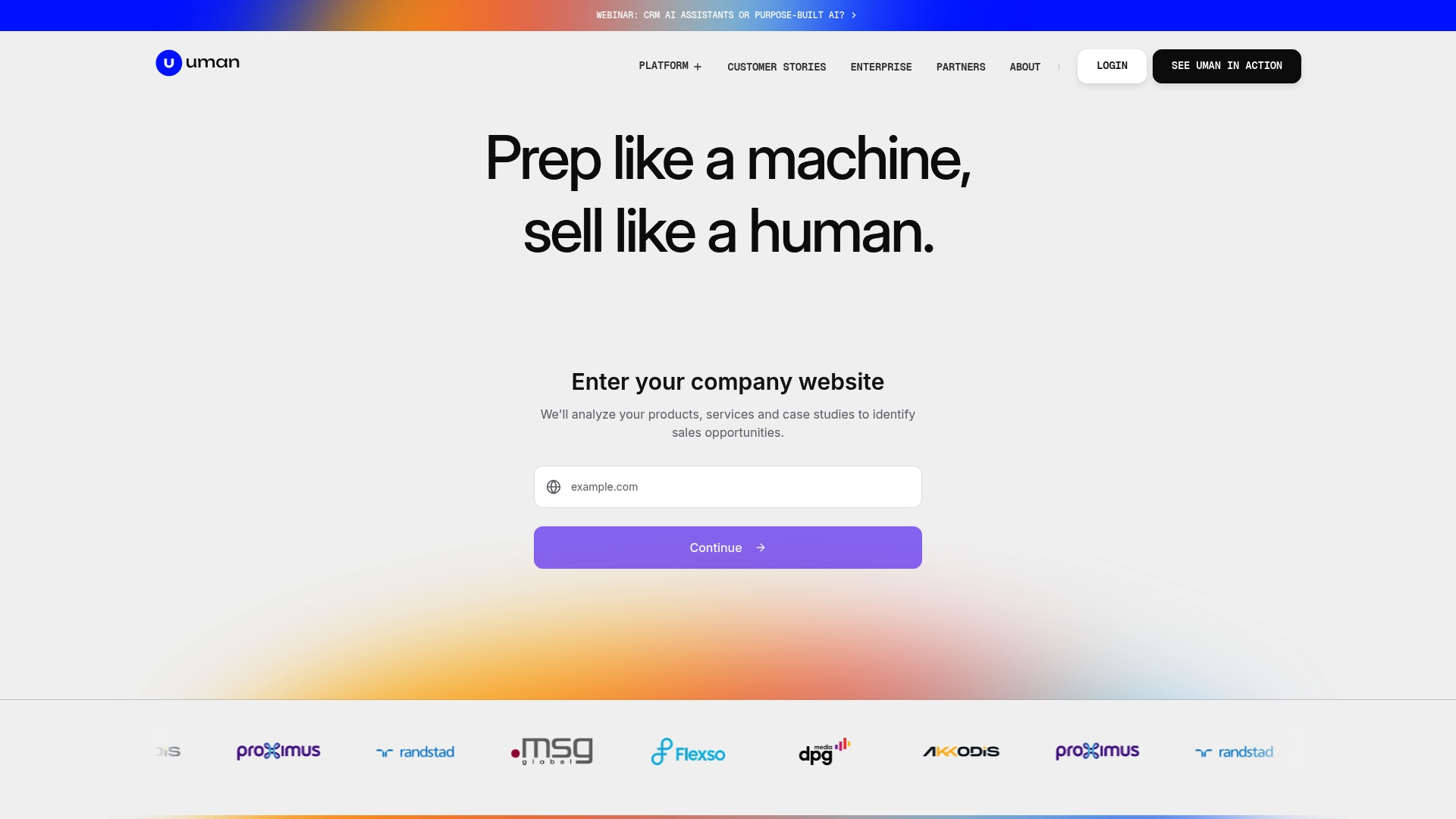
Uman is purpose-built for exactly this challenge. The Uman platform centralizes your entire service portfolio and sales content into a governed, AI-powered knowledge layer that feeds structured workflows across the sales cycle. From account management solutions that surface cross-sell opportunities to deal execution features that automate meeting preparation and CRM updates, Uman gives complex B2B sales teams the infrastructure to execute consistently and efficiently. If your team is ready to move from scattered content to a system that actually drives revenue, Uman is worth a closer look.
Frequently asked questions
How does AI improve sales knowledge management in B2B organizations?
AI enables semantic search, contextual surfacing, and role-based personalization, dramatically reducing the time reps spend searching for information and improving the relevance of what they find.
What are the biggest challenges when implementing SKM?
Major challenges include content silos, knowledge loss from turnover, outdated assets, rep resistance to new systems, and difficulty connecting SKM investment to measurable revenue outcomes.
Which platforms are best for B2B sales knowledge management?
Leading SKM platforms include Highspot, Seismic, and Showpad for content centralization; Gong for conversation intelligence; and Guru and Bloomfire for knowledge bases, each serving different organizational needs.
How does SKM impact sales onboarding and ramp time?
Structured SKM boosts quota attainment for new hires by over 15% and reduces sales cycle length by 12 days, giving new reps faster access to the knowledge they need to perform.
Recommended

Prep like a machine, sell like a human
Let AI handle the research and prep work — you focus on building relationships and closing deals.