%20(1).png)
Streamline your prospecting workflow for higher B2B sales
Learn how to fix B2B prospecting workflows with data-driven list building, multi-touch outreach, and continuous improvement strategies that drive measurable revenue gains.
Prospecting inefficiency is one of the most expensive problems in B2B sales, yet it rarely appears on a balance sheet. Reps spend hours building lists, chasing stale contacts, and sending outreach that never lands. Meanwhile, pipeline stalls and revenue targets slip. Data decay reaches 28% annually, cold email reply rates hover around 4.2%, and follow-ups generate 62% of all replies. These numbers tell a clear story: most teams aren’t losing because of poor products or weak pricing. They’re losing because their prospecting workflow is broken. This article walks through how to diagnose those breaks, fix them systematically, and build a repeatable engine that converts effort into revenue.
Table of Contents
- Diagnosing workflow inefficiencies in complex B2B sales
- Preparation: Building a data-driven prospect list
- Executing multi-touch outreach for greater engagement
- Tracking metrics and iterating for continuous improvement
- Perspective: Why small workflow tweaks lead to big sales wins
- Accelerate your prospecting with Uman’s platform
- Frequently asked questions
Key Takeaways
PointDetailsDiagnose bottlenecksSpot weak links in your prospecting system by measuring each stage against industry benchmarks.Refresh data regularlyAccurate, up-to-date prospect lists increase reply and success rates while reducing wasted effort.Use multi-touch outreachStructure outreach sequences with at least 4-6 touches and timely follow-ups for higher engagement.Iterate using metricsReview key metrics like reply and call success rates to make ongoing workflow improvements.Start small for big gainsMinor workflow tweaks, not just large overhauls, are the most reliable path to greater B2B sales efficiency.
Diagnosing workflow inefficiencies in complex B2B sales
You know inefficiency costs you, but where exactly is the workflow breaking down? In complex B2B organizations, the answer is rarely one thing. It’s usually a chain of small failures that compound over time.
The most common bottlenecks fall into three areas: poor lead list quality, stale contact data, and delayed or inconsistent follow-ups. Each one quietly erodes your team’s output. A rep who spends 40% of their week sourcing and cleaning data is a rep who isn’t selling.
Here’s how typical and optimized workflows compare:
Workflow stageTypical teamOptimized teamLead sourcingManual, ad hocAutomated, criteria-basedData freshnessUpdated quarterly or lessVerified continuouslyFollow-up timingInconsistentScheduled, sequencedCRM hygieneReactiveProactive, governedOutreach personalizationGeneric templatesContext-driven messaging
The performance gap is stark. Cold call success sits at just 2-3% for average teams, while top performers reach 6-10%. That difference rarely comes from charisma. It comes from better preparation and tighter workflow discipline.
Use these questions to self-diagnose your current state:
- How often is your prospect data verified or refreshed?
- What percentage of outreach attempts reach a valid contact?
- How many touches does your team make before abandoning a lead?
- Do reps have a consistent, repeatable sequence to follow?
- How long does it take from lead identification to first outreach?
If you can’t answer most of these with confidence, that’s a signal. For a deeper look at improving B2B prospecting outcomes, the gap between knowing and doing is often a workflow design problem, not a people problem.
Preparation: Building a data-driven prospect list
Having identified inefficiencies, the next step is preparing a bulletproof prospect list. This is where most teams either win or lose before a single message is sent.
The core issue is data decay. Contact data degrades by 28% each year, meaning a list built six months ago is already significantly compromised. Titles change, companies restructure, decision-makers move on. Sending outreach to stale data wastes time and damages sender reputation.
Here’s a practical method to build and maintain a high-quality list:
- Define your ICP precisely. Specify industry, company size, revenue range, tech stack, and buying triggers before sourcing a single contact.
- Source from verified databases. Use platforms that refresh data regularly and allow filtering by firmographic and technographic criteria.
- Enrich every record. Add context such as recent news, funding rounds, or leadership changes to enable personalized outreach.
- Score leads by fit and intent. Prioritize accounts showing active buying signals over those that simply match your ICP on paper.
- Validate before outreach. Run email verification and phone checks to remove invalid contacts before they enter your sequence.
Pro Tip: Automate the validation step. Manual checking is slow and inconsistent. Tools that integrate directly with your CRM can flag stale records in real time, keeping your list clean without adding to your team’s workload. Learn more about automating prospecting data to reduce that burden significantly.
Tool categoryPurposeExample criteriaData providerSource verified contactsIndustry, title, company sizeEnrichment toolAdd context to recordsNews, funding, tech stackEmail verifierRemove invalid addressesBounce rate reductionLead scoring platformPrioritize by fit and intentEngagement signals, ICP match
Strong CRM best practices and disciplined B2B lead qualification processes sit at the foundation of every high-performing prospecting operation. Without them, even the best outreach strategy hits a ceiling.
Executing multi-touch outreach for greater engagement
Once your list is built, the next challenge is executing outreach that stands out. Volume alone won’t get you there. Structure and timing will.

The data is clear: 62% of replies come from follow-up emails, and the average effective sequence runs 4 to 6 touches. Most reps give up after one or two attempts. That gap is where pipeline gets left on the table.
Here’s how to design a multi-touch campaign that works:
- Map your channel mix. Combine email, phone, and LinkedIn touchpoints. Each channel reaches different buyers at different moments.
- Set a sequence schedule. Space touches 2 to 4 days apart. Too fast feels aggressive; too slow loses momentum.
- Lead with value, not pitch. Your first touch should offer something relevant, a piece of insight, a relevant case study, or a specific observation about their business.
- Vary your message across touches. Each follow-up should add a new angle, not repeat the same ask with different wording.
- Include a clear, low-friction call to action. Ask for a 15-minute call, not a full demo. Reduce the commitment required at each step.
- Track opens and replies by touch number. This tells you where your sequence loses momentum and where to optimize first.
Pro Tip: Use CRM activity data and recent account signals to personalize each touch. A rep who references a prospect’s recent product launch or hiring push gets noticed. Generic outreach gets deleted.
“Consistency in follow-up is the single biggest differentiator between average and top-performing sales teams. It’s not about sending more emails. It’s about sending the right message at the right moment, repeatedly.”
For a closer look at what actually drives response rates, data-backed cold outreach analysis shows where most sequences fall apart. Pairing that with proven B2B sales best practices gives your team a repeatable framework rather than a guessing game.
Tracking metrics and iterating for continuous improvement
Even with great outreach, ongoing measurement is vital for sustained efficiency. Without it, you’re flying blind. You might be running a beautiful sequence into the wrong accounts, or losing prospects at the third touch without realizing it.
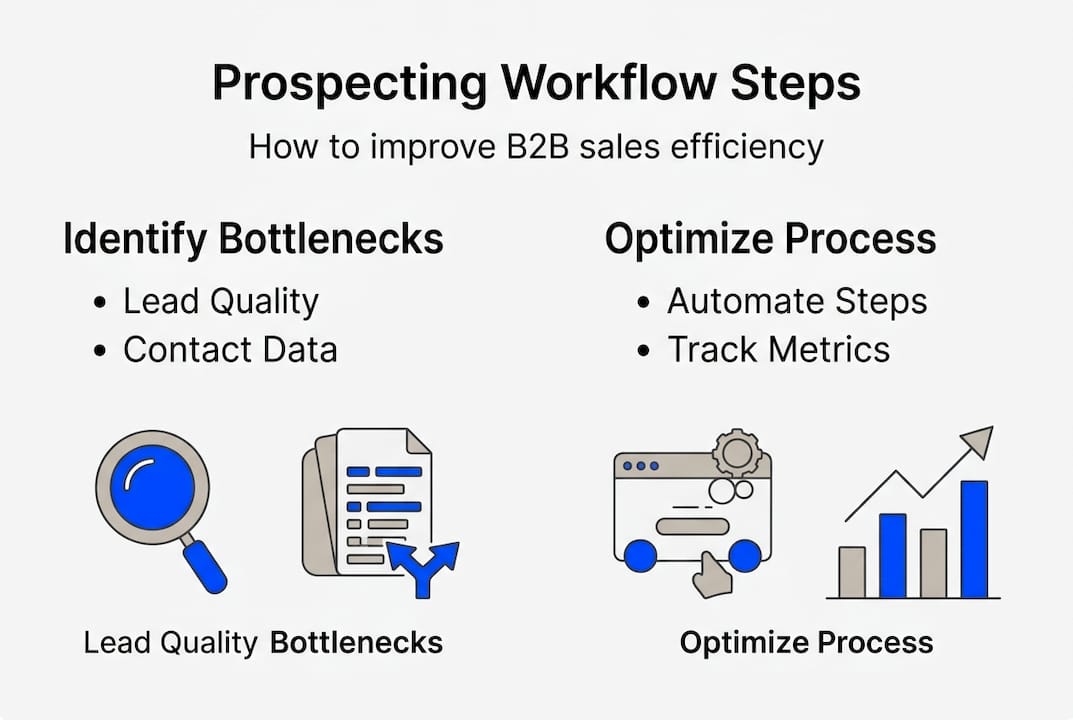
Start with the benchmarks that matter most. Industry averages sit at 4.2% email reply rate, 1.5% positive replies, and 2 to 3% cold call success. These numbers aren’t targets. They’re baselines. If your team is below them, you have a workflow problem. If you’re above them, you have a scaling opportunity.
Common pitfalls in measuring workflow efficiency:
- Tracking activity volume (calls made, emails sent) instead of outcome rates
- Measuring only top-of-funnel metrics and ignoring conversion at each stage
- Reviewing data monthly instead of weekly, which slows your ability to course-correct
- Treating all reps’ results as one aggregate, hiding individual performance gaps
- Ignoring sequence drop-off rates, which reveal exactly where prospects disengage
Here’s how static and continuous improvement approaches compare:
ApproachStaticContinuous improvementReview frequencyMonthly or quarterlyWeeklyMetrics focusActivity countsConversion rates by stageResponse to underperformanceSlow, reactiveFast, proactiveSequence optimizationRarely updatedTested and refined regularlyRevenue impactIncremental at bestCompounding gains over time
The compounding effect of continuous improvement is real. A team that improves reply rate by 1% each quarter doesn’t just add 4% by year end. It builds momentum, refines messaging, and develops institutional knowledge that compounds. Resources on driving prospecting productivity and business development automation offer practical frameworks for embedding this discipline into your team’s weekly rhythm.
Perspective: Why small workflow tweaks lead to big sales wins
There’s a common belief in sales leadership that meaningful pipeline growth requires a major overhaul. New tools, new hires, new strategy. In reality, the biggest gains we see in complex B2B organizations come from something far less dramatic.
Marginal improvements in workflow design compound faster than most leaders expect. Fixing follow-up timing alone, for example, can lift reply rates by 25% without changing a single word of your messaging. That’s not a transformation. That’s a Tuesday afternoon adjustment.
High-performing sales teams don’t reinvent their process every quarter. They iterate. They review what’s working, identify the one or two friction points causing the most drop-off, and fix those specifically. Then they do it again next week.
The uncomfortable truth is that most prospecting problems aren’t strategic. They’re operational. The strategy is usually sound. The execution is where things fall apart, and execution problems respond to small, targeted fixes far better than sweeping change.
For teams focused on streamlining prospecting for results, the discipline of incremental improvement is more valuable than any single tool or tactic. Build that habit first. The gains will follow.
Accelerate your prospecting with Uman’s platform
Want to put these strategies into action more easily? Uman is built specifically for complex B2B sales organizations that need structure, speed, and consistency across every stage of prospecting.
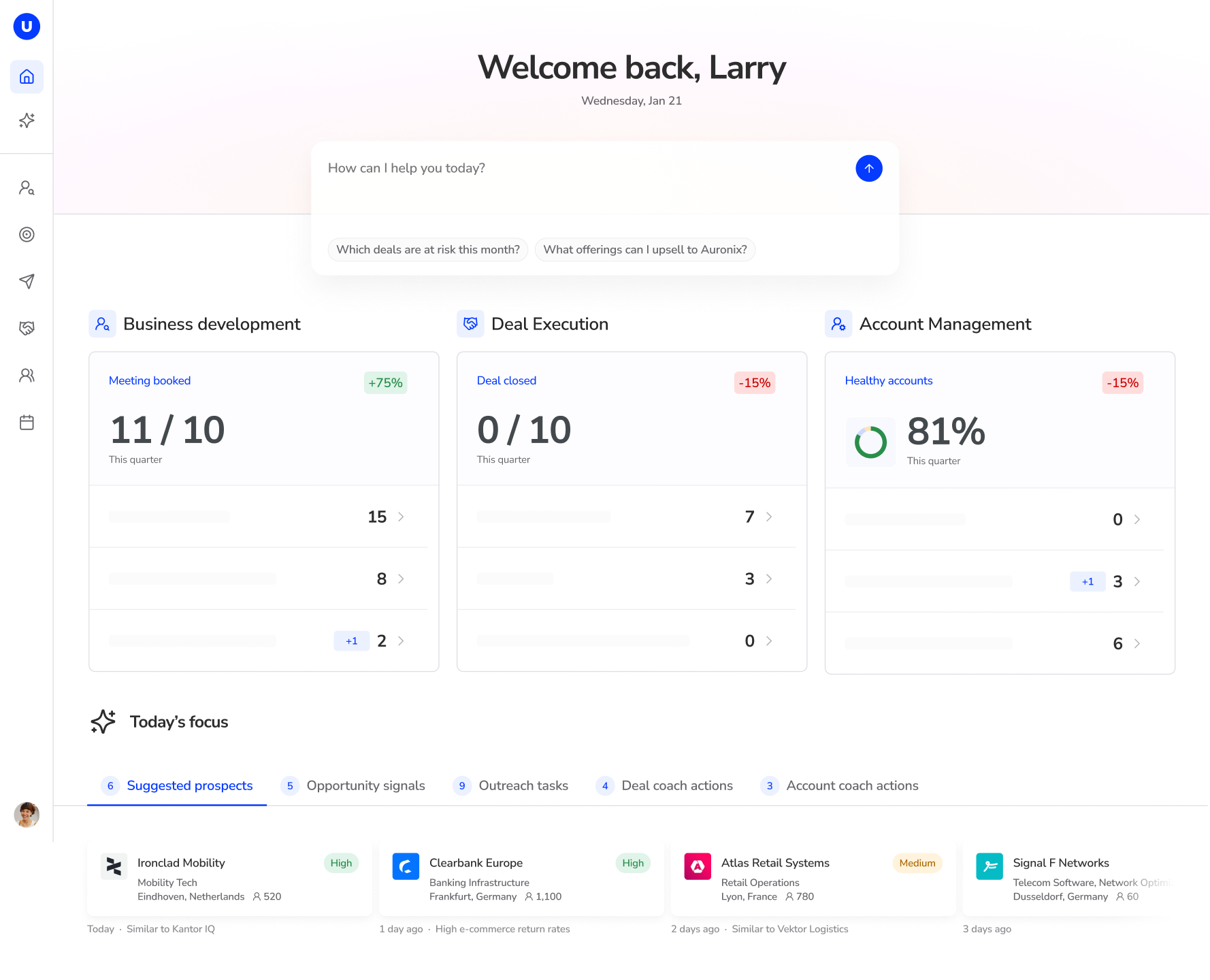
The Uman platform centralizes your sales knowledge, automates data-driven workflows, and surfaces the right content at the right moment, without disrupting your existing CRM or tech stack. From business development through deal execution and account management, every stage of your pipeline benefits from guided, governed workflows. Teams using Uman report up to a 10% to 30% increase in revenue within 12 to 18 months. If you’re ready to move from diagnosing inefficiency to eliminating it, explore what Uman can do for your team.
Frequently asked questions
What KPI benchmarks should B2B sales leaders monitor for efficient prospecting?
Focus on reply rate (4.2%), positive reply rate (1.5%), cold call success (2 to 3%), and time from lead identification to first outreach. These four metrics reveal where your workflow is performing and where it’s leaking.
How often should prospecting data be updated?
At minimum, quarterly. B2B data decays at 28% annually, which means waiting six months to refresh your list puts roughly 14% of your contacts at risk of being outdated or invalid.
What is the ideal length for a sales email sequence?
A sequence of 4 to 6 emails is optimal for most B2B contexts, since 62% of replies come from follow-ups rather than the initial message. Stopping at one or two touches leaves the majority of potential responses uncaptured.
How can workflow automation help with prospecting efficiency?
Automation removes manual bottlenecks by keeping data current, triggering follow-up sequences on schedule, and surfacing the right content for each prospect, so reps spend more time selling and less time on administrative tasks.
Recommended

Prep like a machine, sell like a human
Let AI handle the research and prep work — you focus on building relationships and closing deals.