%20(1).png)
The future of sales enablement
For years, sales enablement was mostly about collecting content. Teams built huge libraries of PDFs, slide decks, and playbooks. The idea was simple: if reps had more information, they would sell better. But as selling has become more complex, this approach is no longer enough. Static content libraries can’t keep up with today’s pace. Reps need help in the moment, not just somewhere to search when they have time. The future of sales enablement is dynamic. It combines AI-powered recommendations, guided workflows, and live data so teams can act with confidence every day. In this article, you’ll learn why old methods fall short and how modern sales enablement looks in practice.
The limits of static content libraries
Content libraries were a big step forward when they first appeared. Before that, reps had to look through email chains or ask colleagues for the latest version of a deck.
But even the best library has limits:
- Content gets outdated fast.
- Pricing, messaging, and product details can change often. When this happens, reps may use old materials without knowing.
- Reps forget where to look.
- A library with hundreds of files feels overwhelming. People give up and rely on what they remember.
- Low adoption.
- If finding content feels like extra work, most reps skip it.
When content is static, enablement is passive. Reps have to do the work of searching, filtering, and deciding if something is still relevant.
Why AI-powered workflows are the next step
Modern sales enablement is not about storing information. It’s about delivering the right help at the right time.
AI-powered workflows change the experience because they:
- React to context.
- For example, if a rep is preparing for a meeting with a healthcare client, the system shows relevant case studies and messaging for that industry.
- Keep content fresh.
- AI can help surface updated materials automatically, so reps don’t have to guess what is current.
- Remove the need to search.
- Instead of digging through folders, reps get recommendations built into their workflow.
This approach makes enablement active, not passive.
What modern enablement looks like in practice
Let’s imagine two different scenarios to see the difference.
Scenario 1: Static content library
A rep is getting ready for a big presentation. They open the content portal, search for pitch decks, and see dozens of files. Each has a slightly different version or focus. They pick one that looks familiar, even if it’s a little outdated.
Before the meeting, they spend an hour updating slides and checking that the messaging is correct.
Scenario 2: Dynamic operating system
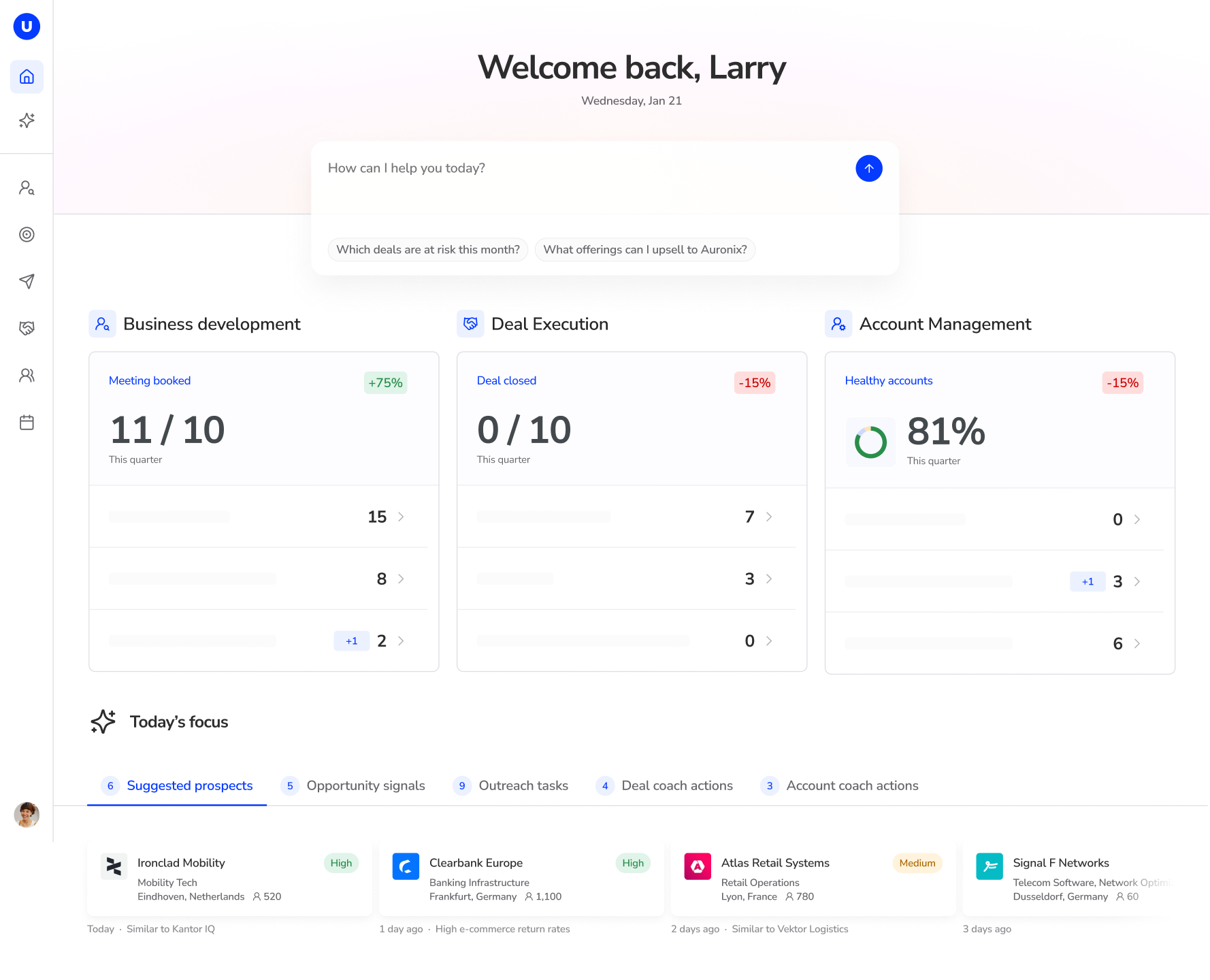
The same rep opens their sales platform. Because the system knows the client’s industry, deal stage, and past interactions, it automatically recommends:
- A current pitch deck for that industry
- Relevant case studies
- Talking points aligned with company messaging
Instead of searching, the rep reviews and personalizes the materials in minutes. The system also suggests the next best action after the meeting, like sending a follow-up summary.
This is the power of an operating system. It guides the rep step by step.
How AI makes guidance personal and relevant
AI doesn’t just speed things up. It makes content smarter.
When combined with a governed knowledge base, AI can:
- Generate custom emails that match your tone and include the right references
- Score opportunities based on qualification criteria
- Recommend which product or service to highlight next
This means every rep can sound professional and consistent, even if they are new to the role.
How uman supports modern enablement
uman is built to turn content into action. It offers:
- A single knowledge base that stays updated automatically
- Embedded workflows that guide reps through prospecting, meetings, and follow-ups
- AI suggestions that are always linked to your approved messaging and content
- Continuous learning, so recommendations improve over time
Instead of giving reps a library and hoping they use it, uman gives them a path they can trust every day.
A story: saving time and winning trust
Imagine a rep working on a renewal. With a static library, they might spend hours gathering slides, creating updates, and writing emails from scratch.
With uman, they log in and see:
- A complete account summary with recent activity
- A suggested renewal deck
- Pre-drafted talking points based on past meetings
Instead of worrying about missing something, they focus on the conversation. The client feels supported, and the rep feels confident.
Conclusion
Sales enablement has changed. Reps don’t just need more content. They need smart systems that guide them in real time.
Moving from static libraries to a true sales operating system helps teams work faster, stay consistent, and grow revenue.
Prep like a machine, sell like a human
Let AI handle the research and prep work — you focus on building relationships and closing deals.