%20(1).png)
The hidden cost of sales inconsistency (and how to fix it)
If you ask most sales leaders what is holding their revenue back, they will say things like pipeline size, pricing pressure, or hiring challenges. But if you look closer, you will see the real problem is much simpler and more common. The real problem is inconsistency. Inconsistent selling is the silent killer of growth. When everyone works in a different way, it creates hidden costs you do not see right away. It wastes time, stretches out sales cycles, and makes your forecast little more than a guess. In this article, you will learn why inconsistency costs more than you think, how to spot it in your team, and what you can do to replace it with a clear and repeatable process.
What is sales inconsistency?
Sales inconsistency happens when your team members:
- Use different ways to qualify and follow up on deals
- Work with outdated or conflicting messages
- Store information in many different tools and folders
- Build forecasts based on personal opinion instead of real data
When every salesperson uses their own style, each deal becomes a coin toss and your results are unpredictable.
The true cost of inconsistent selling
Let’s break it down into real numbers:
Time waste
- Reps spend up to 12 hours every week doing manual admin and prep
- More than 50 percent of sales time is spent on work that does not create revenue
Pipeline quality
- About 35 percent of opportunities are not qualified when they enter your pipeline
- This makes your forecast look better than it really is
Forecast accuracy
- 70 percent of sales leaders say their forecasts are usually wrong
- Deals get stuck because key qualification details are missing or unclear
Ramp time
- Without a clear process, new hires need 9 to 12 months to reach full productivity
- Even experienced reps struggle to stay consistent
Emotional cost
- Reps feel burned out because they must figure everything out on their own
- Sales managers lose trust in their forecast and their data
Why tools alone do not solve the problem
Many teams try to solve inconsistency with more tools. But CRM platforms and AI helpers do not fix the real issue.
- A CRM is just a place to record what happened. It does not guide your reps on what to do next.
- AI tools like ChatGPT or Copilot can help write content but they do not connect to your sales process or your company’s knowledge.
- Meeting recorders capture conversations but do not tell your reps the next best action.
These tools can help in small ways but they do not replace the need for a clear system.
What high-performing teams do differently
The best sales teams do not leave process up to chance. They build a system that everyone uses.
Think of it like training in sports. An athlete does not rely on inspiration alone. They follow a plan with clear steps. The same is true for sales.
This system has three main parts:
- A knowledge base that keeps your messages, content, and playbooks in one place
- Workflows that guide reps step by step
- AI that gives smart recommendations based on your own data
The benefits of a sales operating system
- Higher productivity because reps spend more time selling and less time searching
- Faster ramp time because new hires learn by doing, not just reading documents
- More accurate forecasts because everyone uses the same qualification standards
- Higher win rates because your process is consistent
How uman helps you remove inconsistency
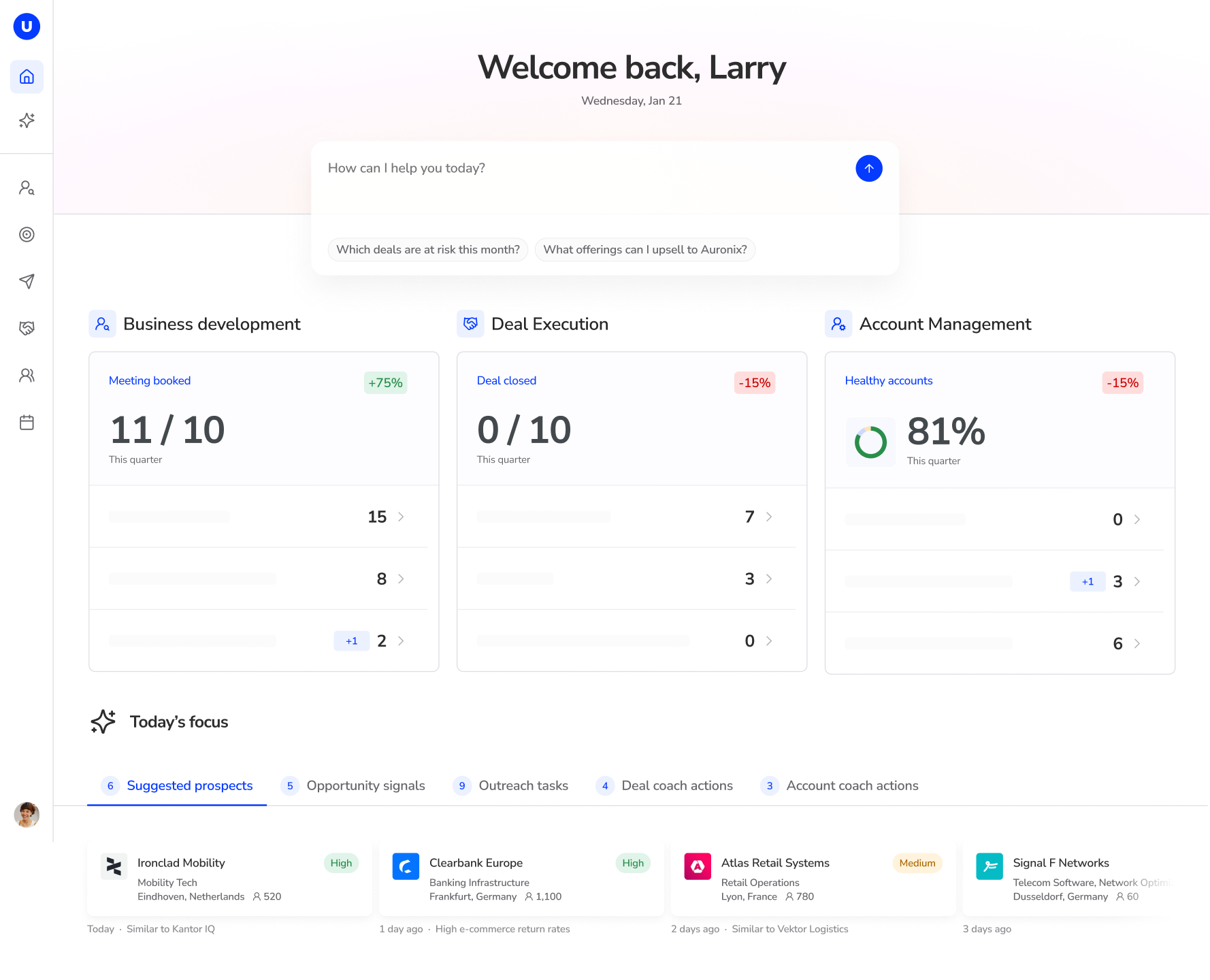
uman is made to help you create this kind of system:
- The service knowledge hub organizes all your important information
- Embedded workflows guide your reps through prospecting, deal execution, and account growth
- AI suggestions show the next best action without needing manual prompts
- Every interaction updates the system so it keeps getting smarter
Conclusion
Inconsistent selling is a hidden cost that holds your revenue back. But you can replace it with a system that guides your team and makes results more predictable.
If you want to see how uman helps you build a clear sales operating system, book a personalized demo today.
Prep like a machine, sell like a human
Let AI handle the research and prep work — you focus on building relationships and closing deals.