%20(1).png)
What is a complex sales cycle? A guide for B2B leaders
Discover what defines a complex sales cycle, the 7 core stages, common challenges like multi-threading, and proven strategies to optimize your B2B sales process for better outcomes.
Most sales leaders underestimate the true complexity of high-value B2B deals. While transactional sales close in weeks, complex sales cycles average 6 to 24 months and involve coordinating with an average of 6.3 stakeholders. These aren’t just longer sales processes. They’re fundamentally different journeys requiring strategic orchestration across multiple decision-makers, customized solutions, and iterative negotiations. This guide breaks down what defines a complex sales cycle, the core stages involved, common challenges that derail deals, and proven strategies to optimize your team’s performance in lengthy B2B sales environments.
Table of Contents
- Key takeaways
- What is a complex sales cycle? Defining the concept
- Core stages of the complex sales cycle: From prospecting to expansion
- Challenges and nuances in managing complex sales cycles
- Choosing and integrating sales methodologies for complex cycles
- Optimizing your complex sales cycle: Best practices and strategies
- How Uman supports complex sales cycle management
- Frequently asked questions
Key Takeaways
PointDetailsComplex deal definitionA complex sales cycle involves high value B2B deals with multiple decision makers, customization, and long durations typically six to twenty four months.Core stagesCore stages include prospecting and outreach, qualification and discovery, needs analysis and solution design, proposal development and presentation, and negotiation and consensus building.Stakeholder coordinationComplex deals involve an average of 6.3 stakeholders across functions, and risk increases if a single champion leaves.Integrated qualificationIntegrated qualification and discovery help validate budget timeline and decision processes early to prevent stalls.Patience and planningPatience and strategic planning are required to manage nonlinear journeys and iterative negotiations across multiple stakeholders.
What is a complex sales cycle? Defining the concept
A complex sales cycle refers to high-value B2B sales processes involving customizable products or services, multiple decision-makers, and lengthy durations. These deals typically exceed $500,000 in value and require engaging multiple contacts across an organization, with an average of 6.3 stakeholders participating in purchase decisions. The timeline stretches from 6 to 24 months on average, though this varies significantly by industry and deal size.
Several characteristics distinguish complex from transactional sales:
- High deal values requiring executive approval and budget allocation across multiple fiscal periods
- Customizable products or services demanding deep needs analysis and solution configuration
- Multiple stakeholders including technical evaluators, financial gatekeepers, legal reviewers, and executive sponsors
- Lengthy evaluation periods with formal RFP processes, proof of concept stages, and security reviews
- Relationship-based selling where trust and credibility development span months or years
The stakes are considerably higher in complex sales. A single-threaded relationship where you rely on one champion can collapse if that person leaves or loses influence. Deal failure becomes more likely when you overlook critical stakeholders or rush through qualification stages. Unlike transactional sales where a single decision-maker can approve a purchase in days, complex cycles demand patience, strategic planning, and systematic stakeholder management to navigate successfully.
Core stages of the complex sales cycle: From prospecting to expansion
Understanding the key stages helps sales leaders allocate resources effectively and identify where deals stall. While these phases appear sequential, complex sales cycles involve iteration, overlap, and occasional backtracking as new stakeholders enter or requirements evolve.
- Prospecting and initial outreach: Identifying target accounts that match your ideal customer profile, researching organizational structure, and initiating contact with potential champions. This stage requires understanding business challenges and finding entry points into accounts.
- Qualification and discovery: Assessing whether the opportunity aligns with your solution capabilities and the prospect’s budget, timeline, and decision-making process. Discovery digs deeper into pain points, current state challenges, and desired outcomes through consultative conversations.
- Needs analysis and solution design: Collaborating with technical and business stakeholders to map specific requirements, configure tailored solutions, and demonstrate how your offering addresses their unique challenges. This often involves workshops, technical assessments, and proof of concept demonstrations.
- Proposal development and presentation: Creating comprehensive proposals that articulate value, pricing, implementation plans, and success metrics. Presentations engage multiple stakeholder groups, addressing technical, financial, and strategic concerns specific to each audience.
- Negotiation and consensus building: Working through objections, refining terms, and securing buy-in from all decision-makers and influencers. This stage often involves multiple rounds as procurement, legal, and finance teams review contract terms.
- Closing and contracting: Finalizing agreements, navigating legal review, and obtaining signatures from authorized parties. Even at this stage, deals can stall in procurement processes or require executive escalation.
- Delivery, implementation, and expansion: Ensuring successful onboarding, demonstrating value realization, and identifying opportunities for account expansion through additional products, services, or use cases.
Effective business development and deal execution require recognizing that these stages rarely progress linearly. New stakeholders may emerge during negotiation, requiring you to revisit discovery. Budget changes can send you back to proposal refinement. Building flexibility into your process while maintaining momentum separates successful complex sales teams from those with bloated pipelines and low conversion rates.
Challenges and nuances in managing complex sales cycles
Complex B2B sales present obstacles that don’t exist in simpler transactions. Understanding these challenges helps you build strategies that mitigate risk and accelerate deals without cutting corners.

The most significant risk is single-threading. When you rely on one champion, you’re vulnerable to organizational changes, shifting priorities, or your contact losing internal influence. If that person leaves or gets reassigned, your deal often dies with their departure. Multi-threading by building relationships across multiple stakeholders creates resilience and provides alternative pathways when obstacles arise.
Political dynamics add another layer of complexity. Buying committees average 11.2 stakeholders in enterprise deals, each with different priorities, success metrics, and veto power. Technical teams evaluate functionality, finance scrutinizes ROI, legal reviews risk and compliance, and executives assess strategic alignment. Navigating these competing interests requires understanding organizational politics and building coalitions of support.
Procurement and legal review processes create significant bottlenecks. According to research, 28% of deals fail during the paper process, stalling in contract negotiations, security reviews, or budget approvals. These stages often lack clear timelines, leaving deals in limbo for weeks or months. Addressing procurement bottlenecks proactively by engaging legal and procurement teams early reduces last-minute surprises.
Non-linear buying journeys complicate forecasting and pipeline management. Prospects may pause evaluations due to budget freezes, restart discovery when new stakeholders join, or circle back to earlier stages when requirements change. This unpredictability makes traditional linear sales processes ineffective for complex B2B environments.
Pro Tip: Create detailed stakeholder maps early in the sales cycle, identifying decision-makers, influencers, and potential blockers. Update these maps continuously as you learn more about organizational dynamics and individual motivations. This practice, combined with improving pre-sales productivity, helps you allocate effort strategically and avoid wasting time on contacts without real influence.
ChallengeImpactMitigation strategySingle-threadingDeal collapse if champion leavesBuild relationships with 3-5 stakeholders across functionsPolitical dynamicsCompeting priorities stall decisionsMap stakeholder interests and build consensus through targeted value messagingProcurement delays28% of deals fail in paper processEngage legal/procurement early, provide standard terms proactivelyNon-linear journeysUnpredictable timelines and forecastingBuild flexibility into process, maintain engagement during pauses
Choosing and integrating sales methodologies for complex cycles
No single sales methodology addresses all aspects of complex B2B selling. The most effective approach integrates qualification rigor with discovery depth, combining frameworks that excel in different areas.
MEDDPICC (Metrics, Economic Buyer, Decision Criteria, Decision Process, Paper Process, Identify Pain, Champion, Competition) provides exceptional qualification rigor. It forces sales teams to answer hard questions about deal viability, decision-making authority, and competitive positioning. This methodology works brilliantly for large enterprise deals where thorough qualification prevents wasted effort on unwinnable opportunities. However, MEDDPICC can feel overly rigid for mid-market deals and focuses more on qualification checkboxes than on building deep customer relationships.
SPIN Selling (Situation, Problem, Implication, Need-Payoff) excels at discovery and needs development. By asking strategic questions that help prospects recognize problems and envision solutions, SPIN builds engagement and positions you as a trusted advisor. The framework guides conversations that uncover hidden needs and create urgency. Its weakness lies in qualification rigor. SPIN doesn’t systematically assess deal viability or help you navigate complex decision-making processes.
The Challenger Sale emphasizes teaching, tailoring, and taking control of sales conversations. It’s particularly effective when you need to challenge customer assumptions and introduce new perspectives. Challenger reps bring insights that reframe how prospects think about their challenges. Like SPIN, it lacks the systematic qualification framework needed for complex, multi-stakeholder deals.
Successful sales organizations increasingly adopt hybrid approaches. Combining SPIN’s discovery depth with MEDDIC’s qualification rigor creates a balanced framework that builds relationships while maintaining deal discipline. You use SPIN techniques to uncover needs and engage stakeholders, then apply MEDDIC criteria to assess whether the opportunity warrants continued investment.
Pro Tip: Systems beat heroics in complex sales. Rather than relying on individual rep brilliance, build repeatable processes that any team member can follow. Document your integrated methodology, create templates and playbooks, and train your team consistently. This systematic approach scales better than depending on a few star performers.
MethodologyPrimary strengthPrimary weaknessBest use caseMEDDPICCRigorous qualification and deal validationCan feel transactional, less focus on relationship buildingEnterprise deals >$1M requiring thorough vettingSPIN SellingDeep discovery and needs developmentLacks systematic qualification frameworkEarly-stage discovery and stakeholder engagementChallengerInsight-led selling and reframing customer thinkingLimited guidance on qualification and process navigationDifferentiation in competitive, commoditized marketsHybrid (SPIN+MEDDIC)Balances discovery depth with qualification rigorRequires training investment and process disciplineComplex B2B sales with multiple stakeholders and long cycles
Implementing a sales operating system that incorporates your chosen methodology ensures consistency across your team and provides the structure needed to manage complexity effectively.
Optimizing your complex sales cycle: Best practices and strategies
Improving complex sales cycle performance requires deliberate strategies that address the unique challenges of lengthy, multi-stakeholder deals. Research shows that deals exceeding $500K take 270 days on average, making efficiency gains critically important for revenue growth.

Start with aggressive multi-threading from day one. Don’t wait until later stages to expand your stakeholder network. Early engagement with technical evaluators, financial decision-makers, and executive sponsors builds resilience and provides multiple perspectives on organizational priorities. Each relationship creates an additional channel for information, influence, and momentum when obstacles arise.
Leverage data to identify and eliminate bottlenecks systematically. Analyze where deals stall most frequently in your pipeline. Is it during technical evaluation? Legal review? Budget approval? Once you pinpoint the problem stages, develop specific interventions. If procurement delays are common, create standard terms and engage procurement teams earlier. If technical evaluations drag on, develop proof of concept frameworks that accelerate assessment.
Technology platforms designed for complex sales environments dramatically improve efficiency. Account management tools help track stakeholder engagement, monitor account health, and identify expansion opportunities. Deal execution platforms streamline meeting preparation, content generation, and CRM updates. These technologies free your team from administrative burden, allowing more time for strategic selling activities.
Personalization remains critical, but balance depth with progression. Deep discovery and customized solutions are essential in complex sales, yet perfectionism can stall deals indefinitely. Set clear milestones for each stage and maintain momentum by delivering value iteratively rather than waiting for complete information. You can refine solutions during implementation based on additional insights.
Regularly review and adapt your processes to match your organization’s specific complexity and culture. What works for a software company selling to mid-market manufacturers may not fit a consulting firm serving Fortune 500 financial services clients. Test different approaches, measure results, and evolve your methodology based on evidence rather than assumptions. Addressing sales cycle bottlenecks requires continuous improvement, not one-time fixes.
Five actionable practices to implement immediately:
- Conduct weekly pipeline reviews that assess deal health using your qualification framework, identifying at-risk opportunities early
- Create stakeholder engagement scorecards that track breadth and depth of relationships across buying committee members
- Develop stage-specific playbooks that outline required activities, deliverables, and exit criteria for each phase
- Implement mutual action plans with prospects that document agreed timelines, responsibilities, and decision milestones
- Build a content library organized by stakeholder role and buying stage, enabling rapid personalization without starting from scratch
These strategies compound over time. Small improvements in qualification accuracy, stakeholder engagement, or stage progression rates translate into significantly higher win rates and shorter sales cycles across your entire pipeline.
How Uman supports complex sales cycle management
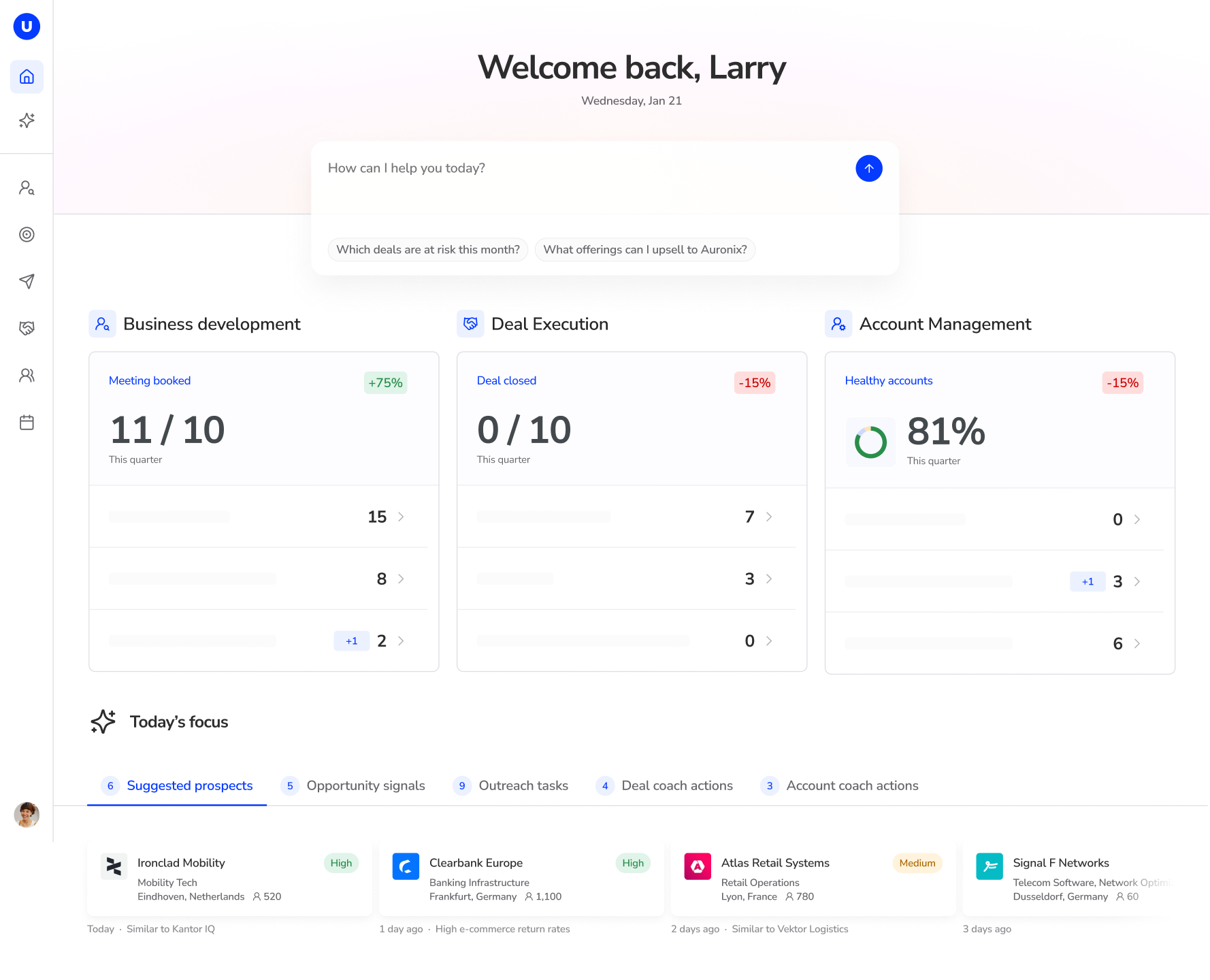
Navigating complex B2B sales cycles demands more than methodology. You need integrated technology that systematizes best practices and eliminates the administrative friction that slows deals down. Uman’s platform is purpose-built for sales organizations managing lengthy, multi-stakeholder sales processes across broad product and service portfolios.
The platform centralizes sales knowledge into a governed data layer, ensuring your team always accesses accurate, current information about your offerings, customer contexts, and competitive positioning. This foundation powers automated workflows for deal execution, from meeting preparation and stakeholder analysis to proposal generation and CRM updates. By reducing administrative burden, Uman frees your sales professionals to focus on strategic relationship building and deal progression.
Account management capabilities help identify cross-sell and upsell opportunities within existing relationships, turning closed deals into expanding partnerships. For sales leaders managing complex cycles, Uman provides the systematic approach and technological support needed to improve win rates, shorten sales cycles, and scale best practices across your entire organization.
Frequently asked questions
How long does a typical complex sales cycle last?
Complex B2B sales cycles typically range from 6 to 24 months, with deals exceeding $500,000 averaging around 270 days. Duration varies significantly based on deal size, industry regulations, organizational complexity, and the number of stakeholders involved in decision-making.
What’s the difference between a complex sale and a transactional sale?
Complex sales involve multiple decision-makers (average 6.3 stakeholders), customizable solutions, lengthy evaluation periods, and high deal values, while transactional sales feature single decision-makers, standardized products, short timelines, and lower values. Complex sales require relationship-based selling and strategic stakeholder management, whereas transactional sales focus on efficiency and volume.
How many stakeholders are typically involved in complex B2B purchases?
Complex B2B buying committees average 6.3 stakeholders for standard deals and can reach 11.2 stakeholders in large enterprise purchases. These include technical evaluators, financial decision-makers, legal reviewers, procurement specialists, executive sponsors, and end users, each with distinct priorities and influence levels.
Which sales methodology works best for complex sales cycles?
No single methodology suffices for complex sales. The most effective approach integrates qualification frameworks like MEDDPICC with discovery methodologies such as SPIN Selling or Challenger. This hybrid strategy balances rigorous deal qualification with deep needs development and relationship building, addressing the multi-faceted nature of complex B2B sales.
What causes most complex sales deals to fail?
Single-threading (relying on one champion) creates vulnerability to organizational changes, while 28% of deals fail during procurement and legal review processes. Political dynamics among buying committee members, budget constraints, shifting priorities, and inadequate stakeholder engagement also contribute significantly to deal failure in complex sales environments.
Recommended



Prep like a machine, sell like a human
Let AI handle the research and prep work — you focus on building relationships and closing deals.