%20(1).png)
Why a sales process is important for B2B success
Discover why structured sales processes increase win rates by 588% and how to implement methodologies like SPICED and MEDDPICC for B2B success.
Many sales leaders assume that winning deals depends primarily on hiring talented reps with strong interpersonal skills. However, research reveals a different reality. Top performers are 588% more likely to follow structured methodologies like SPICED or MEDDPICC than average reps. This data challenges the notion that sales success is mostly about individual charisma. A defined sales process provides the framework that enables your entire team to consistently qualify opportunities, forecast accurately, and close more deals in complex B2B environments. This article explains why structured sales processes matter and how to implement them effectively.
Table of Contents
- Key takeaways
- The impact of structured sales processes on performance
- How a defined sales process drives efficiency and reduces administrative burden
- Comparing popular sales processes and their applicability in complex B2B sales
- Implementing and optimizing your sales process for lasting success
- Explore Uman’s platform to transform your sales process
- Frequently asked questions
Key Takeaways
PointDetailsStructured methodologies boost winsTop performers are far more likely to follow repeatable frameworks which raises win rates and accelerates revenue growth.Defined process improves efficiencyA documented process reduces wasted time and aligns activities across sales, marketing, and operations.Better forecasting and qualificationStructured criteria and stages enable more accurate pipeline assessments and smarter deal selection.Adaptive framework adoptionStart with a standard methodology and tailor it to product complexity and team capability to balance discipline with flexibility.
The impact of structured sales processes on performance
Structured sales methodologies directly influence your team’s ability to win deals and hit revenue targets. The evidence is compelling: top performers are 588% more likely to follow structured frameworks compared to average reps. This massive performance gap shows that process discipline separates winners from everyone else.
Popular methodologies include SPICED (Situation, Pain, Impact, Critical Event, Decision) and MEDDPICC (Metrics, Economic Buyer, Decision Criteria, Decision Process, Paper Process, Identify Pain, Champion, Competition). These frameworks provide repeatable steps that help reps qualify opportunities rigorously, understand buyer contexts deeply, and navigate complex stakeholder landscapes. When your team follows a consistent process, they make better decisions about where to invest time and which deals to pursue aggressively.
“Sales processes create predictability in unpredictable environments. They transform individual heroics into team capabilities.”
Structured processes improve three critical areas: deal qualification, forecasting accuracy, and win rates. Qualification becomes more rigorous when reps systematically assess buyer pain, budget authority, and timeline. Forecasting improves because managers can evaluate pipeline health using consistent criteria rather than gut feelings. Win rates increase because your team engages buyers with relevant insights at the right moments.
MetricTop Performers (Structured Process)Average Reps (Ad Hoc Approach)Win Rate47%23%Forecast Accuracy89%62%Average Deal Size$127K$84KSales Cycle Length87 days112 days
Effective sales processes share several core characteristics:
- Clear qualification criteria that help reps identify viable opportunities early
- Defined stages with specific exit criteria that prevent deals from stalling
- Stakeholder mapping requirements that ensure engagement with all decision makers
- Content and messaging guidelines aligned to each buyer journey stage
- Metrics and KPIs that enable coaching and continuous improvement
Pro Tip: Avoid adopting methodologies too rigidly. The best approach adapts proven frameworks to your specific product complexity, buyer dynamics, and team capabilities. Start with a standard methodology, then customize based on what your top performers already do well.
Implementing structured processes also supports building high performing sales teams by creating shared language and expectations. New hires ramp faster when they can follow documented steps rather than figuring everything out through trial and error. However, process alone won’t solve deeper issues. Understanding the limitations of AI in sales process helps you set realistic expectations about what technology can and cannot fix.
How a defined sales process drives efficiency and reduces administrative burden
Beyond performance gains, structured sales processes dramatically improve operational efficiency across your organization. A documented process clarifies exactly what activities reps should complete at each deal stage, eliminating confusion and redundant work. When everyone follows the same steps, your team wastes less time reinventing approaches or debating next actions.

Streamlined communication represents another major efficiency gain. Sales, marketing, and operations teams align more easily when they share a common process framework. Marketing knows which content assets support each stage. Operations understands when to engage for technical validation or contract support. This coordination reduces handoff delays and keeps deals moving forward.
Recent research demonstrates that technology amplifies these efficiency benefits. GenAI positively impacts sales process effectiveness, administrative efficiency, and sales performance. AI tools automate routine tasks like meeting preparation, CRM updates, and follow-up email drafting. This automation frees your reps to focus on high-value activities like strategic account planning and relationship building.
Specific efficiency gains from standardized processes include:
- Reduced meeting prep time through templated research and stakeholder analysis
- Faster proposal creation using approved content libraries and case studies
- Improved CRM data quality through automated capture and validation
- Shorter sales cycles due to consistent buyer engagement patterns
- Lower training costs as new hires follow documented playbooks
- Better resource allocation based on clear pipeline visibility
These improvements compound over time. A rep who saves two hours per week on administrative tasks gains 100 hours annually for selling activities. Across a team of 20 reps, that’s 2,000 hours redirected toward revenue generation. The math becomes compelling quickly.
Pro Tip: Balance process consistency with flexibility for your reps. The goal is to provide helpful structure, not create bureaucratic overhead. Allow experienced reps to adapt steps based on buyer context while maintaining core qualification and documentation standards. This approach preserves efficiency gains while respecting seller autonomy.
Exploring pre-sales efficiency strategies reveals additional ways to optimize your team’s time allocation. Modern sales technology platforms integrate process guidance directly into daily workflows, making it easier for reps to follow best practices without switching between multiple tools.
Comparing popular sales processes and their applicability in complex B2B sales
Selecting the right sales methodology for your organization requires understanding how different frameworks address specific selling challenges. Three methodologies dominate complex B2B environments: SPICED, MEDDPICC, and Challenger Sale. Each brings distinct strengths to different selling scenarios.
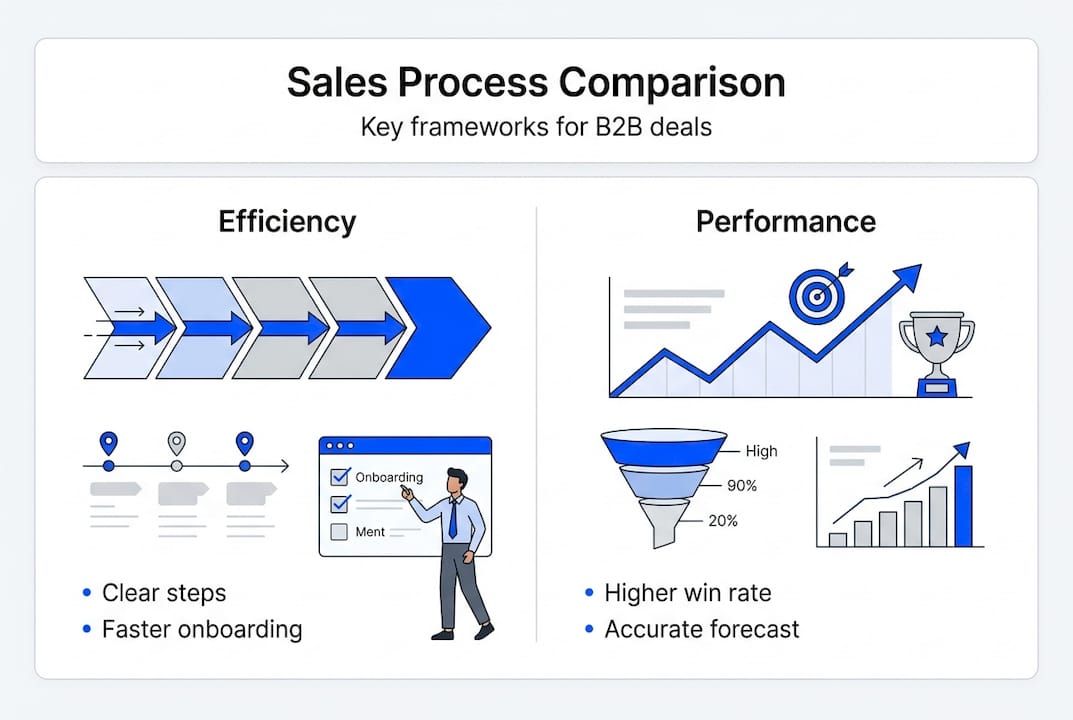
SPICED focuses on understanding buyer situations and the business impact of solving their problems. This methodology works well when you need to build urgency around initiatives that might otherwise remain low priority. MEDDPICC provides exhaustive qualification criteria that help teams navigate enterprise sales with multiple stakeholders and lengthy approval processes. Challenger Sale emphasizes teaching buyers new perspectives about their business, making it effective when you need to differentiate in competitive markets.
MethodologyPrimary FocusComplexity LevelBest ForSPICEDSituation, Pain, Impact, Critical Event, DecisionMediumMid-market deals requiring urgency and clear ROIMEDDPICCMetrics, Economic Buyer, Decision Criteria, ProcessHighEnterprise sales with complex buying committeesChallenger SaleTeaching, Tailoring, Taking ControlMedium-HighCompetitive markets requiring thought leadershipSolution SellingNeeds, Solutions, ValueLow-MediumTransactional sales with clear product fit
Each methodology has trade-offs worth considering:
- SPICED strengths: Simple to learn, focuses on business outcomes, creates urgency effectively. SPICED limitations: Less detailed on stakeholder mapping, may oversimplify enterprise complexity.
- MEDDPICC strengths: Comprehensive qualification, excellent forecast accuracy, strong in enterprise environments. MEDDPICC limitations: Can feel bureaucratic, requires significant training investment, may slow down mid-market deals.
- Challenger Sale strengths: Differentiates through insights, builds credibility, effective in competitive situations. Challenger Sale limitations: Requires deep industry knowledge, can alienate buyers if executed poorly, needs strong marketing support.
- Solution Selling strengths: Straightforward approach, works for clear pain points, easy to implement. Solution Selling limitations: Less effective in complex sales, doesn’t address modern buyer behaviors, limited differentiation.
When selecting a methodology, evaluate your typical deal characteristics. Enterprise sales with six-month cycles and ten stakeholders need MEDDPICC’s rigor. Mid-market opportunities with shorter timelines might benefit more from SPICED’s focus on impact and urgency. Highly competitive markets where buyers struggle to differentiate vendors call for Challenger Sale’s teaching approach.
Customization matters more than perfect methodology selection. Take the framework that best matches your selling environment, then adapt it based on what your top performers already do successfully. Document your customized process clearly so everyone understands expectations. The deal execution platform features that support your chosen methodology can reinforce best practices through guided workflows.
Implementing and optimizing your sales process for lasting success
Successful process implementation requires systematic planning and ongoing refinement. Follow these phases to embed your chosen methodology effectively:
- Assess your current state by analyzing win rates, sales cycle length, and forecast accuracy across your team. Identify specific gaps that a structured process should address.
- Select and customize your methodology based on deal complexity, buyer dynamics, and team capabilities. Document clear stage definitions, exit criteria, and required activities.
- Train your entire sales organization on the new process, including managers who will coach to it. Use real deal examples to illustrate how the process applies in practice.
- Implement supporting tools and content that make the process easy to follow. Integrate process guidance into your CRM and sales enablement platforms.
- Measure adoption and results using leading indicators like activity completion rates and lagging indicators like win rates. Track metrics consistently to identify trends.
- Adjust based on feedback and performance data. Refine steps that create friction without adding value. Double down on elements that clearly improve outcomes.
Key success factors separate effective implementations from failed attempts:
- Leadership buy-in demonstrated through active participation and consistent messaging about process importance
- Clear KPIs that connect process adherence to business outcomes like revenue and pipeline growth
- Ongoing coaching that helps reps apply the process to real opportunities rather than treating it as paperwork
- Recognition systems that celebrate reps who follow the process and achieve strong results
- Regular process reviews that incorporate seller feedback and adapt to changing market conditions
Pro Tip: Leverage customer success stories and pilot programs to build momentum. Start with a small group of reps who test the new process and document quick wins. Share their results to demonstrate value before rolling out organization-wide. This approach reduces resistance and provides proof points that motivate broader adoption.
Data-driven continuous improvement keeps your process relevant as markets evolve. Review conversion rates between each stage monthly to identify bottlenecks. Analyze lost deals to understand where your process needs strengthening. Gather regular feedback from your sales team about which steps add value versus which feel like busywork.
Before implementing major process changes, consider conducting an AI readiness assessment for sales to understand how technology can support your methodology. Real-world examples like the Akkodis sales process transformation show how organizations successfully embed structured processes with the right combination of methodology, technology, and change management.
Explore Uman’s platform to transform your sales process
Implementing a structured sales process becomes significantly easier with the right technology foundation. Uman’s platform centralizes your sales knowledge and automates process execution across deal stages, reducing the administrative burden that often derags process adoption.
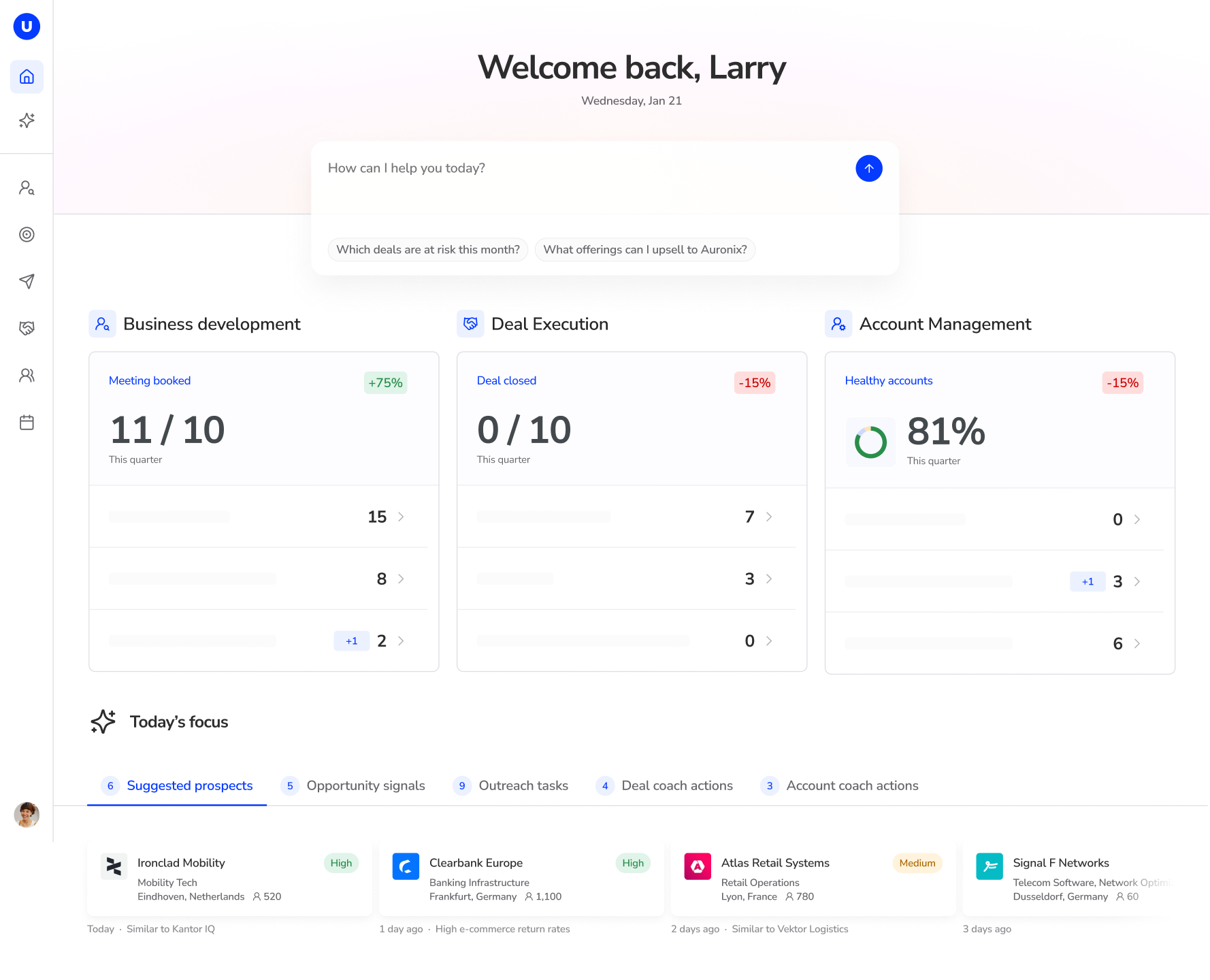
The Uman platform provides guided workflows for prospecting, meeting preparation, and opportunity management that embed your chosen methodology directly into daily activities. Deal execution features help reps qualify opportunities rigorously and generate client-specific content without spending hours on research. Account management solutions identify cross-sell and upsell opportunities by analyzing your portfolio against customer contexts. This combination of process guidance and automation enables your team to follow best practices consistently while focusing energy on strategic selling activities that drive revenue.
Frequently asked questions
How does a sales process improve team performance?
A structured sales process clarifies priorities and activities at each deal stage, eliminating confusion about next steps. It enables managers to coach effectively using consistent criteria rather than subjective opinions. Teams forecast more accurately because everyone evaluates opportunities using the same qualification framework. This consistency transforms individual success patterns into repeatable team capabilities.
What sales methodologies are recommended for complex B2B sales?
SPICED, MEDDPICC, and Challenger Sale represent the most popular methodologies for complex B2B environments. SPICED focuses on business impact and urgency. MEDDPICC provides comprehensive qualification criteria for enterprise deals with multiple stakeholders. Challenger Sale differentiates through teaching buyers new perspectives. Select based on your typical deal complexity, sales cycle length, and competitive dynamics.
Can technology like AI replace the sales process?
AI enhances sales processes but cannot replace them. GenAI positively impacts sales process effectiveness, administrative efficiency, and performance by automating routine tasks like research and CRM updates. However, AI requires a structured process to work effectively. Without clear qualification criteria and stage definitions, AI tools lack the context needed to provide relevant recommendations. Process discipline remains essential for successful AI adoption, as explored in depth regarding limitations of AI in sales process.
How long does it take to implement a new sales process?
Implementation timelines vary based on organization size and process complexity, but most companies need three to six months for full adoption. Initial training and rollout typically require four to eight weeks. Achieving consistent adherence and seeing measurable results takes an additional two to four months. Plan for ongoing refinement beyond the initial implementation period as you gather feedback and optimize based on real-world results.
What metrics should we track to measure sales process effectiveness?
Track both leading and lagging indicators. Leading indicators include process adherence rates, activity completion by stage, and pipeline velocity. Lagging indicators include win rates, average deal size, sales cycle length, and forecast accuracy. Compare metrics before and after implementation to quantify impact. Monitor conversion rates between each stage to identify specific bottlenecks that need attention.
Recommended


Prep like a machine, sell like a human
Let AI handle the research and prep work — you focus on building relationships and closing deals.