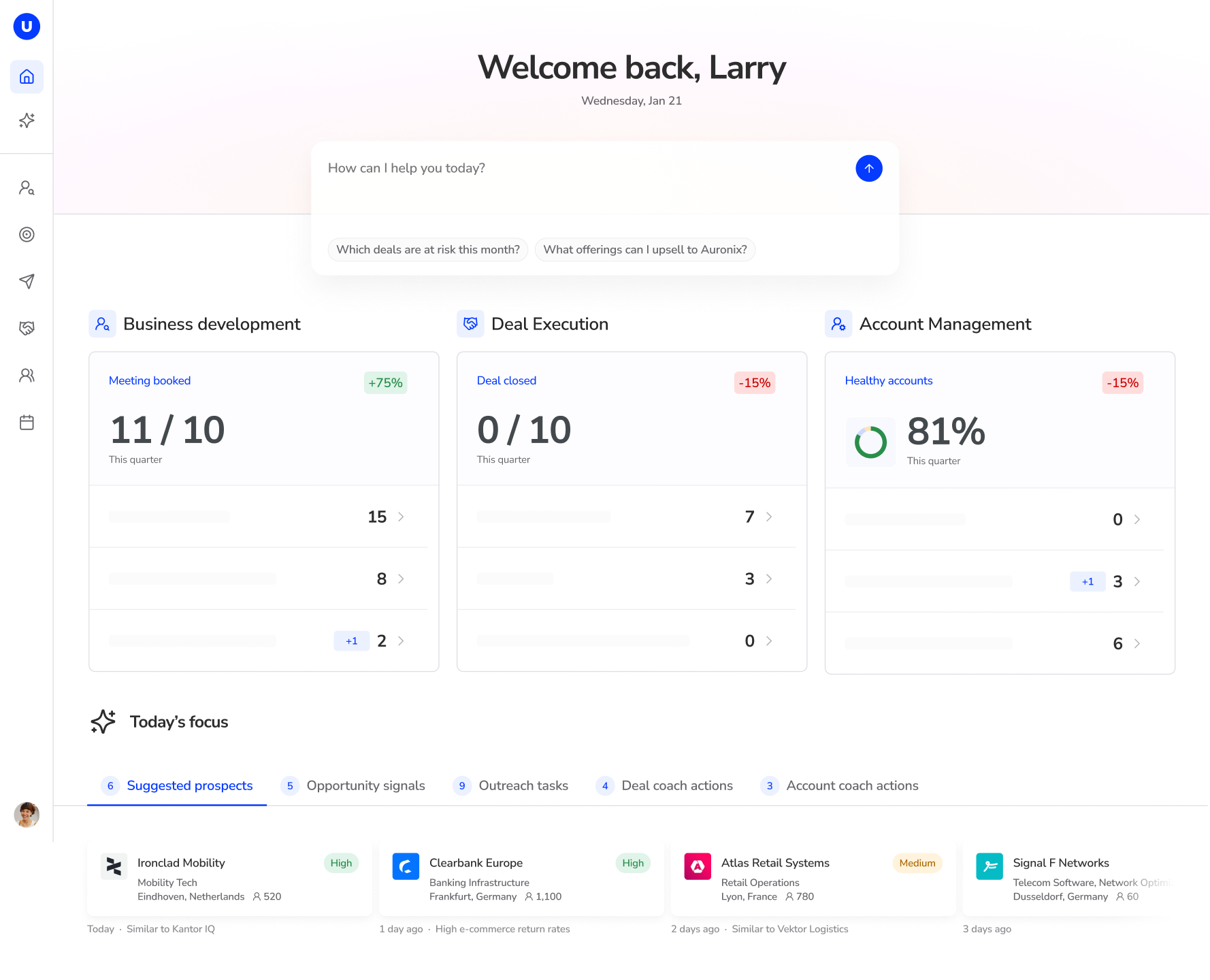
%20(1).png)
Sales is a fact-checking job now
Stop prepping for a meeting that no longer exists, and learn how to do it right
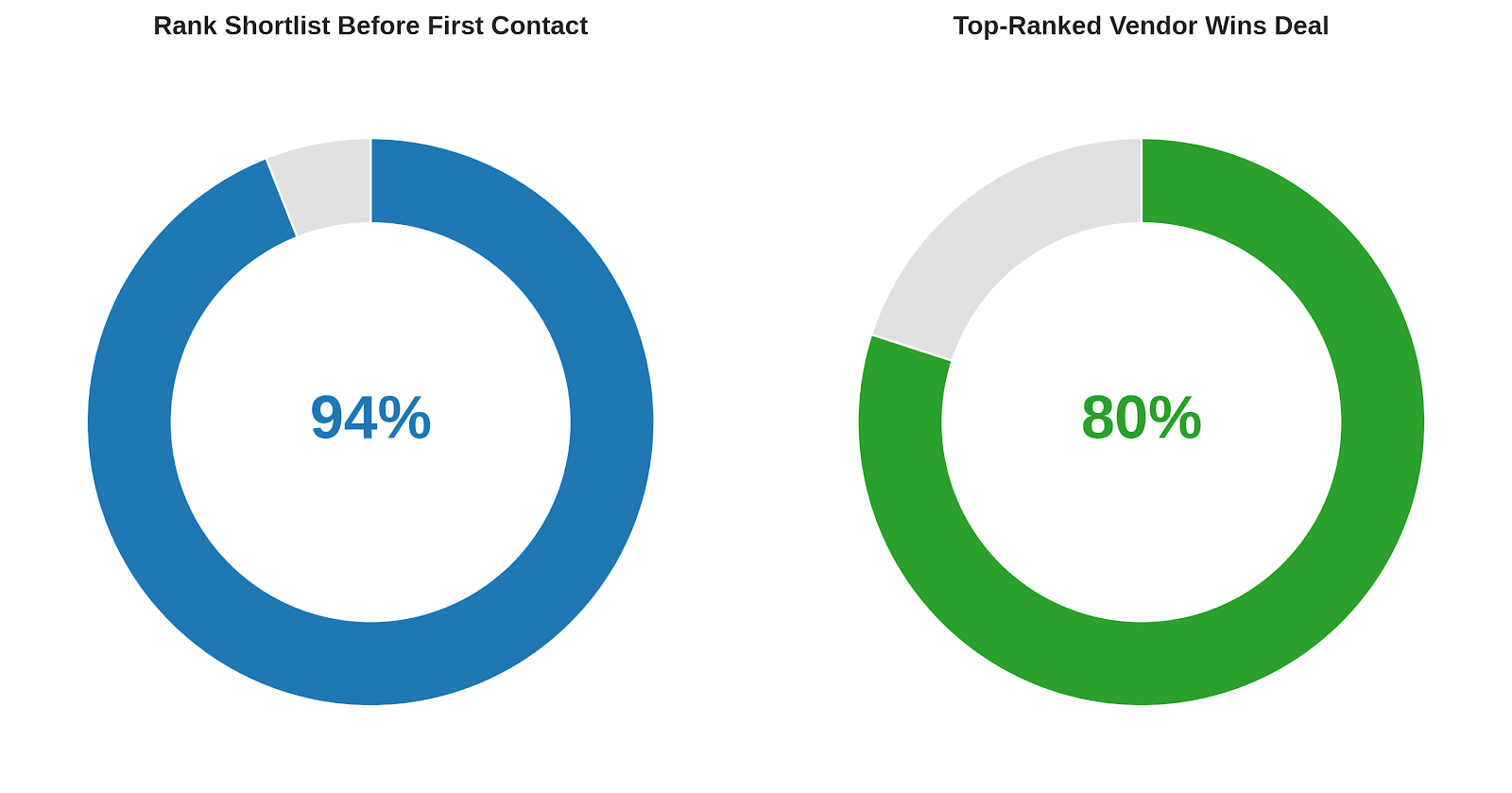
Buyers now finish their research before they ever contact you. 94% use AI to do it, and 94% of buying groups have ranked their shortlist before speaking to a single person, with the top listed vendor winning around 80% of the time.
The first meeting is no longer for buyers to learn what you do.
The first meeting now is for buyers to verify if their already formed AI-powered opinion is right.
In our conversation with Harry Boers, +11 years the resident strategist at Macaw, he said this: Clients now arrive far better prepared than they used to be, and by the time a seller reaches the table, most of the buying journey has already happened.
In a sense, you're not really competing with competitors anymore, but with the fifteen other things that company could spend the money on instead.
Which is why he doesn't take pitches on faith.
"I only participate if I can win. And if I ask that question to a client: "why are we on the shortlist?", and they have no story? I don't participate."
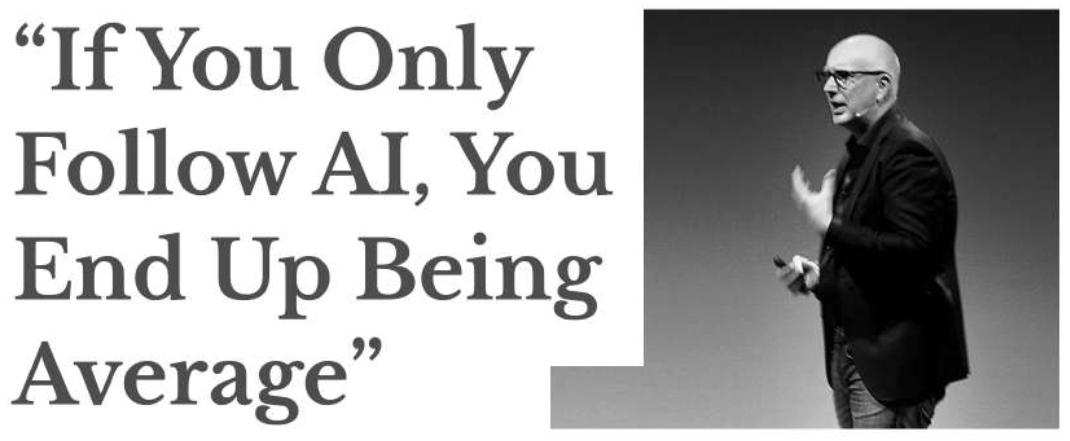
Read Harry's article here: https://www.uman.ai/newspaper
He was pressure-testing his position in a ranking years before anyone had numbers on the ranking. Then the numbers arrived.
Forrester put the question to 18,000 business buyers worldwide in its 2026 Buyers' Journey Survey.
94% of B2B buyers used AI during their most recent purchase, and twice as many named generative AI or conversational search their most meaningful research source than named any other single option.
That is over your website, your product experts and sales people.
Alongside that, 6sense found 94% of buying groups have already ranked their shortlist in order of preference before they make contact with anyone at all. And the top-ranked vendor wins around 80% of the time!
So the research is finished before your calendar invite lands. The comparison is done and the business case is half-written already. You've been ranked by something and someone that has never spoken to you. And then the meeting happens. Which raises a question almost nobody in sales has stopped to ask out loud: if buyers already have their answers, what are they turning up for?
Gartner found that 69% percent of B2B buyers said they turn to salespeople to validate AI-generated insights.
The first conversation used to be where buyers found things out. It's now where they check whether what they found out is true, and whether the person in front of them is worth believing.
So you're not really up against the competitor in the next browser tab so much as a confident paragraph an AI wrote about you last Tuesday.
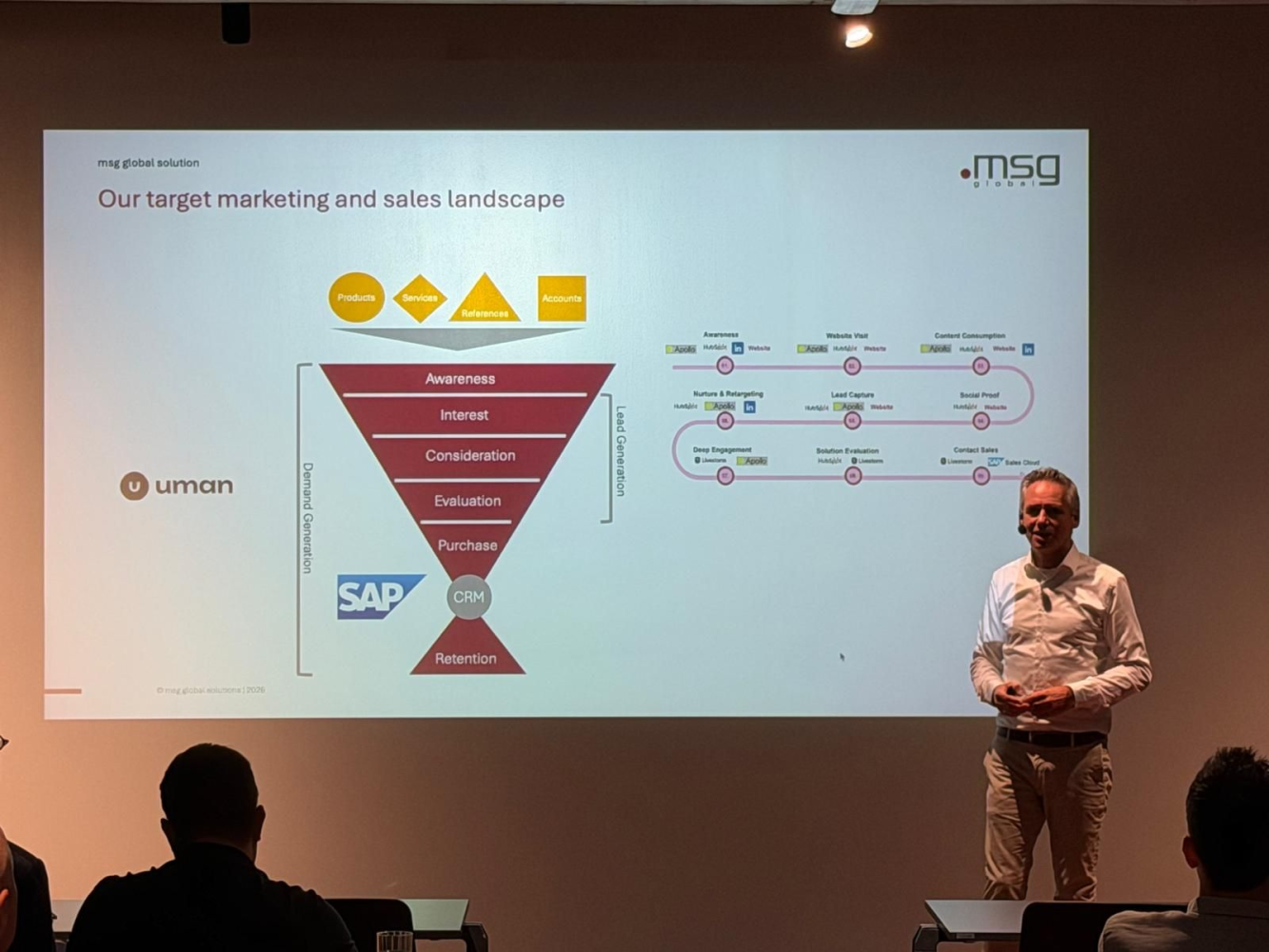
Peter de Bruijne, Executive Board for EMEA at msg global solutions, put his finger on the stakes at one of our Breakfast & AI sessions without knowing he was describing this exact problem.
"The opening conversation is usually the first click with the customer. And we forget that far too often."
The cost of fumbling it has gone up sharply, because the buyer now has a higher benchmark. Someone who half-remembers a detail doesn't come across as junior, they just come across as wrong.
msg global went through this in the most honest way we've heard anyone describe it. 1,500 people, 24 countries, €161 million in revenue, an SAP co-innovator. They still couldn't see their own portfolio, so they tried to fix it by hand, putting every pre-sales person on mandatory cleanup one day a week.
"We'd been at it almost a year. And I thought: wait, everything we did at the start I can basically throw away and start a new cycle."
Knowing your own offering isn't a project you finish, it's a state you have to hold, and manual effort can't hold it because the portfolio keeps moving underneath you.
The obvious response is to point more AI at the problem, and this is where Harry gets sharp. He has a term for what happens when everybody reaches for the same tools at once, which he calls digital sameness.
"Don't forget, the application of AI is a statistical model. If you only follow that, you always end up at the average. You're in the same mash as the rest."
A general-purpose assistant doesn't know your portfolio, your install base, or which of your customers looks like the one across the table, so it produces fluent answers rather than correct ones. Exactly the failure you're being tested on!
Passing that test needs something much narrower, which in fact becomes it strength. True correct info on what you sell, who you sold it to, when, how, why, and the impact it had. That's why msg global started where they did rather than with anything resembling automation.
"This (through uman) is the foundation you need before you can automate anything further."
Once it held, the rest compounded. Propositions started generating themselves, cross-sell became obvious rather than aspirational, and 25 leads that used to occupy a team for a month became something Peter could see immediately.
Peter was also honest about what hasn't worked, which is what made the rest of his talk credible. One product line underperforms, and he named the reason without flinching.
"One reason it isn't successful, is that its best seller refuses to work with uman."
Sabrina Van Cutsem, B2B Marketing & Intelligence Director at DPG Media, described the same outcome across more than 80 brands:
"uman knows more about the client and our offerings than we ever did."
Where the system gets used, the conversations get better. Where someone opts out, you can see the hole from across the room.
Which brings it back to Harry, who has a line about what happens when a whole profession reaches for the same playbook at the same time.
"If we all follow the same books and the same models, we also all end up in the same bin at the end of the funnel."
Your buyer already has the average answer. They read it before the call, and they booked the meeting to find out whether you're better than it.
That's the only question the first conversation asks now. Everything your team does before walking into it should be built around answering it.
Ready?
Start here: https://www.uman.ai/book-a-demo
Prep like a machine, sell like a human
Let AI handle the research and prep work — you focus on building relationships and closing deals.