%20(1).png)
5 Sales transformation priorities sales teams should lock in for Q3
Written based on what we see with our customers and own prospects
1. Unify the sales process before you optimize It
Ask a sales leader how their team does discovery and you'll get one answer. Ask ten of their staff the same question and you'll get ten different ones.
It gets worse the bigger the team gets.
In most large sales organizations — especially those selling complex service portfolios — the sales process isn't really a process. It's a collection of habits. Some inherited from previous leadership. Some copied from a top performer who left two years ago. Some improvised on a Tuesday afternoon and never questioned again.
Different regions, different business units, different sellers — all operating with their own version of the truth. Different vocabulary for what a qualified opportunity even is. Different standards for what good discovery looks like.
And here's where most organizations go wrong: they try to optimize individual pieces. Better outreach templates. A new meeting prep tool. A playbook for cross-sell. But when the underlying process is fragmented, every optimization just adds another layer to the chaos.
For Q3
Get the entire commercial team process (business development, account manager, portfolio managers, AEs, ...) running on one standard.
BCG found that organizations embedding their approach into actual workflows see 50% productivity gains — compared to 10-15% when they layer tools on top of broken processes. That's a massive delta, which is not the tech, but the unification.
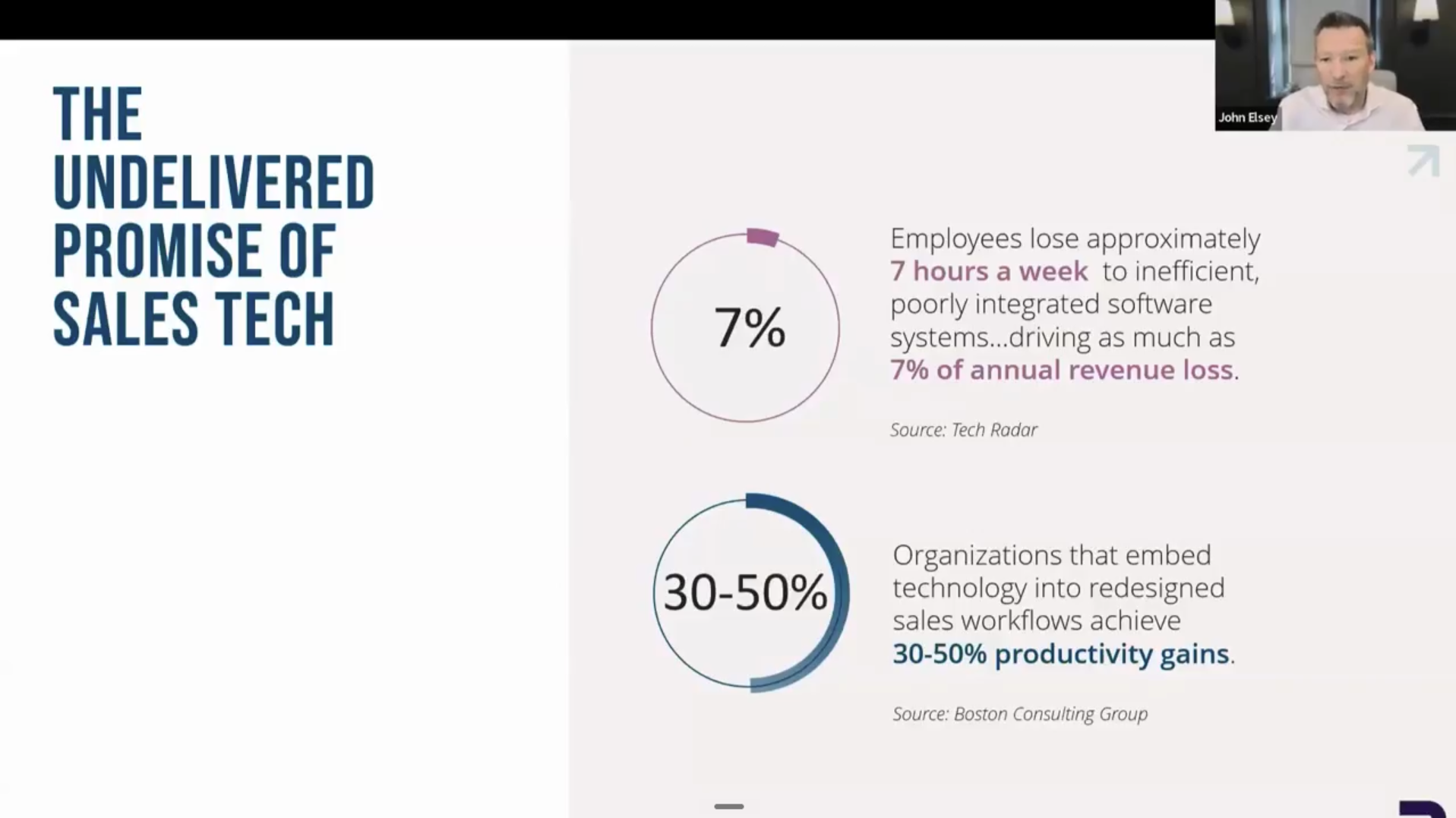
From 'Webinar Recording: CEO Insights - Top Sales Trends for 2026' - on Youtube
Before you optimize anything in Q3, ask yourself:
Does our entire sales team even do it the same way? If the answer is no, that's priority one.
2. Fix the "Everyone Uses AI Differently" problem
Before AI, everyone had their sort of own way of prepping, qualifying, writing proposals. Now everyone has their own way of using AI to do those same things.
When 50 people use 50 different AI setups, you get 50 different quality levels of output. Different research depth. Different messaging. Different levels of hallucinated nonsense making it into customer-facing emails.
Your tooling needs to do the following 3 things to win
- Help the team adopt a unified way of working
- Let your entire commercial team work with one unified setup
- Make sure every step AI touches, works in a closed loop to maximize self-improvement
If your portfolio manager automatically knows what services are and aren't selling, it makes their job 10x easier. If your SDRs and AEs know which services match which prospects, it makes their job 10x easier. If your Account Managers get signals every time an account shows upsell potential, it makes their job 10x easier.
This is a Sales Excellence priority, not an IT one.
The Q3 move:
Stop treating AI adoption as "let people figure it out." Define one AI-powered process for your entire sales team. Same inputs, same workflows, same standard of output. From business development through account management.
Because if you don't unify how your team uses AI, you're just scaling inconsistency at machine speed.
3. Closing the loop
Mentioned above but requires it's own section: Closing the loop.
Every sales conversation produces signal:
- What messaging landed
- Which service got traction
- Where the deal stalled
- What objection came up that nobody saw coming
In most organizations, that signal dies where it was born. It stays in one person's head, gets buried in a CRM note nobody reads, or disappears into a call recording that no manager has time to review.
And trying to get it out of the CRM notes, even with their built-in AI, does not work.
Gartner says 83% of sales leaders agree their sellers aren't adapting to customer needs fast enough. But it's hard to adapt when the system doesn't circulate what's actually working.
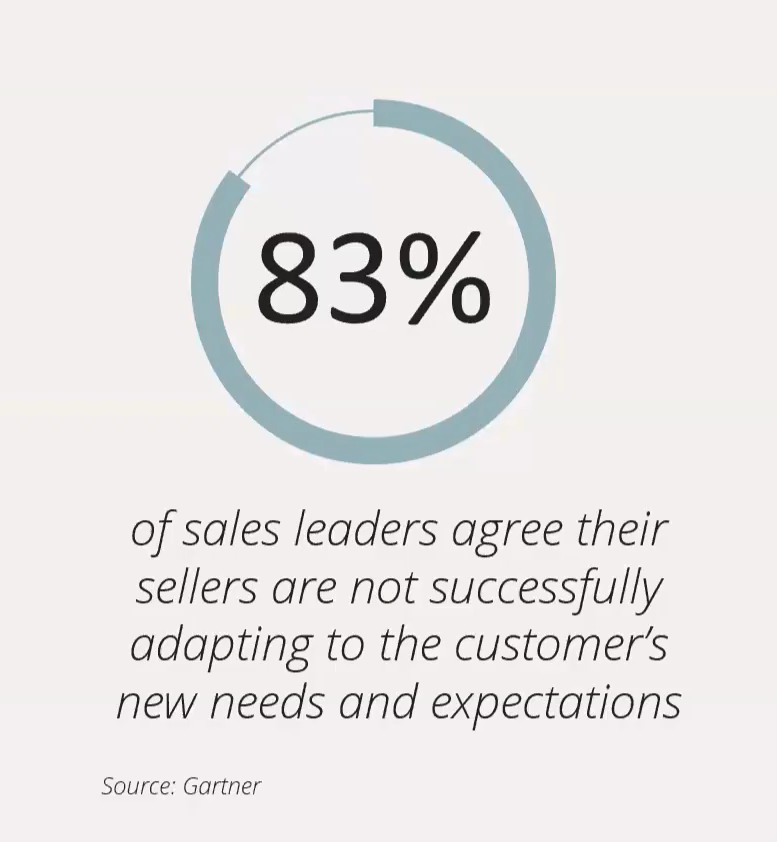
The teams pulling ahead in 2026 have systems that close the loop automatically. The output of every sales interaction becomes the input that sharpens the next one.
uman, for instance, does this natively. Every interaction feeds back into the system and improves what the entire team sees. It's a loop that runs on auto and is in fact the core of the system.
This is a fundamentally different idea than "analytics." Analytics tells you what happened. Closing loops change what happens next.
The Q3 question for Sales Excellence leads:
When your best seller learns something in the field on Monday, how long does it take for that insight to reach the rest of the team? If the answer is "it doesn't" -> that's the gap to close.
4. Make the sales experience consistent for buyers
All the above leads to this:
A prospect talks to one seller and gets a sharp, well-prepared pitch tailored to their industry. They talk to another seller from the same company and get a generic overview that could've been pulled from the website. A third conversation happens and suddenly the value proposition sounds completely different.
That's three touch points and three different experiences.
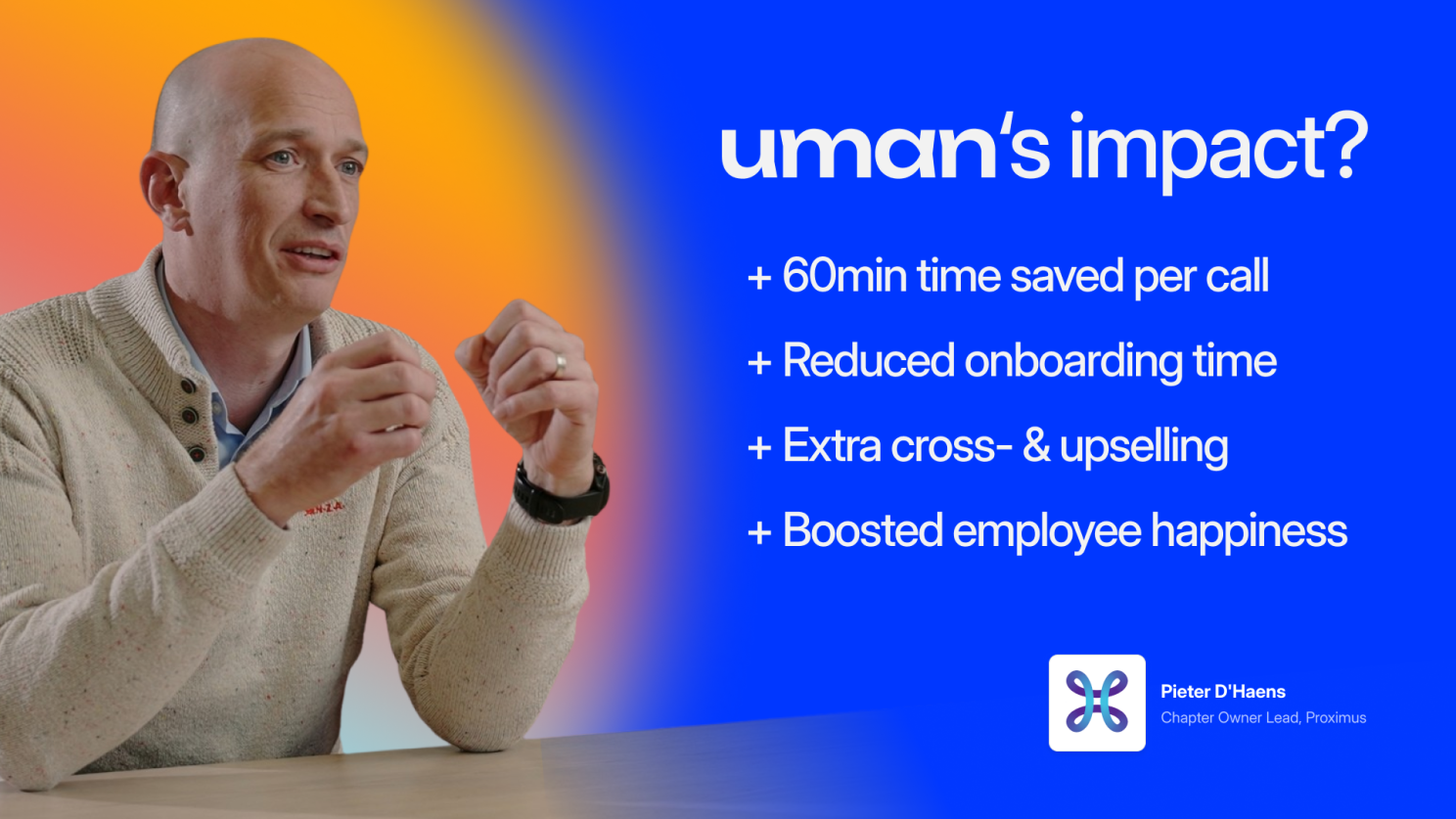
Our customer Proximus (NXT) had the same struggle
New sales team members needed significant time to get up to speed learning all the offerings and inner working. This limited their ability to act as trusted advisors from the start.
Taken from their testimonial:
"With uman, everything changed. Reps get real-time insights effortlessly, right when they need them. Seamlessly integrated, easy to use and finally, a tool the whole team actually adopts."
If this is an issue for the existing senior team, imagine the struggle and the impact of unifying the experience has on new hires.
Richardson's research is unambiguous on this
"The sales experience is the single most significant driver of customer loyalty. And when we say "sales experience," we mean how it feels to buy from you. Is it clear? Is it credible? Does every conversation build on the last one?"

From 'Webinar Recording: CEO Insights - Top Sales Trends for 2026' - on Youtube
When it doesn't, buyers notice. And in 2026, they're already nervous. Salesforce reports only 28% of sellers were on track to hit quota last year. Sales cycles are 40% longer than before COVID according to Gartner. Buying committees keep growing. Decisions keep stalling.
Buyers are stalling because they're afraid of making the wrong call, and inconsistency makes that fear worse.
The internal fix drives the external result. Unify the process, unify the AI, close the loops, and suddenly the buyer experiences something rare in 2026: a sales team that actually feels like one team.
5. Target the transformation window
Everything in this article is hard to do when the organization is standing still.
Amongst our customers (large B2B services), they are in constant transformation to some degree. Only nowadays, that's massively accelerated. And it's the single best moment to lock in these changes.
The internal conversation has already shifted from "should we do something" to "what should we do." Or sometimes to "what the hell are we doing."
Miss that window and everything gets harder. People settle into new habits. The methodology rollout becomes a binder on a shelf. The new leadership moves on to the next fire. And by Q4, the window is closed until next year's kickoff.
Nearly every organization we work with at uman came to us during a transformation moment. Because that's when the pain is sharpest and the willingness to change is highest. Proximus unified how 50+ sellers work during a portfolio expansion. PwC moved during a push toward cross-practice selling.
So here's the honest question for Q3
Is your organization in motion right now?
If yes: this is the quarter to move.
Sources used: youtube



Prep like a machine, sell like a human
Let AI handle the research and prep work — you focus on building relationships and closing deals.